Strategy vault / Trend following
A Strict Trend Following Strategy Based on Ichimoku Kinko Hyo
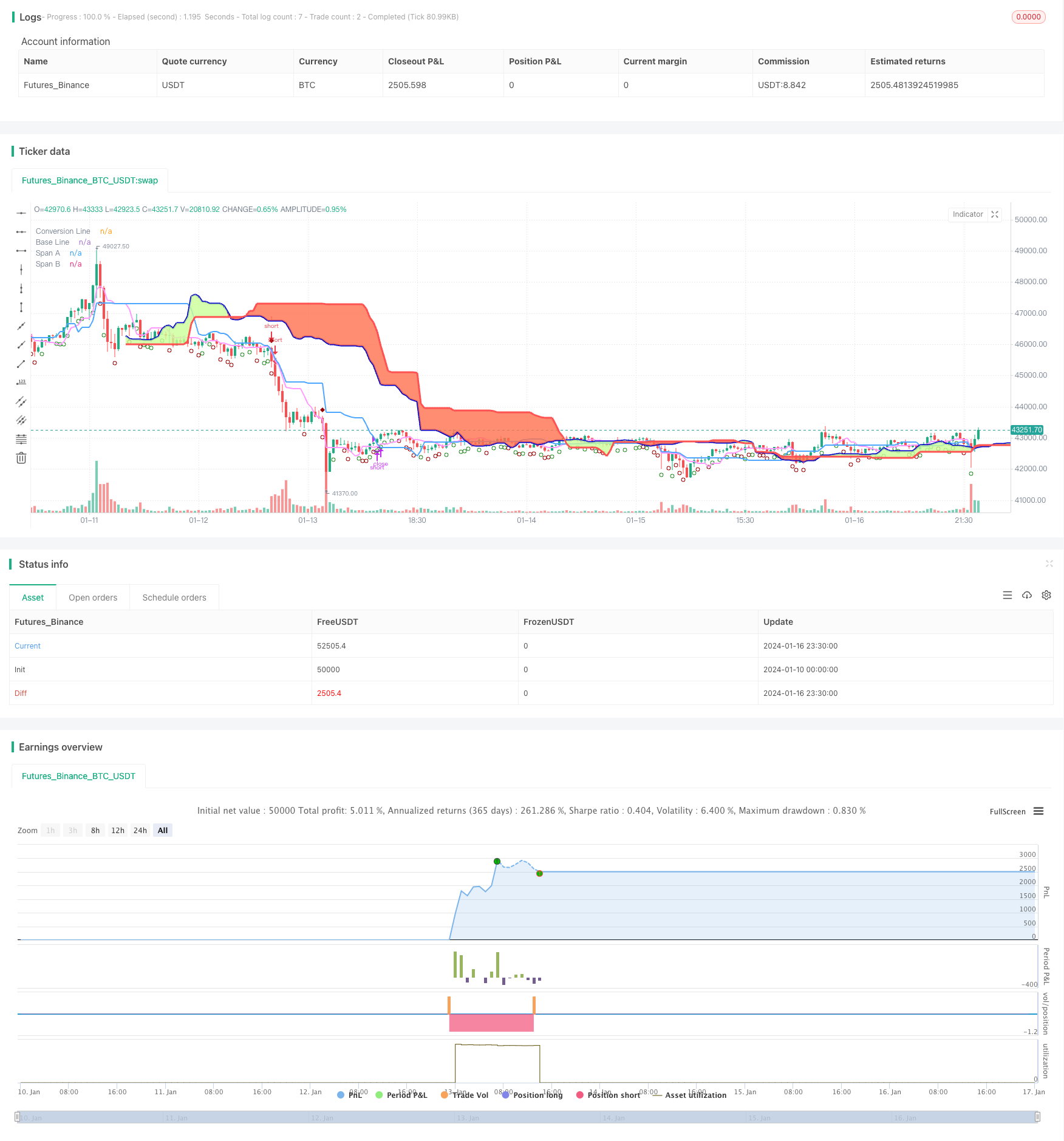
This is a trend following strategy designed based on the Ichimoku Kinko Hyo indicator. It sets very strict entry rules using multiple metrics from the Ichimoku system, while having simple exits to lock in trends. The…
Overview
This is a trend following strategy designed based on the Ichimoku Kinko Hyo indicator. It sets very strict entry rules using multiple metrics from the Ichimoku system, while having simple exits to lock in trends. The strategy is intended for long-term trend trading.
Strategy Logic
The strategy uses the relationship between the conversion line, base line, leading span A, leading span B and price itself from the Ichimoku system to determine trend direction and strength. The specific rules are:
- Current cloud expands and price above cloud;
- Future cloud expands;
- Base line above cloud;
- Conversion line above base line;
- Price above conversion line;
- Current and future leading span A, leading span B, base line and conversion line angles pointing up.
It triggers buy signal when all above conditions are met, and sell signal when all conditions are inverted.
The strategy also sets leading span A as the stop loss line. It flattens positions when price crosses below stop loss.
Advantage Analysis
This is an extremely strict strategy, which effectively avoids false signals and locks in major trends. It also utilizes multiple indicators to determine the trend, preventing systemic failures of single metrics.
The strategy favors long holding periods, thus reducing trading frequency and cost from commissions and slippage.
Risk Analysis
The stop loss of this strategy is relatively wide, set at leading span A, which poses the risk of large losses per trade. Consider tightening stops or adding filters to control risks.
Also, there are fewer signals generated, which may miss some short-term opportunities. Traders seeking higher frequency may consider relaxing some entry rules.
Improvement Opportunities
Fine tune entry rules to strike a balance between getting more signals vs filtering out noise.
Explore more advanced stop loss techniques like automated or remote stops to control single trade loss.
Test impact of different parameter sets to find optimum values. Incorporate other indicators to achieve more accurate position sizing.
Conclusion
This is an exceptionally strict trend following strategy based on Ichimoku Kinko Hyo system. By using multiple Ichimoku metrics to gauge trend, it avoids false signals reliably. The wide stop loss allows it to ride long term trends. With parameter tuning and risk management enhancements, this strategy can evolve into a formidable system for quantitative trading.
Parameters
| Name | Default | What it controls |
|---|---|---|
| v_input_1 | 20 | ATR Period |
| v_input_2 | 9 | Conversion Line Period |
| v_input_3 | 26 | Base Line Period |
| v_input_4 | 52 | Span B Period |
| v_input_5 | 26 | Displacement |
| v_input_6 | true | Min Current Cloud ATR |
| v_input_7 | false | Min Future Cloud ATR |
| v_input_8 | true | Check Base Line above Cloud? |
| v_input_9 | true | Check Conversion Line above Base Line? |
| v_input_10 | true | Check Price above Conversion Line? |
| v_input_11 | false | Check Current Span A is pointing Up? |
| v_input_12 | false | Check Current Span B is pointing Up? |
| v_input_13 | true | Check Future Span A is pointing Up? |
| v_input_14 | true | Check Future Span B is pointing Up? |
| v_input_15 | true | Check Base Line is Pointing Up? |
| v_input_16 | true | Check Conversion Line is Pointing Up? |
Source Pine Script
/*backtest
start: 2024-01-10 00:00:00
end: 2024-01-17 00:00:00
period: 30m
basePeriod: 15m
exchanges: [{"eid":"Futures_Binance","currency":"BTC_USDT"}]
*/

//@version=3
strategy(title="BadaBing Ichimoku", shorttitle="BadaBing", overlay=true)

atr_period = input(title="ATR Period",  defval=20)
conversion_period = input(title="Conversion Line Period", defval=9, minval=1)
base_period = input(title="Base Line Period", defval=26, minval=1)
span_b_period = input(title="Span B Period", defval=52, minval=1)
displacement = input(title="Displacement", defval=26, minval=1)
min_current_cloud_atr = input(title="Min Current Cloud ATR", type=float, defval=1.0)
min_future_cloud_atr = input(title="Min Future Cloud ATR", type=float, defval=0)
check_base_line_above_cloud = input(title="Check Base Line above Cloud?", type=bool, defval=true)
check_conversion_line_above_base_line = input(title="Check Conversion Line above Base Line?", type=bool, defval=true)
check_price_above_conversion_line = input(title="Check Price above Conversion Line?", type=bool, defval=true)
check_span_a_point_up = input(title="Check Current Span A is pointing Up?", type=bool, defval=false)
check_span_b_point_up = input(title="Check Current Span B is pointing Up?", type=bool, defval=false)
check_future_span_a_point_up = input(title="Check Future Span A is pointing Up?", type=bool, defval=true)
check_future_span_b_point_up = input(title="Check Future Span B is pointing Up?", type=bool, defval=true)
check_base_line_point_up = input(title="Check Base Line is Pointing Up?", type=bool, defval=true)
check_conversion_line_point_up = input(title="Check Conversion Line is Pointing Up?", type=bool, defval=true)

bullish_color = #ccff99
bearish_color = #ff704d
span_a_color = #0000cc
span_b_color = #000066
conversion_color = #ff99ff
base_color = #4da6ff
bull_signal_color = #228b22
bear_signal_color = #990000

donchian(len) => avg(lowest(len), highest(len))
bchange(series) => series and not series[1]

conversion_line = donchian(conversion_period)
base_line = donchian(base_period)
future_span_a = avg(conversion_line, base_line)
future_span_b = donchian(span_b_period)
span_a = future_span_a[displacement]
span_b = future_span_b[displacement]
current_atr = atr(atr_period)

min_cloud_width = min_current_cloud_atr * current_atr
current_cloud_long_flag = span_a > (span_b + min_cloud_width)
current_cloud_short_flag = span_a < (span_b - min_cloud_width)
future_cloud_long_flag = future_span_a > (future_span_b + min_cloud_width)
future_cloud_short_flag = future_span_a < (future_span_b - min_cloud_width)
base_line_long_flag = check_base_line_above_cloud ? (base_line > span_a) : true
base_line_short_flag = check_base_line_above_cloud ? (base_line < span_a) : true
conversion_line_long_flag = check_conversion_line_above_base_line ? (conversion_line > base_line) : true
conversion_line_short_flag = check_conversion_line_above_base_line ? (conversion_line < base_line) : true
price_long_flag = check_price_above_conversion_line ? (close > conversion_line) : true
price_short_flag = check_price_above_conversion_line ? (close < conversion_line) : true
span_a_point_long_flag = check_span_a_point_up ? (span_a > span_a[1]) : true
span_a_point_short_flag = check_span_a_point_up ? (span_a < span_a[1]) : true
span_b_point_long_flag = check_span_b_point_up ? (span_b > span_b[1]) : true
span_b_point_short_flag = check_span_b_point_up ? (span_b < span_b[1]) : true
future_span_a_point_long_flag = check_future_span_a_point_up ? (future_span_a > future_span_a[1]) : true
future_span_a_point_short_flag = check_future_span_a_point_up ? (future_span_a < future_span_a[1]) : true
future_span_b_point_long_flag = check_future_span_b_point_up ? (future_span_b > future_span_b[1]) : true
future_span_b_point_short_flag = check_future_span_b_point_up ? (future_span_b < future_span_b[1]) : true
base_line_point_long_flag = check_base_line_point_up ? (base_line > base_line[1]) : true
base_line_point_short_flag = check_base_line_point_up ? (base_line < base_line[1]) : true
conversion_line_point_long_flag = check_conversion_line_point_up ? (conversion_line > conversion_line[1]) : true
conversion_line_point_short_flag = check_conversion_line_point_up ? (conversion_line < conversion_line[1]) : true


bada_long = bchange(current_cloud_long_flag)
   or bchange(future_cloud_long_flag)
   or bchange(base_line_long_flag)
   or bchange(conversion_line_long_flag)
   or bchange(price_long_flag)
   or bchange(span_a_point_long_flag)
   or bchange(span_b_point_long_flag)
   or bchange(future_span_a_point_long_flag)
   or bchange(future_span_b_point_long_flag)
   or bchange(base_line_point_long_flag)
   or bchange(conversion_line_point_long_flag)
bada_short = bchange(current_cloud_short_flag)
   or bchange(future_cloud_short_flag)
   or bchange(base_line_short_flag)
   or bchange(conversion_line_short_flag)
   or bchange(price_short_flag)
   or bchange(span_a_point_short_flag)
   or bchange(span_b_point_short_flag)
   or bchange(future_span_a_point_short_flag)
   or bchange(future_span_b_point_short_flag)
   or bchange(base_line_point_short_flag)
   or bchange(conversion_line_point_short_flag)
bada_color = bada_long ? bull_signal_color : bear_signal_color
plotshape(bada_long or bada_short, title="bada",
  style=shape.circle,
  location=location.belowbar,
  color=bada_color,
  transp=50)

bing_long = current_cloud_long_flag
   and future_cloud_long_flag
   and base_line_long_flag
   and conversion_line_long_flag
   and price_long_flag
   and span_a_point_long_flag
   and span_b_point_long_flag
   and future_span_a_point_long_flag
   and future_span_b_point_long_flag
   and base_line_point_long_flag
   and conversion_line_point_long_flag
bing_short = current_cloud_short_flag
   and future_cloud_short_flag
   and base_line_short_flag
   and conversion_line_short_flag
   and price_short_flag
   and span_a_point_short_flag
   and span_b_point_short_flag
   and future_span_a_point_short_flag
   and future_span_b_point_short_flag
   and base_line_point_short_flag
   and conversion_line_point_short_flag
bing_color = bing_long ? bull_signal_color : bear_signal_color
plotshape(bchange(bing_long or bing_short), title="bing",
   style=shape.diamond,
   location=location.abovebar,
   color=bing_color,
   transp=0)

c = plot(conversion_line, color=conversion_color, title="Conversion Line", linewidth=2)
b = plot(base_line, color=base_color, title="Base Line", linewidth=2)
p1 = plot(future_span_a, offset = displacement, color=span_a_color, title="Span A", linewidth=3)
p2 = plot(future_span_b, offset = displacement, color=red, title="Span B", linewidth=3)
fill(p1, p2, color = future_span_a > future_span_b ? bullish_color : bearish_color, transp = 60)

strategy.entry("long", true, 1, when=bing_long)
strategy.exit("stop", "long", stop=span_a)
strategy.close("long", when=close < base_line)
strategy.entry("short", false, 1, when=bing_short)
strategy.exit("stop", "short", stop=span_a)
strategy.close("short", when=close > base_line)
Published by ChaoZhang on the FMZ strategy square · last modified 2024-01-18. Collected in the Quant Trading Vault. Unvalidated research: re-test with your own data and costs before trusting it.
Build this with AgenKit
A spec is not a trading system. Paste this into your coding agent and AgenKit runs a specialist team — architecture, test-first build, risk gates, review — with paper trading on by default.
/agenkit build a production-grade trading bot with a backtest engine, risk controls and paper trading by default from strategies/A-Strict-Trend-Following-Strategy-Based-on-Ichimoku-Kinko-Hyo.md- npx agenkit install engineering-kit in your project
- Paste the command into your agent and approve each phase
- Get tests, backtest, risk controls and a paper-trading switch
Understand it first
Before you run this, read the lesson behind the idea and how to backtest it honestly. Specs like this one are the survivors of an unknown number of trials; deflate their results accordingly.
Related specs
- Triple Supertrend Ichimoku Cloud Quantitative Trading StrategyPine Script · Trend following · 1d
- TrendHunter w MF Multi Timeframe Trend StrategyPine Script · Trend following · 1h
- Quant Trading Strategy Based on Ichimoku CloudPine Script · Trend following · 1d
- Ichimoku Cloud MACD and Stochastic Based Multi Timeframe Trend Tracking StrategyPine Script · Trend following · 4h
- Enhanced Ichimoku Cloud Trading Strategy with Dynamic Crossover SignalsPine Script · Trend following · 1h
- Multitimeframe Trend Hunter StrategyPine Script · Trend following · 1h