Strategy vault / Mean reversion
Adaptive Trailing Drawdown Balanced Trading Strategy with Take Profit and Stop Loss
This strategy is an adaptive trading system based on gaps and price movements, achieving stable returns through flexible entry points and dynamic take-profit/stop-loss settings. The strategy employs pyramiding…
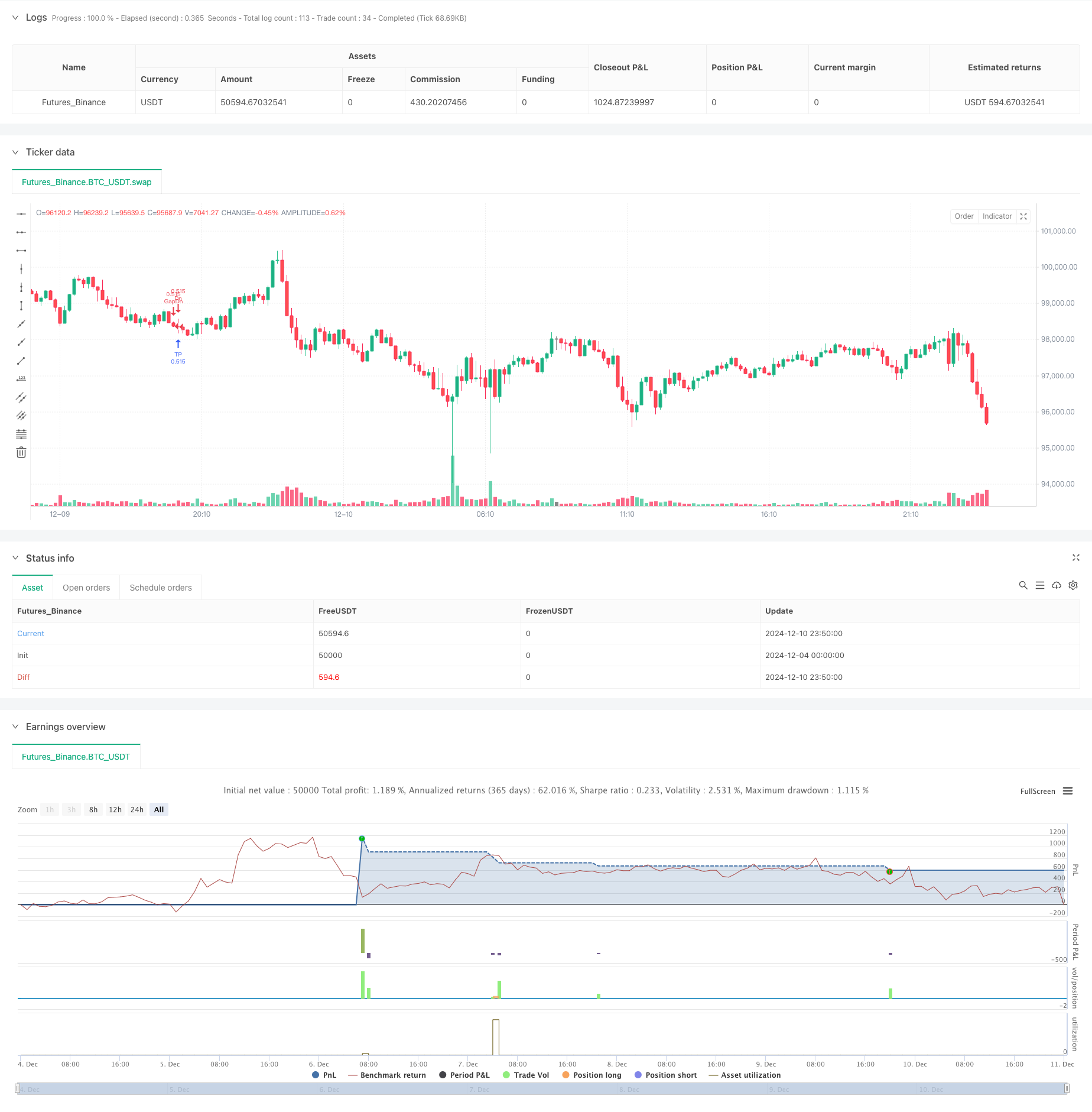
Overview
This strategy is an adaptive trading system based on gaps and price movements, achieving stable returns through flexible entry points and dynamic take-profit/stop-loss settings. The strategy employs pyramiding position sizing combined with an OCA order management system for risk control. The system automatically adjusts position direction and closes positions promptly when reversal signals appear.
Strategy Principles
The strategy operates through several core mechanisms:
- Gap trading mechanism: Identifies upward and downward gaps, placing stop orders at gap levels
- Trend following: Determines trend direction based on the relationship between opening and closing prices
- Pyramiding: Allows up to 100 orders in the same direction
- Dynamic TP/SL: Sets take-profit and stop-loss levels dynamically based on average position price
- OCA order management: Uses OCA order groups to ensure mutual exclusivity of TP and SL orders
- Intraday trading limits: Controls risk through maximum intraday filled orders setting
Strategy Advantages
- High adaptability: Strategy automatically adjusts trading direction and position size based on market conditions
- Controlled risk: Multiple risk control mechanisms including stop-loss, OCA orders, and intraday limits
- High flexibility: Supports pyramiding to capture more profits in trending markets
- High execution efficiency: Uses stop orders for quick position building at key price levels
- High systematization: Fully systematic trading decisions reduce emotional interference
Strategy Risks
- Slippage risk: May face significant slippage in fast-moving markets
- Overtrading risk: Frequent entries and exits may lead to high transaction costs
- Systematic risk: May suffer larger losses in highly volatile markets
- Capital management risk: Pyramiding may lead to excessive capital utilization
- Technical risk: Program interruptions may cause order management issues
Strategy Optimization Directions
- Incorporate volatility indicators: Dynamically adjust TP/SL parameters based on market volatility
- Optimize pyramiding mechanism: Design more detailed position sizing rules to avoid excessive capital use
- Enhance risk control: Add more risk control indicators like maximum intraday drawdown limits
- Improve order execution: Optimize order progression mechanism to reduce slippage impact
- Add market sentiment analysis: Optimize entry timing by incorporating volume and other indicators
Summary
This is a well-designed trading strategy with rigorous logic, ensuring trading stability and safety through multiple mechanisms. The core advantages lie in its adaptability and risk control capabilities, while attention must be paid to risks from market volatility. Through continuous optimization and improvement, the strategy has the potential to maintain stable performance across different market environments.
Source Pine Script
/*backtest
start: 2024-12-04 00:00:00
end: 2024-12-11 00:00:00
period: 10m
basePeriod: 10m
exchanges: [{"eid":"Futures_Binance","currency":"BTC_USDT"}]
*/

//@version=5
strategy("Greedy Strategy - maclaurin", pyramiding = 100, calc_on_order_fills=false, overlay=true, default_qty_type = strategy.percent_of_equity, default_qty_value = 100)
backtestStartDate = input(timestamp("1 Jan 1990"),
     title="Start Date", group="Backtest Time Period",
     tooltip="This start date is in the time zone of the exchange " +
     "where the chart's instrument trades. It doesn't use the time " +
     "zone of the chart or of your computer.")
backtestEndDate = input(timestamp("1 Jan 2023"),
     title="End Date", group="Backtest Time Period",
     tooltip="This end date is in the time zone of the exchange " +
     "where the chart's instrument trades. It doesn't use the time " +
     "zone of the chart or of your computer.")
inTradeWindow = true
tp = input(10)
sl = input(10)
maxidf = input(title="Max Intraday Filled Orders", defval=5)
// strategy.risk.max_intraday_filled_orders(maxidf)
upGap = open > high[1]
dnGap = open < low[1]
dn = strategy.position_size < 0 and open > close
up = strategy.position_size > 0 and open < close
if inTradeWindow and upGap
    strategy.entry("GapUp", strategy.long, stop = high[1])
else
    strategy.cancel("GapUp")
if inTradeWindow and dn
    strategy.entry("Dn", strategy.short, stop = close)
else
    strategy.cancel("Dn")
if inTradeWindow and dnGap
    strategy.entry("GapDn", strategy.short, stop = low[1])
else
    strategy.cancel("GapDn")
if inTradeWindow and up
    strategy.entry("Up", strategy.long, stop = close)
else
    strategy.cancel("Up")
XQty = strategy.position_size < 0 ? -strategy.position_size : strategy.position_size
dir = strategy.position_size < 0 ? -1 : 1
lmP = strategy.position_avg_price + dir*tp*syminfo.mintick
slP = strategy.position_avg_price - dir*sl*syminfo.mintick
float nav = na
revCond = strategy.position_size > 0 ? dnGap : (strategy.position_size < 0 ? upGap : false)
if inTradeWindow and not revCond and XQty > 0
    strategy.order("TP", strategy.position_size < 0 ? strategy.long : strategy.short, XQty, lmP, nav, "TPSL",  "TPSL")
    strategy.order("SL", strategy.position_size < 0 ? strategy.long : strategy.short, XQty, nav, slP, "TPSL", "TPSL")
if XQty == 0 or revCond
    strategy.cancel("TP")
    strategy.cancel("SL")
//plot(strategy.equity, title="equity", color=color.red, linewidth=2, style=plot.style_areabr)
Published by ChaoZhang on the FMZ strategy square · last modified 2024-12-12. Collected in the Quant Trading Vault. Unvalidated research: re-test with your own data and costs before trusting it.
Build this with AgenKit
A spec is not a trading system. Paste this into your coding agent and AgenKit runs a specialist team — architecture, test-first build, risk gates, review — with paper trading on by default.
/agenkit build a production-grade trading bot with a backtest engine, risk controls and paper trading by default from strategies/Adaptive-Trailing-Drawdown-Balanced-Trading-Strategy-with-Take-Profit-and-Stop-Loss.md- npx agenkit install engineering-kit in your project
- Paste the command into your agent and approve each phase
- Get tests, backtest, risk controls and a paper-trading switch
Understand it first
Before you run this, read the lesson behind the idea and how to backtest it honestly. Specs like this one are the survivors of an unknown number of trials; deflate their results accordingly.
Related specs
- 1 2 3 Pattern Quantitative Trading Strategy with EMAs MACD and 4th Candle ExtensionPine Script · Mean reversion · 1h
- 3 10 Oscillator Profile Flagging StrategyPine Script · Mean reversion · 1d
- A Trend Reversal Strategy Based on Moving Averages Price Patterns and VolumePine Script · Mean reversion · 1d
- ATR and EMA based Dynamic Take Profit and Stop Loss Adaptive StrategyPine Script · Mean reversion · 1h
- Adaptive Mean Reversion Trading Strategy Based on Chande Momentum OscillatorPine Script · Mean reversion · 1d
- Adaptive Moving Average Tracking StrategyPine Script · Mean reversion · 1d