Strategy vault / Mean reversion
ATR based Trailing Stop Strategy for ES
This strategy is a trailing stop strategy applied to the E-mini S&P500 futures (ES). It uses 10-day ATR as a reference and sets the stop loss range to 3 times ATR to define long and short stop lines. The strategy…
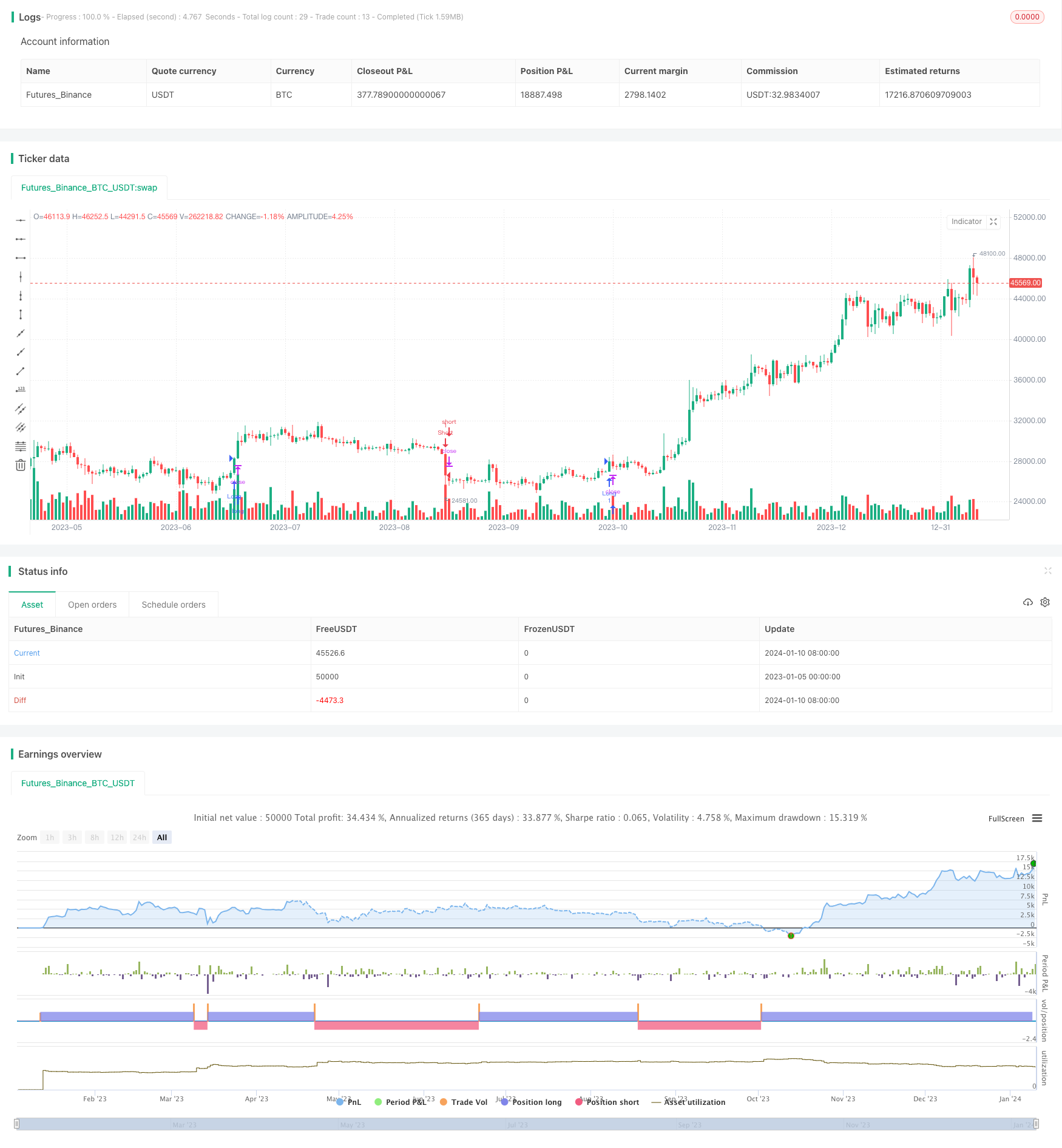
Overview
This strategy is a trailing stop strategy applied to the E-mini S&P500 futures (ES). It uses 10-day ATR as a reference and sets the stop loss range to 3 times ATR to define long and short stop lines. The strategy judges the trend by the direction change of the ATR lines and generates entry signals at turning points of the trend. Once entered, it will adjust the stop loss lines in real time to trail the price movement, protecting profits.
Strategy Logic
The strategy uses hl2 as the price source. First it calculates the 10-day ATR, and lets the user choose between using SMA method or built-in ATR function to calculate ATR. After obtaining ATR, it adds 3 times ATR up and down to form the range. The two range lines are the stop loss lines.
The method to judge the trend is when the price exceeds the upper boundary, it is long; when the price breaks the lower boundary, it is short. When the price retraces back into the range, it confirms the trend reversal. At this time, if turned from short to long, it will generate a long entry signal; if turned from long to short, it will generate a short entry signal.
After entering, the long stop loss line is set to the upper boundary minus 1 tick, and the short stop loss line is set to the lower boundary plus 1 tick, trailing to protect profits.
Advantages
- Using ATR can automatically adapt to changes in market volatility and reduce the probability of stop loss being triggered.
- The trend tracking method is simple and effective to avoid risks of chasing tops and bottoms.
- Trailing stops lock in profits and avoid giving back profitable trades.
Risk Analysis
- Improper ATR parameter setting may cause the stop loss range to be too large or too small.
- Drastic changes in the volatility of the underlying may cause abnormal stop loss triggering.
- TRAILING stops may be too conservative to keep tracking the trend.
Optimization Directions
- Consider optimizing ATR parameters combined with volatility metrics.
- Test different trailing stop algorithms like percentage trailing stops etc.
- Filter entry signals combined with trend indicators to avoid false trend signals.
Conclusion
In general, this is a robust trend following strategy. It solves the problem of determining stop loss range and reduces risks by adjusting stops dynamically based on ATR. At the same time, trailing stops lock in profits. But there is still room for optimizing parameters like ATR periods, stop algorithms etc. With further testing and tuning, this strategy can become a trend following strategy with high robustness.
Parameters
| Name | Default | What it controls |
|---|---|---|
| v_input_1 | 10 | ATR Period |
| v_input_2_hl2 | 0 | Source: hl2 | high | low | open | close | hlc3 | hlcc4 | ohlc4 |
| v_input_3 | 3 | ATR Multiplier |
| v_input_4 | true | Change ATR Calculation Method ? |
Source Pine Script
/*backtest
start: 2023-01-05 00:00:00
end: 2024-01-11 00:00:00
period: 1d
basePeriod: 1h
exchanges: [{"eid":"Futures_Binance","currency":"BTC_USDT"}]
*/

//@version=4
strategy("ATR Based Trailing Stop Strategy on ES! [v4]", overlay=true)

// Given ATR study
Periods = input(title="ATR Period", type=input.integer, defval=10)
src = input(hl2, title="Source")
Multiplier = input(title="ATR Multiplier", type=input.float, step=0.1, defval=3.0)
changeATR = input(title="Change ATR Calculation Method ?", type=input.bool, defval=true)
atr2 = sma(tr, Periods)
atr = changeATR ? atr(Periods) : atr2
up = src - (Multiplier * atr)
up1 = nz(up[1], up)
up := close[1] > up1 ? max(up, up1) : up
dn = src + (Multiplier * atr)
dn1 = nz(dn[1], dn)
dn := close[1] < dn1 ? min(dn, dn1) : dn
trend = 1
trend := nz(trend[1], trend)
trend := trend == -1 and close > dn1 ? 1 : trend == 1 and close < up1 ? -1 : trend

// Entry logic based on trend change
longCondition = trend == 1 and trend[1] == -1
shortCondition = trend == -1 and trend[1] == 1

if (longCondition)
    strategy.entry("Long", strategy.long)

if (shortCondition)
    strategy.entry("Short", strategy.short)

// Trailing stop loss logic
// For long positions, trail 1 point below the up plot
longStopPrice = up - 1

// For short positions, trail 1 point above the dn plot
shortStopPrice = dn + 1

strategy.exit("Trailing Stop Long", "Long", trail_offset=longStopPrice)
strategy.exit("Trailing Stop Short", "Short", trail_offset=shortStopPrice)
Published by ChaoZhang on the FMZ strategy square · last modified 2024-01-12. Collected in the Quant Trading Vault. Unvalidated research: re-test with your own data and costs before trusting it.
Build this with AgenKit
A spec is not a trading system. Paste this into your coding agent and AgenKit runs a specialist team — architecture, test-first build, risk gates, review — with paper trading on by default.
/agenkit build a production-grade trading bot with a backtest engine, risk controls and paper trading by default from strategies/ATR-based-Trailing-Stop-Strategy-for-ES.md- npx agenkit install engineering-kit in your project
- Paste the command into your agent and approve each phase
- Get tests, backtest, risk controls and a paper-trading switch
Understand it first
Before you run this, read the lesson behind the idea and how to backtest it honestly. Specs like this one are the survivors of an unknown number of trials; deflate their results accordingly.
Related specs
- Adaptive Trading Strategy Combining Dynamic Trend Reversal and Stochastic IndicatorPine Script · Mean reversion · 1d
- Advanced Momentum EMA Trend Following with RSI Overbought Oversold Trading StrategyPine Script · Mean reversion · 1d
- Advanced Quantitative Trend Following and Cloud Reversal Composite Trading StrategyPine Script · Mean reversion · 1d
- Advanced Strategy with Volume and Price Pullback Multiple Take ProfitPine Script · Mean reversion · 1h
- Bidirectional Moving Average Reversion Trading StrategyPine Script · Mean reversion · 1h
- Bollinger Bands ATR Risk Reward Trading StrategyPine Script · Mean reversion · 1d