AVMQTS Adaptive Volatility and Momentum Quantitative Trading System AVMQTS
This strategy is an adaptive trading system that combines volatility and momentum indicators to capture market trends through the coordination of multiple technical indicators. The strategy uses the ATR indicator to…
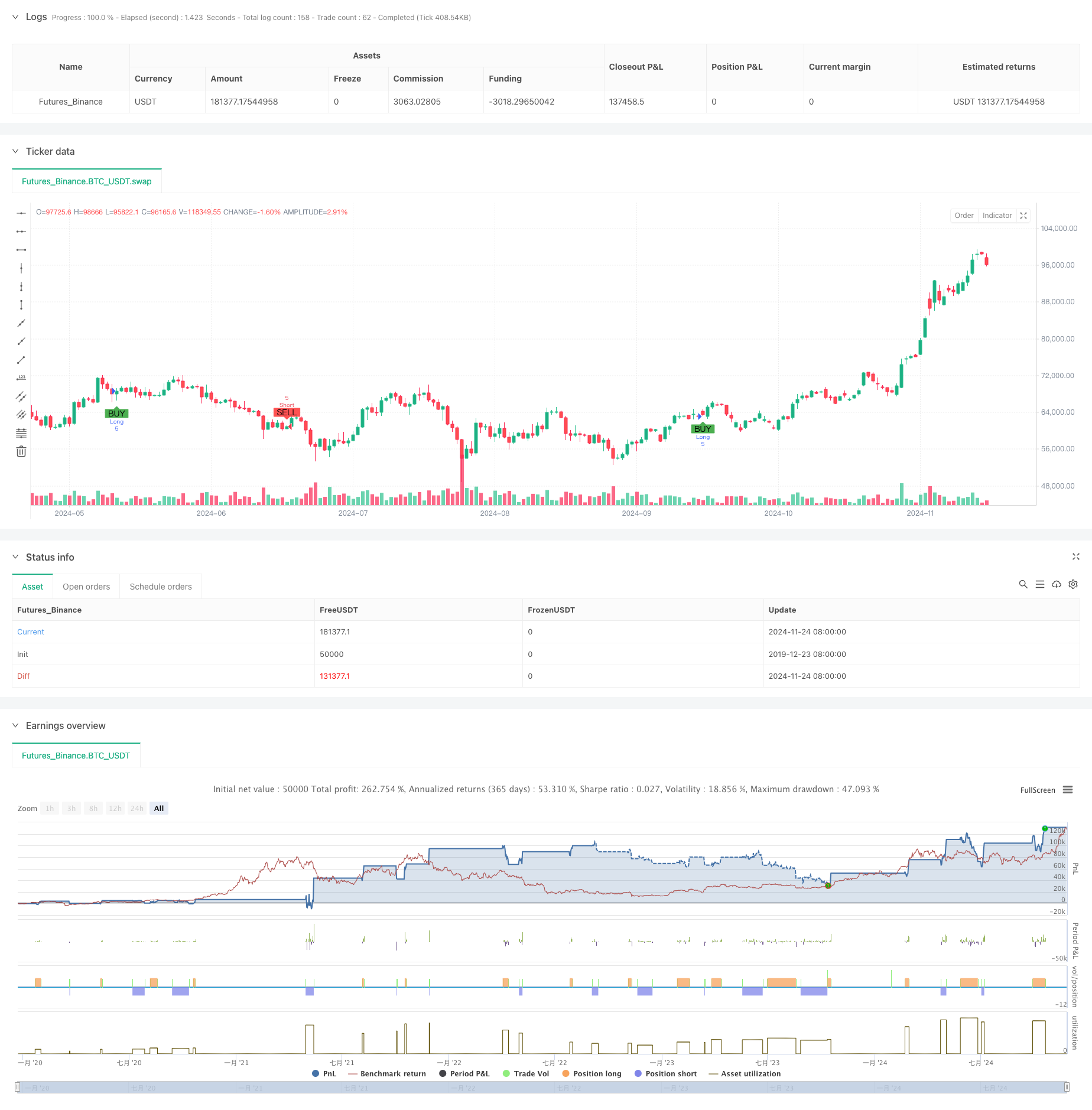
Overview
This strategy is an adaptive trading system that combines volatility and momentum indicators to capture market trends through the coordination of multiple technical indicators. The strategy uses the ATR indicator to monitor market volatility, MACD to judge trend momentum, and combines price momentum indicators to confirm trading signals, with a flexible stop-loss and take-profit mechanism. The system has strong adaptability and can automatically adjust trading frequency and position control according to market conditions.
Strategy Principles
The strategy relies on a triple indicator system as its core trading logic: First, ATR is used to measure market volatility conditions to provide volatility reference for trading decisions; Second, MACD indicator's golden and death crosses are used to capture trend turning points, with MACD fast and slow line crossovers used as the main trading trigger signals; Third, price momentum indicators are used for verification, observing price changes relative to previous periods to confirm trend strength. The system also incorporates a 50-day moving average as a trend filter, only allowing long positions when price is above the moving average and short positions when below. To avoid overtrading, the strategy sets minimum trading intervals and optionally enforces alternating signal execution.
Strategy Advantages
- Multiple indicator cross-validation: Through the coordination of indicators in three dimensions - volatility, trend, and momentum, greatly improving the reliability of trading signals.
- Strong adaptability: The strategy can dynamically adjust according to market volatility conditions, adapting to different market environments.
- Comprehensive risk control: Percentage-based stop-loss and take-profit settings effectively control single trade risk.
- Controllable trading frequency: Avoids overtrading through minimum trading interval settings and signal alternation mechanism.
- Clear system structure: High degree of code modularity with clear boundaries between functional modules, facilitating maintenance and optimization.
Strategy Risks
- Oscillating market risk: In sideways markets, multiple false signals may be generated, leading to consecutive stop-losses.
- Slippage risk: During periods of intense volatility, actual transaction prices may significantly deviate from signal trigger prices.
- Parameter sensitivity: The strategy uses multiple technical indicators, and the reasonableness of parameter settings directly affects strategy performance.
- Market environment dependence: The strategy performs better in markets with clear trends but may underperform in other market conditions.
Strategy Optimization Directions
- Introduce market environment recognition mechanism: Add trend strength indicators to use different parameter configurations in different market environments.
- Optimize stop-loss and take-profit mechanism: Consider dynamically adjusting stop-loss and take-profit ratios based on ATR to better adapt to market volatility.
- Add position management: Recommend introducing a volatility-based dynamic position management system, appropriately reducing trading size during high volatility periods.
- Add more filtering conditions: Consider adding volume, volatility, and other filtering indicators to improve signal quality.
Summary
This strategy is a well-designed, logically rigorous quantitative trading system that achieves effective capture of market trends through the use of multiple technical indicators. The system has made detailed considerations in risk control and trade execution, showing good practicality. Although there are some potential risks, through the suggested optimization directions, both the stability and profitability of the strategy can be expected to further improve.
Source Pine Script
/*backtest
start: 2019-12-23 08:00:00
end: 2024-11-25 08:00:00
period: 1d
basePeriod: 1d
exchanges: [{"eid":"Futures_Binance","currency":"BTC_USDT"}]
*/

//@version=5
strategy("[ETH] Volatility & Momentum Adaptive Strategy", shorttitle="Definitive 1 day Ethereum Signal", overlay=true, initial_capital=10000, currency=currency.USD)

// === Input Parameters === //
trade_size = input.float(5, title="Trade Size (ETH)")
atr_length = input.int(8, minval=1, title="ATR Length")
macd_fast = input.int(8, minval=1, title="MACD Fast Length")
macd_slow = input.int(7, minval=1, title="MACD Slow Length")
macd_signal = input.int(9, minval=1, title="MACD Signal Length")
momentum_length = input.int(37, title="Momentum Length")
stop_loss_percent = input.float(9.9, title="Stop Loss Percentage (%)")
take_profit_percent = input.float(9.0, title="Take Profit Percentage (%)")
alternate_signal = input.bool(true, title="Alternate Buy/Sell Signals")

// === Indicators === //
// ATR to measure volatility
atr = ta.atr(atr_length)

// MACD for trend momentum
[macd_line, signal_line, _] = ta.macd(close, macd_fast, macd_slow, macd_signal)
macd_cross_up = ta.crossover(macd_line, signal_line)
macd_cross_down = ta.crossunder(macd_line, signal_line)

// Momentum
momentum = ta.mom(close, momentum_length)

// === Signal Control Variables === //
var bool last_signal_long = na
var int last_trade_bar = na
min_bars_between_trades = 5 // Adjust for minimal trade frequency control
time_elapsed = na(last_trade_bar) or (bar_index - last_trade_bar) >= min_bars_between_trades

// === Buy and Sell Conditions === //
// Buy when:
buy_signal = (macd_cross_up and momentum > 0 and close > ta.sma(close, 50) and time_elapsed)

// Sell when:
sell_signal = (macd_cross_down and momentum < 0 and close < ta.sma(close, 50) and time_elapsed)

// Enforce alternate signals if selected
if alternate_signal
    buy_signal := buy_signal and (na(last_signal_long) or not last_signal_long)
    sell_signal := sell_signal and (not na(last_signal_long) and last_signal_long)

// === Trade Execution === //
// Buy Position
if (buy_signal)
    if strategy.position_size < 0
        strategy.close("Short")
    strategy.entry("Long", strategy.long, qty=trade_size)
    last_signal_long := true
    last_trade_bar := bar_index

// Sell Position
if (sell_signal)
    if strategy.position_size > 0
        strategy.close("Long")
    strategy.entry("Short", strategy.short, qty=trade_size)
    last_signal_long := false
    last_trade_bar := bar_index

// === Stop Loss and Take Profit === //
if strategy.position_size > 0
    long_take_profit = strategy.position_avg_price * (1 + take_profit_percent / 100)
    long_stop_loss = strategy.position_avg_price * (1 - stop_loss_percent / 100)
    strategy.exit("TP/SL Long", from_entry="Long", limit=long_take_profit, stop=long_stop_loss)

if strategy.position_size < 0
    short_take_profit = strategy.position_avg_price * (1 - take_profit_percent / 100)
    short_stop_loss = strategy.position_avg_price * (1 + stop_loss_percent / 100)
    strategy.exit("TP/SL Short", from_entry="Short", limit=short_take_profit, stop=short_stop_loss)

// === Visual Signals === //
plotshape(series=buy_signal and time_elapsed, title="Buy Signal", location=location.belowbar, color=color.green, style=shape.labelup, text="BUY")
plotshape(series=sell_signal and time_elapsed, title="Sell Signal", location=location.abovebar, color=color.red, style=shape.labeldown, text="SELL")
Published by ChaoZhang on the FMZ strategy square · last modified 2024-11-27. Collected in the Quant Trading Vault. Unvalidated research: re-test with your own data and costs before trusting it.
Build this with AgenKit
A spec is not a trading system. Paste this into your coding agent and AgenKit runs a specialist team — architecture, test-first build, risk gates, review — with paper trading on by default.
/agenkit build a production-grade trading bot with a backtest engine, risk controls and paper trading by default from strategies/AVMQTS-Adaptive-Volatility-and-Momentum-Quantitative-Trading-System-AVMQTS.md- npx agenkit install engineering-kit in your project
- Paste the command into your agent and approve each phase
- Get tests, backtest, risk controls and a paper-trading switch
Understand it first
Before you run this, read the lesson behind the idea and how to backtest it honestly. Specs like this one are the survivors of an unknown number of trials; deflate their results accordingly.
Related specs
- KST EMA Momentum Trend Following StrategyPine Script · Momentum · 1d
- Multi Indicator Trend Momentum Trading Strategy with Dynamic Risk Management SystemPine Script · Momentum · 1h
- Multi Indicator Trend Momentum Trading Strategy An Optimized Quantitative Trading System Based on Bollinger Bands Fibonacci and ATRPine Script · Momentum · 1h
- Multi MA Trend Strength Capture with Momentum Profit Taking StrategyPine Script · Momentum · 2h
- Multi Trend Momentum Crossover Strategy with Volatility Optimization SystemPine Script · Momentum · 1d
- Dynamic Momentum Weighted Moving Average Crossover StrategyPine Script · Momentum · 1h