Strategy vault / Mean reversion
Bitcoin Futures Position Trading Strategy
Overview: This strategy uses BitMEX bitcoin futures position data to guide trades. It goes short when short positions increase and goes long when short positions decrease. Suitable for following "smart money" trading…
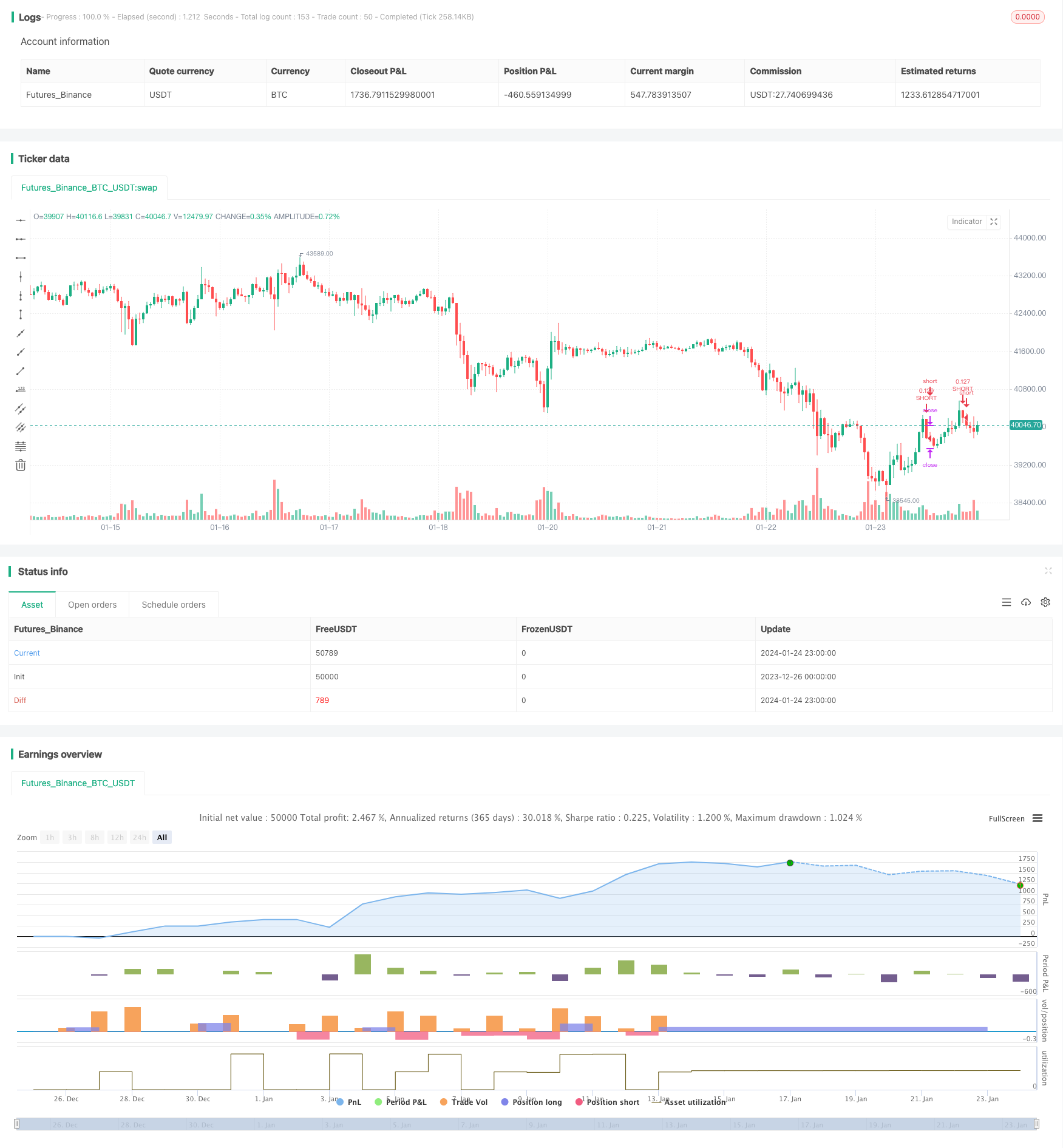
Overview: This strategy uses BitMEX bitcoin futures position data to guide trades. It goes short when short positions increase and goes long when short positions decrease. Suitable for following "smart money" trading behavior.
Strategy Logic:
- Use BitMEX bitcoin futures short positions as indicator. BitMEX is considered dominated by institutions and "smart money".
- When short positions increase, go short on BTC spot. Institutions are adding to their short positions.
- When short positions decrease, go long on BTC spot. Institutions are reducing shorts, indicating bullish sentiment.
- Use RSI indicator to detect peaks and troughs in short positions. RSI above 75 is peak signal, below 30 is trough signal.
- Enter long/short positions on peak/trough signals.
Advantages Analysis:
- Uses position data from professional BitMEX traders, capturing institutional activity.
- RSI helps determine peaks/troughs, controlling trading risk.
- Real-time monitoring of institutional moves to adjust own position accordingly.
- No need to analyze charts, directly follow "smart money" thinking.
- Backtest results look decent, respectable returns.
Risk Analysis:
- Unable to tell if increase in shorts is speculative or hedging. Need to follow cautiously.
- BitMEX data has lag, may miss best entry price.
- Institutions are not 100% correct, failures happen.
- Poor RSI parameter tuning leads to false signals or missing signals.
- Stop loss too loose, single loss could be huge.
Optimization Directions:
- Optimize RSI parameters, test different holding periods.
- Try other indicators like KD, MACD to detect peaks/troughs.
- Tighter stop loss to limit single loss.
- Add exit conditions like trend reversal, breakers etc.
- Test applicability to other coins, e.g. follow BTC shorts to trade ETH.
Summary:
This strategy leverages BitMEX professional bitcoin futures traders to get timely signals. It helps investors gauge market sentiment and spot highs/lows. Also warns downside risks when whales are heavily short. Overall an interesting approach utilizing futures position data, but further refinement in parameters and risk control necessary before deploying live.
Parameters
| Name | Default | What it controls |
|---|---|---|
| v_input_1 | timestamp(01 Jan 2021) | Start Date |
| v_input_2 | timestamp(01 Jan 2024) | Start Date |
| v_input_3 | BTC_USDT:swap | Bitfinex Short Symbol |
| v_input_4 | 7 | (?RSI Settings)Length |
| v_input_5 | 75 | High Shorts Threshold |
| v_input_6 | 30 | Low Shorts Threshold |
| v_input_float_1 | 25 | (?Stop Loss Settings)Long Stop Loss (%) |
| v_input_float_2 | 25 | Short Stop Loss (%) |
Source Pine Script
/*backtest
start: 2023-12-26 00:00:00
end: 2024-01-25 00:00:00
period: 1h
basePeriod: 15m
exchanges: [{"eid":"Futures_Binance","currency":"BTC_USDT"}]
*/

//@version=5
strategy("Bitfinex Shorts Strat",
     overlay=true,
     default_qty_type=strategy.percent_of_equity,
     default_qty_value=10, precision=2, initial_capital=1000,
     pyramiding=2,
     commission_value=0.05)

//Backtest date range
StartDate = input(timestamp("01 Jan 2021"), title="Start Date")
EndDate = input(timestamp("01 Jan 2024"), title="Start Date")
inDateRange = true

symbolInput = input(title="Bitfinex Short Symbol", defval="BTC_USDT:swap")
Shorts = request.security(symbolInput, "", open)

// RSI Input Settings
length = input(title="Length", defval=7, group="RSI Settings" )
overSold = input(title="High Shorts Threshold", defval=75, group="RSI Settings" )
overBought = input(title="Low Shorts Threshold", defval=30, group="RSI Settings" )

// Calculating RSI
vrsi = ta.rsi(Shorts, length)
RSIunder = ta.crossover(vrsi, overSold)
RSIover = ta.crossunder(vrsi, overBought)

// Stop Loss Input Settings
longLossPerc = input.float(title="Long Stop Loss (%)", defval=25, group="Stop Loss Settings") * 0.01
shortLossPerc = input.float(title="Short Stop Loss (%)", defval=25, group="Stop Loss Settings") * 0.01

// Calculating Stop Loss
longStopPrice  = strategy.position_avg_price * (1 - longLossPerc)
shortStopPrice = strategy.position_avg_price * (1 + shortLossPerc)

// Strategy Entry
if (not na(vrsi))
	if (inDateRange and RSIover)
		strategy.entry("LONG", strategy.long, comment="LONG")
	if (inDateRange and RSIunder)
		strategy.entry("SHORT", strategy.short, comment="SHORT")

// Submit exit orders based on calculated stop loss price
if (strategy.position_size > 0)
    strategy.exit(id="LONG STOP", stop=longStopPrice)
if (strategy.position_size < 0)
    strategy.exit(id="SHORT STOP", stop=shortStopPrice)
Published by ChaoZhang on the FMZ strategy square · last modified 2024-01-26. Collected in the Quant Trading Vault. Unvalidated research: re-test with your own data and costs before trusting it.
Build this with AgenKit
A spec is not a trading system. Paste this into your coding agent and AgenKit runs a specialist team — architecture, test-first build, risk gates, review — with paper trading on by default.
/agenkit build a production-grade trading bot with a backtest engine, risk controls and paper trading by default from strategies/Bitcoin-Futures-Position-Trading-Strategy.md- npx agenkit install engineering-kit in your project
- Paste the command into your agent and approve each phase
- Get tests, backtest, risk controls and a paper-trading switch
Understand it first
Before you run this, read the lesson behind the idea and how to backtest it honestly. Specs like this one are the survivors of an unknown number of trials; deflate their results accordingly.
Related specs
- ATR and EMA based Dynamic Take Profit and Stop Loss Adaptive StrategyPine Script · Mean reversion · 1h
- Advanced 15 Minute Chart Trading Signal StrategyPine Script · Mean reversion · 3h
- BONK Multi Factor Trading StrategyPine Script · Mean reversion · 1d
- Chaikin Oscillator StrategyPine Script · Mean reversion · 3h
- Customizable Non Repainting HTF MACD MFI Scalable Bot StrategyPine Script · Mean reversion · 1d
- Dynamic Adaptive Multi Timeframe Trend Following and Range Reversal Hybrid StrategyPine Script · Mean reversion · 2d