Strategy vault / Trend following
Derivative Based Trend Strategy
This strategy uses a combination of moving averages with different periods to establish trends and uses finite difference derivative approximations to predict possible reversals. It works best on hourly charts of…
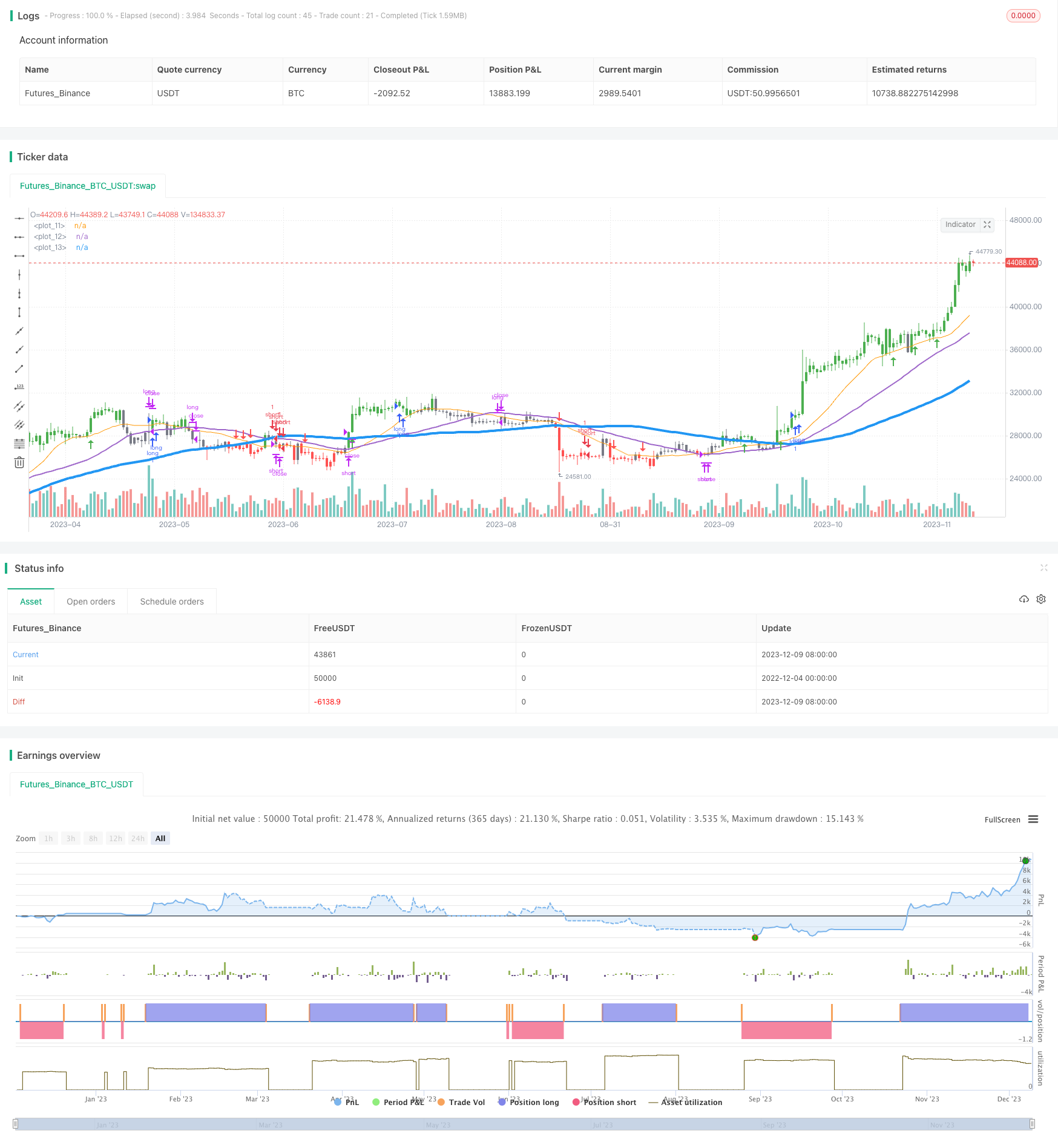
Overview
This strategy uses a combination of moving averages with different periods to establish trends and uses finite difference derivative approximations to predict possible reversals. It works best on hourly charts of less volatile currency pairs.
Strategy Logic
The strategy uses 20-, 40-, and 80-period simple moving averages simultaneously. When the closing price is above these 3 moving averages, it is defined as an uptrend; when the closing price is below these 3 moving averages, it is defined as a downtrend. The trend is confirmed only when the lowest price is above or the highest price is below these 3 moving averages.
To predict possible reversal points, the strategy uses the finite difference derivative approximation of the first derivative of the 40-period simple moving average. When the first derivative is positive, it indicates a stable uptrend; when the first derivative is negative, it indicates a stable downtrend.
The specific trading rules are:
When the fast line is above the middle line and the middle line is above the slow line, and the first derivative > 0, go long;
When the fast line is below the middle line and the middle line is below the slow line, and the first derivative <0, go short;
Close long position when the first derivative <= 0;
Close short position when the first derivative >= 0.
Advantage Analysis
The advantages of this strategy include:
Using multiple moving averages to determine trends makes trend judgment more reliable;
Predicting reversal points with derivatives allows timely stop loss and smaller drawdowns;
The logic is simple and easy to understand, suitable for beginners;
Only trading reversals after trends avoids being trapped and has a higher win rate.
Risk Analysis
There are also some risks with this strategy:
The moving average combination may give wrong signals during range-bound markets;
The derivative reversal signals may lag and cannot completely avoid losses;
Improper stop loss setting may expand losses.
To address these risks, we can optimize the parameters of the moving averages, adjust the stop loss, combine with other indicators to improve the strategy.
Optimization Directions
The strategy can be optimized in the following aspects:
Optimize the moving average periods to better suit different market conditions;
Try different types of moving averages, like EMAs;
Use volatility indicators to set dynamic stops;
Combine other indicators for confirmation to avoid false signals.
Conclusion
This moving average combination trend strategy uses multiple moving averages to determine trend direction and derivatives to predict reversals, which can effectively control risks and is suitable for medium-term trading. The strategy is simple and easy to optimize, making it ideal for beginners to learn and practice trend following strategies. Further optimizations can make the parameters more adaptive to different products for better results.
Source Pine Script
/*backtest
start: 2022-12-04 00:00:00
end: 2023-12-10 00:00:00
period: 1d
basePeriod: 1h
exchanges: [{"eid":"Futures_Binance","currency":"BTC_USDT"}]
*/

//@version=3
strategy("Big 3",overlay=true, default_qty_type=strategy.percent_of_equity)

// enter on Arrows
// take profit on touch with 80 SMA, gray, or at discretion

fast = sma(close,20)
mid = sma(close,40)
slow = sma(close,80)

plot(fast,linewidth=1)
plot(mid,linewidth=2)
plot(slow,linewidth=4)

isUptrend = close > fast and close > mid and close > slow
isDowntrend = close < fast and close < mid and close < slow

confirmed = (low > fast and low > mid and low > slow) or (high < fast and high < mid and high < slow)
deriv = 3 * mid[0] - 4 * mid[1] + mid[2]

stableUptrend = (fast > mid) and (mid > slow) and (deriv > 0)
stableDowntrend = (fast < mid) and (mid < slow) and (deriv < 0)

barcolor(isUptrend ? green : isDowntrend ? red : gray)
plotshape(not confirmed[1] and confirmed and isUptrend ? close : na,style=shape.arrowup,location=location.belowbar,color=green)
plotshape(not confirmed[1] and confirmed and isDowntrend ? close : na,style=shape.arrowdown,location=location.abovebar,color=red)

stop = na
//stop = input(1000, "Stop")


strategy.entry("long", strategy.long, when=(stableUptrend), stop=stop)
strategy.close("long", when=(deriv <= 0))

strategy.entry("short", strategy.short, when=(stableDowntrend), stop=stop)
strategy.close("short", when=(deriv >= 0))
Published by ChaoZhang on the FMZ strategy square · last modified 2023-12-11. Collected in the Quant Trading Vault. Unvalidated research: re-test with your own data and costs before trusting it.
Build this with AgenKit
A spec is not a trading system. Paste this into your coding agent and AgenKit runs a specialist team — architecture, test-first build, risk gates, review — with paper trading on by default.
/agenkit build a production-grade trading bot with a backtest engine, risk controls and paper trading by default from strategies/Derivative-Based-Trend-Strategy.md- npx agenkit install engineering-kit in your project
- Paste the command into your agent and approve each phase
- Get tests, backtest, risk controls and a paper-trading switch
Understand it first
Before you run this, read the lesson behind the idea and how to backtest it honestly. Specs like this one are the survivors of an unknown number of trials; deflate their results accordingly.
Related specs
- ADX MA and EMA Long Only Trend Tracking StrategyPine Script · Trend following · 1d
- ATR and Moving Average Crossover Hybrid StrategyPine Script · Trend following · 1h
- Adaptive FVG Detection and MA Trend Trading Strategy with Dynamic ResistancePine Script · Trend following · 1d
- Adaptive Risk Management Strategy Based on Dynamic ATR and Moving Average CrossoverPine Script · Trend following · 2h
- Adaptive Trading Strategy Based on Stochastic RSI Dual Line CrossoverPine Script · Trend following · 4h
- Adaptive Volatility Based Trend Following Short Strategy with Time Delay and Stop Loss ProtectionPine Script · Trend following · 2m