Double Turtle Breakthrough Strategy
The Double Turtle Breakthrough Strategy integrates the turtle trading breakthrough strategy and Linda Raschke's moving stop loss principle, with excellent breakthrough performance and strict risk control. The…
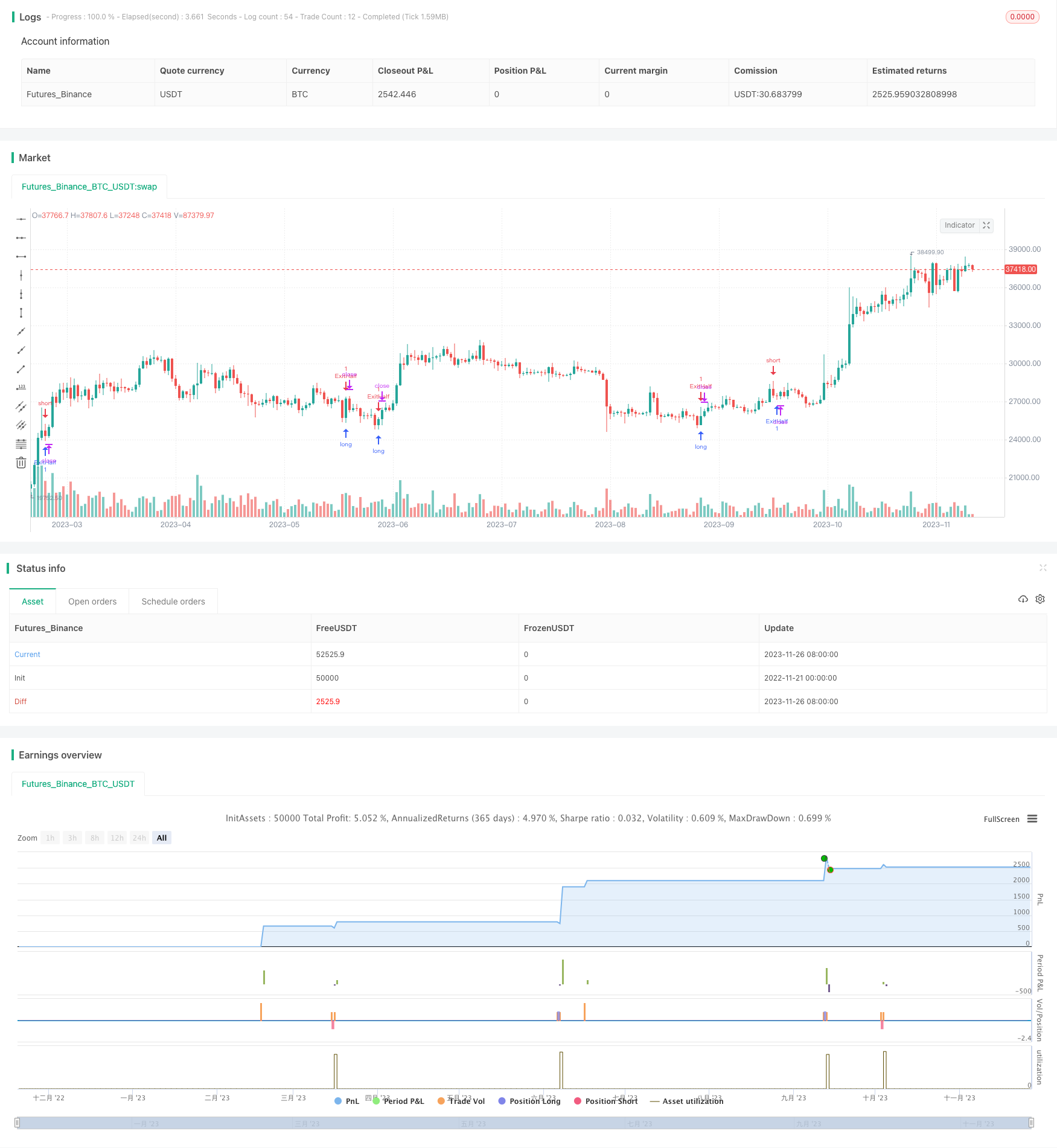
Overview
The Double Turtle Breakthrough Strategy integrates the turtle trading breakthrough strategy and Linda Raschke's moving stop loss principle, with excellent breakthrough performance and strict risk control. The strategy simultaneously monitors the price breakout up and down, establishes long or short positions when a breakthrough occurs, and uses moving stop loss and moving take profit to manage positions.
Strategy Principle
The core logic is to go short when breaking through the small cycle high on the large cycle high point, and go long when breaking through the small cycle low at the large cycle low point. After opening a position, set up a moving stop loss and moving take profit, first stop loss to confirm the risk. When the holding quantity accumulates to the set take profit quantity, cancel the stop loss order in the next cycle, then exit half of the position and set up a moving stop loss and moving take profit to lock in profits and track spreads.
The specific operation steps are:
Calculate the large cycle (20 cycles) high point prevHigh and the small cycle (4 cycles) high point smallPeriodHigh.
When the high of the latest K-line is greater than prevHigh, and prevHigh is greater than smallPeriodHigh, it indicates that the large cycle high point breaks through the small cycle high point. At this time, if there is no position, go short.
After opening a position, set a moving stop loss. Wait for the position to reverse before cancelling the stop loss order to prevent being stopped out.
When the holding quantity reaches the set moving take profit cycle number (currently 0 cycles), exit half of the position in the next cycle, and set up a moving stop loss and moving take profit to track the spread and lock in profits.
For breakthroughs of low points, long positions are established based on breakthrough relationships between large cycle lows and small cycle lows.
Advantage Analysis
This is a highly comprehensive breakthrough strategy with the following advantages:
Combining double cycle turtle trading can effectively identify breakthrough signals.
The use of moving stop loss and moving take profit techniques strictly controls risks and avoids huge losses.
Exiting in two stages, taking profit half position at a time, then fully exiting through moving take profit, locking in profits.
Take into account both long and short operations, matching the characteristics of alternating multi-empty markets.
Excellent backtesting results with strong real trading performance.
Risk Analysis
The main risks and countermeasures are as follows:
Risk of false breakthroughs. Appropriately adjust cycle parameters to ensure breakthrough validity.
Risk of chasing rises and kills falls. Filtering should be combined with trends and patterns to avoid opening positions at the end of trends.
Risk of stop loss being washed out. Appropriately relax the stop loss amplitude to ensure sufficient space.
Risk of overly sensitive moving stop loss. Adjust slippage settings after stop loss to avoid unnecessary stop outs.
Optimization Directions
The strategy can also be optimized in the following aspects:
Add volume breakthrough filters to ensure authenticity of breakthroughs.
Add trend judgment indicators to avoid opening positions at the end of trends.
Combine more time cycles to determine breakthrough timing.
Increase machine learning algorithms for dynamic optimization of parameters.
Combine with other strategies for statistical arbitrage.
Summary
The Double Turtle Breakthrough Strategy comprehensively uses double cycle techniques, breakthrough theories and strict risk management methods to ensure high win rates while ensuring stable returns. This strategy model is simple and clear, easy to understand and apply, and it is an excellent quantitative strategy. This strategy still has great potential for optimization. Investors can innovate on this basis to create even better trading systems.
Parameters
| Name | Default | What it controls |
|---|---|---|
| v_input_1 | 20 | bigPeriod |
| v_input_2 | 4 | smallPeriod |
| v_input_3 | false | takeProfitBars |
| v_input_4 | 5 | Trailing stop percentages |
| v_input_5 | false | Custom Backtesting Dates |
| v_input_6 | 2018 | Backtest Start Year |
| v_input_7 | 3 | Backtest Start Month |
| v_input_8 | 6 | Backtest Start Day |
| v_input_9 | 8 | Backtest Start Hour |
| v_input_10 | 2038 | Backtest Stop Year |
| v_input_11 | 12 | Backtest Stop Month |
| v_input_12 | 14 | Backtest Stop Day |
| v_input_13 | 14 | Backtest Stop Hour |
Source Pine Script
/*backtest
start: 2022-11-21 00:00:00
end: 2023-11-27 00:00:00
period: 1d
basePeriod: 1h
exchanges: [{"eid":"Futures_Binance","currency":"BTC_USDT"}]
*/

//@version=3
strategy(title = "Turtle soup plus one", shorttitle = "Turtle soup plus one", overlay=true)

bigPeriod = input(20)
smallPeriod = input(4)
takeProfitBars = input(0)
trailingStop = input(5, title = "Trailing stop percentages")
if (strategy.position_size == 0)
    strategy.cancel("Long")
    strategy.cancel("Short")
    strategy.cancel("Stop")


stopLossPrice = 0.1
stopLossPrice := nz(stopLossPrice[1])
takeProfitStarted = false
takeProfitStarted := nz(takeProfitStarted[1])

prevHigh = highest(high, bigPeriod - smallPeriod)[smallPeriod]
smallPeriodHigh = highest(high, smallPeriod - 1)[1]
if (high > prevHigh and prevHigh > smallPeriodHigh and close > prevHigh and strategy.position_size == 0)
    strategy.order("Short", strategy.short, stop = prevHigh)

if strategy.position_size < 0 and strategy.position_size[1] == 0
    stopLossPrice := high[1]
    strategy.order("Stop", strategy.long, qty = -strategy.position_size, stop = stopLossPrice)
    takeProfitStarted := false

if (strategy.position_size < 0 and sum(strategy.position_size, takeProfitBars) == strategy.position_size * takeProfitBars and close < strategy.position_avg_price and not takeProfitStarted)
    takeProfitStarted := true
    strategy.cancel("Stop")
    strategy.order("ExitHalf", strategy.long, qty = ceil(-strategy.position_size / 2), stop = close)
    if (strategy.position_size != -1)
        strategy.exit("ExitFull", "Short", qty = -strategy.position_size - ceil(-strategy.position_size / 2), loss = stopLossPrice, trail_price  = close, trail_offset = -(close - strategy.position_avg_price) * trailingStop / 100 / syminfo.mintick)


prevLow = lowest(low, bigPeriod - smallPeriod)[smallPeriod]
smallPeriodLow = lowest(low, smallPeriod - 1)[1]
if (low < prevLow and prevLow < smallPeriodLow and close < prevLow and strategy.position_size == 0)
    strategy.order("Long", strategy.long, stop = prevLow)

if strategy.position_size > 0 and strategy.position_size[1] == 0
    stopLossPrice := low[1]
    strategy.order("Stop", strategy.short, qty = strategy.position_size, stop = stopLossPrice)
    takeProfitStarted := false

if (strategy.position_size > 0 and sum(strategy.position_size, takeProfitBars) == strategy.position_size * takeProfitBars and close > strategy.position_avg_price and not takeProfitStarted)
    takeProfitStarted := true
    strategy.cancel("Stop")
    strategy.order("ExitHalf", strategy.short, qty = ceil(strategy.position_size / 2), stop = close)
    if (strategy.position_size != 1)
        strategy.exit("ExitFull", "Long", qty = strategy.position_size - ceil(strategy.position_size / 2),loss = stopLossPrice, trail_price  = close, trail_offset = (close - strategy.position_avg_price) * trailingStop / 100 / syminfo.mintick)

// === Backtesting Dates ===
testPeriodSwitch = input(false, "Custom Backtesting Dates")
testStartYear = input(2018, "Backtest Start Year")
testStartMonth = input(3, "Backtest Start Month")
testStartDay = input(6, "Backtest Start Day")
testStartHour = input(08, "Backtest Start Hour")
testPeriodStart = timestamp(testStartYear,testStartMonth,testStartDay,testStartHour,0)
testStopYear = input(2038, "Backtest Stop Year")
testStopMonth = input(12, "Backtest Stop Month")
testStopDay = input(14, "Backtest Stop Day")
testStopHour = input(14, "Backtest Stop Hour")
testPeriodStop = timestamp(testStopYear,testStopMonth,testStopDay,testStopHour,0)
testPeriod() =>
    time >= testPeriodStart and time <= testPeriodStop ? true : false
isPeriod = testPeriodSwitch == true ? testPeriod() : true
// === /END
if not isPeriod
    strategy.cancel_all()
strategy.close_all()Published by ChaoZhang on the FMZ strategy square · last modified 2023-11-28. Collected in the Quant Trading Vault. Unvalidated research: re-test with your own data and costs before trusting it.
Build this with AgenKit
A spec is not a trading system. Paste this into your coding agent and AgenKit runs a specialist team — architecture, test-first build, risk gates, review — with paper trading on by default.
/agenkit build a production-grade trading bot with a backtest engine, risk controls and paper trading by default from strategies/Double-Turtle-Breakthrough-Strategy.md- npx agenkit install engineering-kit in your project
- Paste the command into your agent and approve each phase
- Get tests, backtest, risk controls and a paper-trading switch
Understand it first
Before you run this, read the lesson behind the idea and how to backtest it honestly. Specs like this one are the survivors of an unknown number of trials; deflate their results accordingly.
Related specs
- 5 Day Moving Average Channel Breakout Strategy Combined With Mileage ConceptPine Script · Breakout · 1d
- ATR Trailing Stops StrategyPine Script · Breakout · 1h
- ATR Trend Breakout StrategyPine Script · Breakout · 1d
- Adaptive Bollinger Breakout with Moving Average Quantitative Strategy SystemPine Script · Breakout · 1h
- Adaptive Channel Breakout StrategyPine Script · Breakout · 1d
- Adaptive Multi Period Trading Strategy Based on Wave Trend Momentum BreakoutPine Script · Breakout · 2h