Dual direction Volatility Swallowing Strategy
This strategy is a dual-direction trading strategy that tracks volatility. It uses the Average True Range (ATR) indicator to set stop losses and determines the trend direction based on the price breaking through the…
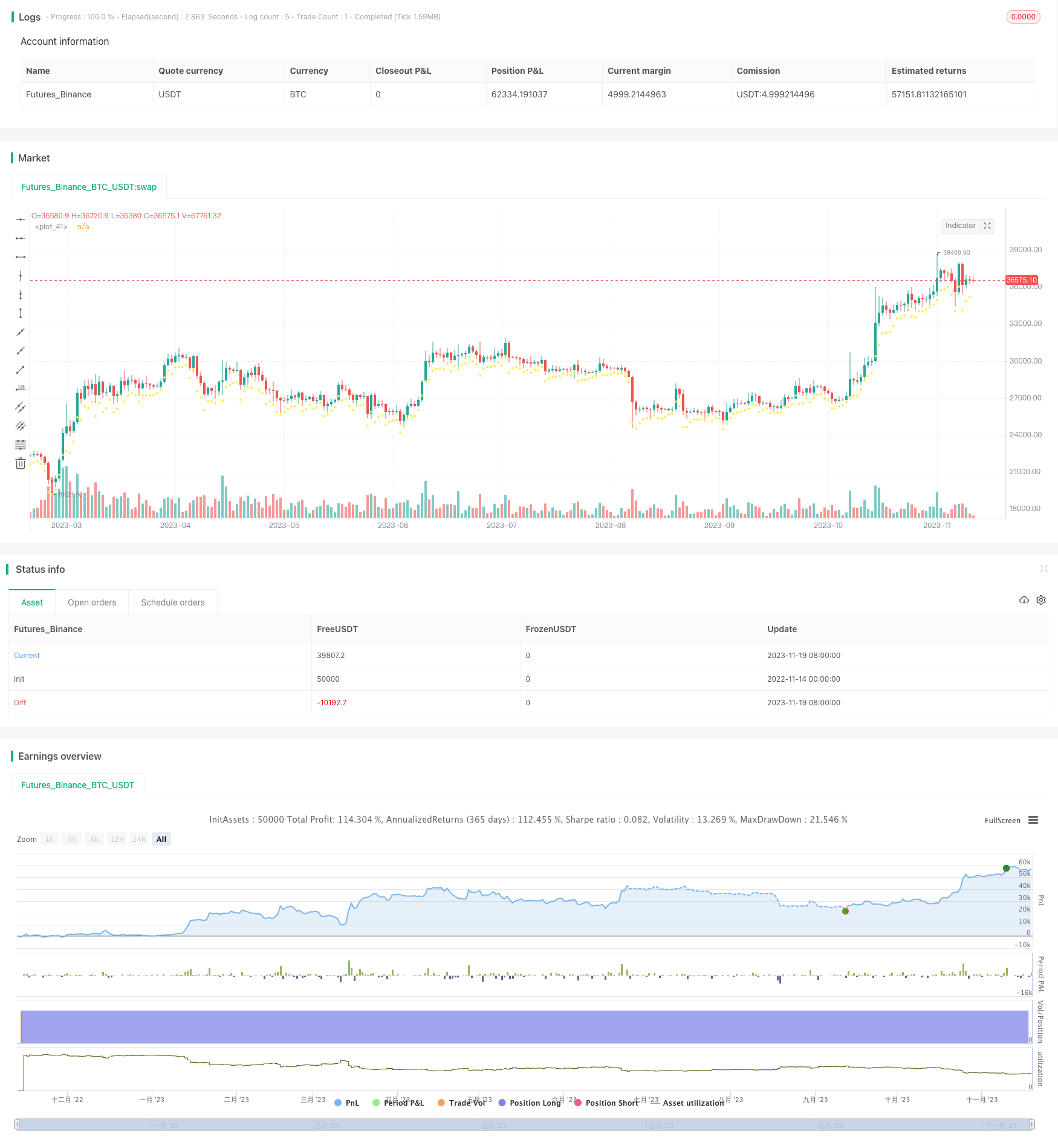
Overview
This strategy is a dual-direction trading strategy that tracks volatility. It uses the Average True Range (ATR) indicator to set stop losses and determines the trend direction based on the price breaking through the stop loss level. It opens reverse positions when the trend direction changes.
Strategy Logic
The strategy uses 3-day ATR to calculate volatility. The ATR value multiplied by a coefficient is used as the stop loss level. When the price is above the stop loss level, it judges it as an uptrend and closes long positions when the price falls below the stop loss level. When the price is below the stop loss level, it judges it as a downtrend and closes short positions when the price rises above the stop loss level. It opens reverse positions when the trend changes. The stop loss level is optimized during trends and reset when trends change.
Advantage Analysis
- Uses ATR to dynamically track market volatility and lower the chance of stop loss being hit
- Dual-direction trading profits from market fluctuation
- Opens reverse positions early in trend changes for higher win rate
Risk Analysis
- Extreme volatility may cause stop loss fails as ATR lags
- GAP risk exists for long positions
- May trade small profits frequently
To mitigate risks: increase ATR coefficient for wider stop levels, limit trade frequency, set minimum take profit levels, etc.
Optimization Directions
- Combine other indicators for trend change signals
- Optimize ATR parameters
- Add trade sizing control
Summary
This is an overall stable dual-direction trailing stop strategy. ATR sets dynamic stop levels to control drawdowns. Dual-direction trading also increases profit chances. Further optimizations can make the strategy more robust, enhancing trend following capabilities.
Parameters
| Name | Default | What it controls |
|---|---|---|
| v_input_1 | true | From Month |
| v_input_2 | true | From Day |
| v_input_3 | 2017 | From Year |
| v_input_4 | 10 | To Month |
| v_input_5 | true | To Day |
| v_input_6 | 2020 | To Year |
| v_input_7 | 3 | length |
| v_input_8 | true | mult |
| v_input_9 | true | Strategy Direction |
Source Pine Script
/*backtest
start: 2022-11-14 00:00:00
end: 2023-11-20 00:00:00
period: 1d
basePeriod: 1h
exchanges: [{"eid":"Futures_Binance","currency":"BTC_USDT"}]
*/

//@version=2
strategy("BCH Swinger v1", overlay=true, commission_value = 0.25, default_qty_type=strategy.percent_of_equity, default_qty_value = 100)

/////////////////////////////////////////////////////////////
//START - SET DATE RANGE

// === BACKTEST RANGE ===
FromMonth = input(defval = 1, title = "From Month", minval = 1)
FromDay   = input(defval = 1, title = "From Day", minval = 1)
FromYear  = input(defval = 2017, title = "From Year")
ToMonth   = input(defval = 10, title = "To Month", minval = 1)
ToDay     = input(defval = 01, title = "To Day", minval = 1)
ToYear    = input(defval = 2020, title = "To Year")

startDate = time > timestamp(FromYear, FromMonth, FromDay, 1, 1)
endDate = time < timestamp(ToYear, ToMonth, ToDay, 23, 59)
withinTimeRange = true

/////////////////////////////////////////////////////////////
//END - SET DATE RANGE


/////////////////////////////////////////////////////////////
//START - INDICATORS

length = input(3)
mult = input(1, minval = 0.01)
atr_ = atr(length)
max1 = max(nz(max_[1]), close)
min1 = min(nz(min_[1]), close)
is_uptrend_prev = nz(is_uptrend[1], true)
stop = is_uptrend_prev ? max1 - mult * atr_ : min1 + mult * atr_
vstop_prev = nz(vstop[1])
vstop1 = is_uptrend_prev ? max(vstop_prev, stop) : min(vstop_prev, stop)
is_uptrend = close - vstop1 >= 0
is_trend_changed = is_uptrend != is_uptrend_prev
max_ = is_trend_changed ? close : max1
min_ = is_trend_changed ? close : min1
vstop = is_trend_changed ? is_uptrend ? max_ - mult * atr_ : min_ + mult * atr_ : vstop1
plot(vstop, color = is_uptrend ? yellow : red, style=circles, linewidth=2)

/////////////////////////////////////////////////////////////
//END - INDICATORS


/////////////////////////////////////////////////////////////
//START - TRADING RULES
direction = input(defval=1, title = "Strategy Direction",  minval=-1, maxval=1)
strategy.risk.allow_entry_in(direction == 0 ? strategy.direction.all : (direction < 0 ? strategy.direction.short : strategy.direction.long))

condition1 = close > vstop and withinTimeRange
condition2 = close < vstop and withinTimeRange

strategy.entry("BUY", strategy.long, when = condition1)
strategy.entry("SELL", strategy.short, when = condition2)

/////////////////////////////////////////////////////////////
//END - TRADING RULESPublished by ChaoZhang on the FMZ strategy square · last modified 2023-11-21. Collected in the Quant Trading Vault. Unvalidated research: re-test with your own data and costs before trusting it.
Build this with AgenKit
A spec is not a trading system. Paste this into your coding agent and AgenKit runs a specialist team — architecture, test-first build, risk gates, review — with paper trading on by default.
/agenkit build a production-grade trading bot with a backtest engine, risk controls and paper trading by default from strategies/Dual-direction-Volatility-Swallowing-Strategy.md- npx agenkit install engineering-kit in your project
- Paste the command into your agent and approve each phase
- Get tests, backtest, risk controls and a paper-trading switch
Understand it first
Before you run this, read the lesson behind the idea and how to backtest it honestly. Specs like this one are the survivors of an unknown number of trials; deflate their results accordingly.
Related specs
- Dual EMA Volatility Adaptive Trading Strategy with Multi Tiered Profit Optimization SystemPine Script · Volatility · 1d
- Dynamic ATR Trailing Stop Trading Strategy Market Volatility Adaptive SystemPine Script · Volatility · 1d
- Multi Indicator Volatility Trading RSI EMA ATR StrategyPine Script · Volatility · 3m
- RWI Volatility Contrarian StrategyPine Script · Volatility · 1h
- Dynamic Volatility Trading System Multi Timeframe Nested Technical Indicator Strategy with Extreme Market Condition Monitoring for FuturesPine Script · Volatility · 1h
- Volatility Stop Tracking StrategyPine Script · Volatility · 1d