Strategy vault / DCA & fixed investment
Dynamic DCA based Cryptocurrency Quantitative Trading Strategy
This is a quantitative trading strategy specifically designed for the cryptocurrency market, leveraging its high volatility characteristics through intelligent Dollar-Cost Averaging (DCA) with dynamic position…
Overview
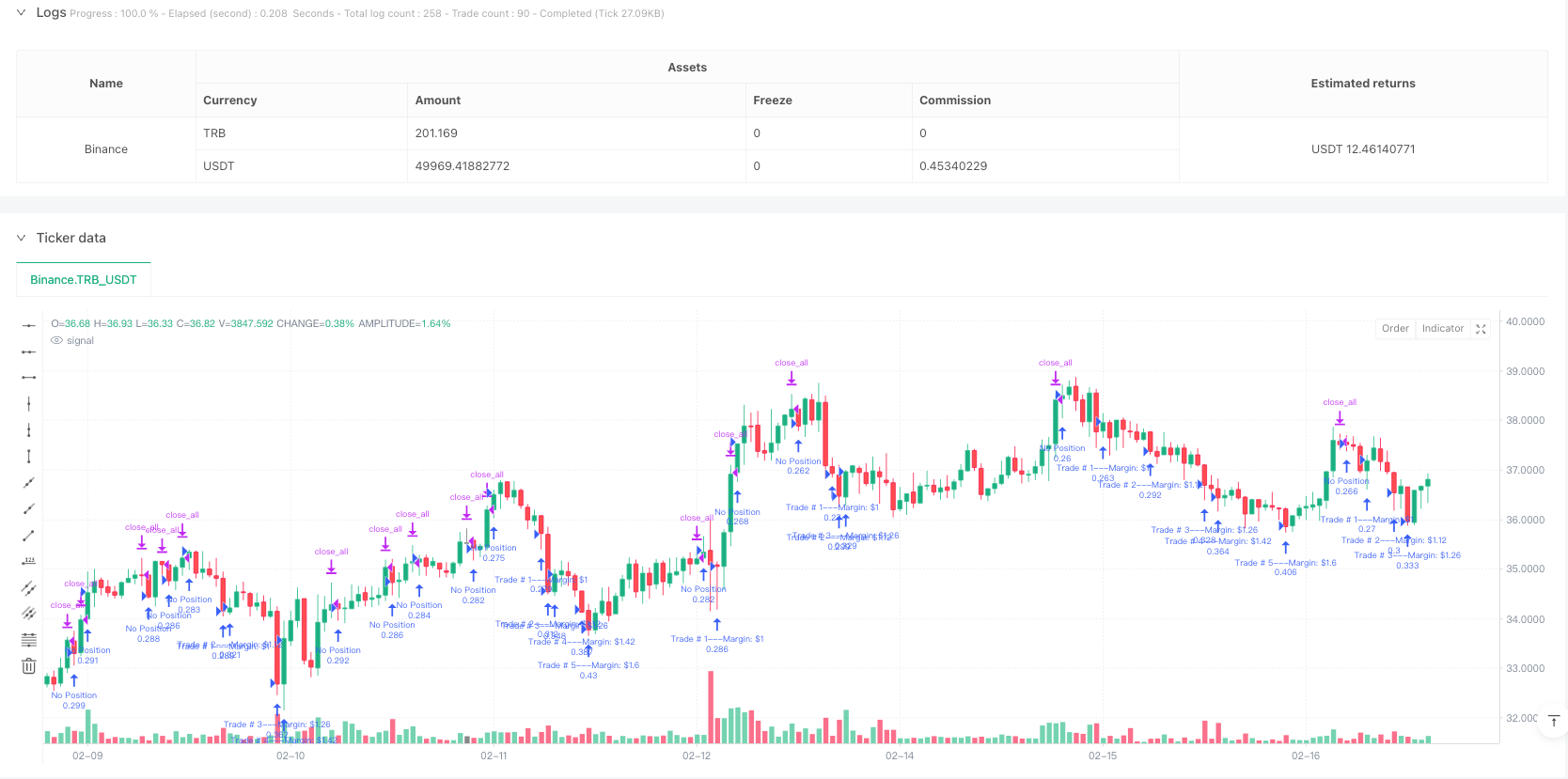
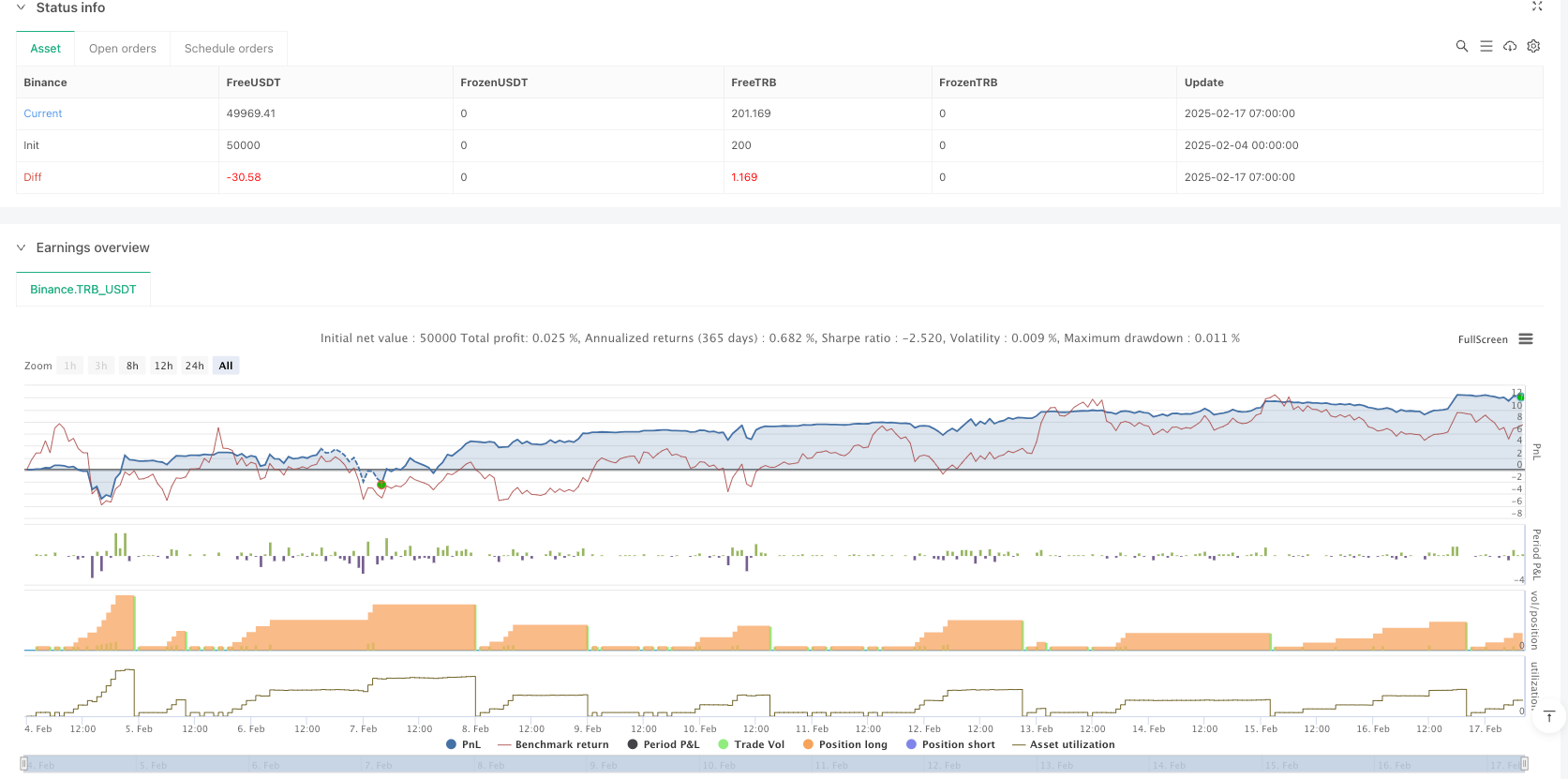
This is a quantitative trading strategy specifically designed for the cryptocurrency market, leveraging its high volatility characteristics through intelligent Dollar-Cost Averaging (DCA) with dynamic position scaling during price retracements. Operating on a 15-minute timeframe, it effectively handles rapid cryptocurrency market fluctuations while avoiding overtrading risks.
Strategy Principles
The strategy consists of four core modules:
- Smart Entry System: Initial position based on OHLC4 weighted average price, adapted to cryptocurrency market volatility
- Dynamic Accumulation Mechanism: Triggers safety orders during price retracements, scaling position size with depth to utilize market volatility
- Risk Management System: Optimizes risk-reward ratio through pyramiding and flexible leverage adjustment
- Rapid Take-Profit Control: Designed for cryptocurrency market's quick fluctuations, including fee optimization
Strategy Advantages
- Market Adaptability: Specifically optimized for cryptocurrency market's high volatility
- Risk Diversification: Reduces sudden risks in cryptocurrency markets through dynamic staged positioning
- Arbitrage Efficiency: Effectively captures profits from cryptocurrency price volatility
- Automated Execution: Supports API integration with major cryptocurrency exchanges
- Capital Efficiency: Improves capital utilization through intelligent leverage management
Strategy Risks
- Market Risk: Extreme cryptocurrency volatility may lead to significant drawdowns
- Liquidity Risk: Some small-cap cryptocurrencies may face insufficient liquidity
- Leverage Risk: High cryptocurrency volatility increases leverage trading risks
- Technical Risk: Depends on exchange API stability and network connection quality
- Regulatory Risk: Cryptocurrency market policy changes may affect strategy execution
Strategy Optimization Directions
- Volatility Adaptation: Introduce cryptocurrency-specific volatility indicators for dynamic parameter adjustment
- Multi-coin Synergy: Develop multi-cryptocurrency trading logic to diversify single-coin risk
- Market Sentiment Filtering: Integrate cryptocurrency market sentiment indicators to optimize entry timing
- Transaction Cost Optimization: Reduce costs through smart routing and exchange selection
- Risk Alert Mechanism: Establish warning system based on market abnormal fluctuations
Summary
The strategy provides a comprehensive automated solution for cryptocurrency trading through innovative DCA methods and dynamic risk management. While cryptocurrency markets carry high risks, the strategy maintains stability in most market conditions through carefully designed risk control mechanisms and market adaptability optimization. Future improvements will focus on enhancing strategy adaptation to cryptocurrency market specificities.
Source Pine Script
/*backtest
start: 2020-08-29 15:00:00
end: 2025-02-18 17:22:45
period: 1h
basePeriod: 1h
exchanges: [{"eid":"Binance","currency":"TRB_USDT"}]
*/

//@version=5
strategy('Autotrade.it DCA', overlay=true, pyramiding=999, default_qty_type=strategy.cash, initial_capital=10000, commission_value=0.02)

// Date Ranges
from_month = 1
from_day = 1
from_year = 2021
to_month = 1
to_day = 1
to_year = 9999
start = timestamp(from_year, from_month, from_day, 00, 00)  // backtest start window
finish = timestamp(to_year, to_month, to_day, 23, 59)  // backtest finish window
window = time >= start and time <= finish ? true : false  // create function "within window of time"

source_type = 'OHLC4'
source_function(type) =>
    if type == 'Close'
        close
    else if type == 'Open'
        open
    else if type == 'High'
        high
    else if type == 'Low'
        low
    else if type == 'HL2'
        hl2
    else if type == 'HL3'
        hlc3
    else if type == 'OHLC4'
        ohlc4
    else if type == 'Median Body'
        (open + close) / 2
    else if type == 'Weighted Close'
        (high + low + 2 * close) / 4
    else if type == 'Trend Biased'
        close > open ? (high + close) / 2 : (low + close) / 2
    else if type == 'Trend Biased Extreme'
        close > open ? high : low
truncate(number, decimals) =>
    factor = math.pow(10, decimals)
    int(number * factor) / factor
// Strategy Inputs
price_deviation = input.float(1.0, title='Price deviation to open safety orders (%)', minval=0.0) / 100
take_profit = 1.0 / 100
base_order = 10.0
safe_order = 10.0
safe_order_volume_scale = 1.1
safe_order_step_scale = 1.1
max_safe_order = 30

var current_so = 0
var initial_order = 0.0
var previous_high_value = 0.0
var original_ttp_value = 0.0
// Calculate our key levels
take_profit_level = strategy.position_avg_price * (1 + take_profit)
startTrade = input.int(defval=1, title='Trade Start')
margin = input.float(title='Margin', defval=1, step=1, tooltip='USDT')
leverage = input.int(title='Leverage', defval=50, tooltip='it only used on futures trade')
multi = 1.125
var float multiplier = 1
symbol = str.replace_all(syminfo.ticker, '.P', '')
var float totalMargin = 0.0
var bool isTrade =false
var float totalPrice = 0.0
var int totalTrade = 0
var float totalQtys = 0
var float sellPrice = 0
var float sellQty = 0


// // First Position
if strategy.position_size == 0 and window and source_function(source_type) > 0 and previous_high_value == 0.0
    strategy.entry('No Position', strategy.long, qty=base_order / source_function(source_type))
    initial_order := source_function(source_type)
    current_so := 1
    previous_high_value := 0.0
    original_ttp_value := 0
    original_ttp_value

threshold = 0.0
if safe_order_step_scale == 1.0
    threshold := initial_order - initial_order * price_deviation * safe_order_step_scale * current_so
    threshold
else
    threshold := initial_order - initial_order * ((price_deviation * math.pow(safe_order_step_scale, current_so) - price_deviation) / (safe_order_step_scale - 1))
    threshold

// Average Down
if current_so > 0 and source_function(source_type) <= threshold and current_so <= max_safe_order and previous_high_value == 0.0
    if(startTrade<=current_so)
        margin := math.round(margin * multiplier * 100) / 100
        multiplier *= multi
        totalMargin += margin
        avePrice = (totalPrice/totalTrade)
        qty = margin*leverage/close
        isTrade := true
        totalPrice+=close
        totalTrade+=1
        totalQtys+=qty
        alert('{"category": "linear", "mode": 3, "tradeMode": 0, "symbol": "' + str.tostring(symbol) + '", "leverage": "' + str.tostring(leverage) + '", "side": "Buy", "orderType": "Market", "marketUnit": "quoteCoin", "qty": "' + str.tostring(margin) + '", "reduceOnly": false, "positionIdx": 1 }')
        strategy.entry('Trade # ' + str.tostring(current_so) +"---Margin: $" + str.tostring(margin), direction=strategy.long, qty=safe_order * math.pow(safe_order_volume_scale, current_so - 1) / source_function(source_type))
    else
        strategy.entry('Trade # ' + str.tostring(current_so) +" No position", direction=strategy.long, qty=safe_order * math.pow(safe_order_volume_scale, current_so - 1) / source_function(source_type))
    current_so += 1
    current_so


// Take Profit!
if take_profit_level <= source_function(source_type) and strategy.position_size > 0 or previous_high_value > 0.0
    if(isTrade)
        avePrice = totalMargin * leverage / totalQtys * 1.002  // Include fee directly
        percentGain = math.round((close - avePrice) / avePrice * 100 * 100) / 100
        gain = math.round(percentGain * leverage * totalMargin / 100 * 100) / 100
        isTrade := false
        sellPrice := avePrice*0.95
        sellQty := totalMargin * leverage/sellPrice
        loop = current_so-1
        testQty = sellQty/loop
        strategy.close_all(comment= "Take Profit: $" + str.tostring(gain))
        alert('{"category": "linear", "mode": 3, "tradeMode": 0, "symbol": "' + str.tostring(symbol) + '", "leverage": "' + str.tostring(testQty) + '", "side": "Sell", "orderType": "Market", "marketUnit": "baseCoin", "qty": "' + str.tostring(sellQty) + '", "reduceOnly": true, "positionIdx": 1, "loop": "' + str.tostring(loop) + '" }')

    else
        strategy.close_all(comment='No Position')
    current_so := 0
    previous_high_value := 0
    original_ttp_value := 0
    multiplier:=1
    totalMargin:=0.0
    totalPrice:=0
    totalTrade:=0
    totalQtys:=0
Published by ianzeng123 on the FMZ strategy square · last modified 2025-02-27. Collected in the Quant Trading Vault. Unvalidated research: re-test with your own data and costs before trusting it.
Build this with AgenKit
A spec is not a trading system. Paste this into your coding agent and AgenKit runs a specialist team — architecture, test-first build, risk gates, review — with paper trading on by default.
/agenkit build a production-grade trading bot with a backtest engine, risk controls and paper trading by default from strategies/Dynamic-DCA-based-Cryptocurrency-Quantitative-Trading-Strategy.md- npx agenkit install engineering-kit in your project
- Paste the command into your agent and approve each phase
- Get tests, backtest, risk controls and a paper-trading switch
Understand it first
Before you run this, read the lesson behind the idea and how to backtest it honestly. Specs like this one are the survivors of an unknown number of trials; deflate their results accordingly.
Related specs
- Dollar Cost Averaging Investment StrategyPine Script · DCA & fixed investment · 1d
- Dynamic Position Building StrategyPine Script · DCA & fixed investment · 1h
- Fibonacci Zone DCA StrategyPine Script · DCA & fixed investment · 1d
- Multi Indicator Confirmation EMA Breakout with DCA and Dynamic Take Profit StrategyPine Script · DCA & fixed investment · 1d
- Bollinger Band and RSI Mixing with DCA StrategyPine Script · DCA & fixed investment · 1d
- DCA Dual Moving Average Turtle Trading StrategyPine Script · DCA & fixed investment · 10m