Dynamic Position Sizing Strategy Based on Equity Curve
The core idea of this strategy is to dynamically adjust position size based on the trend of the equity curve - increase position size during profit and decrease size during loss to control overall risk. The strategy…
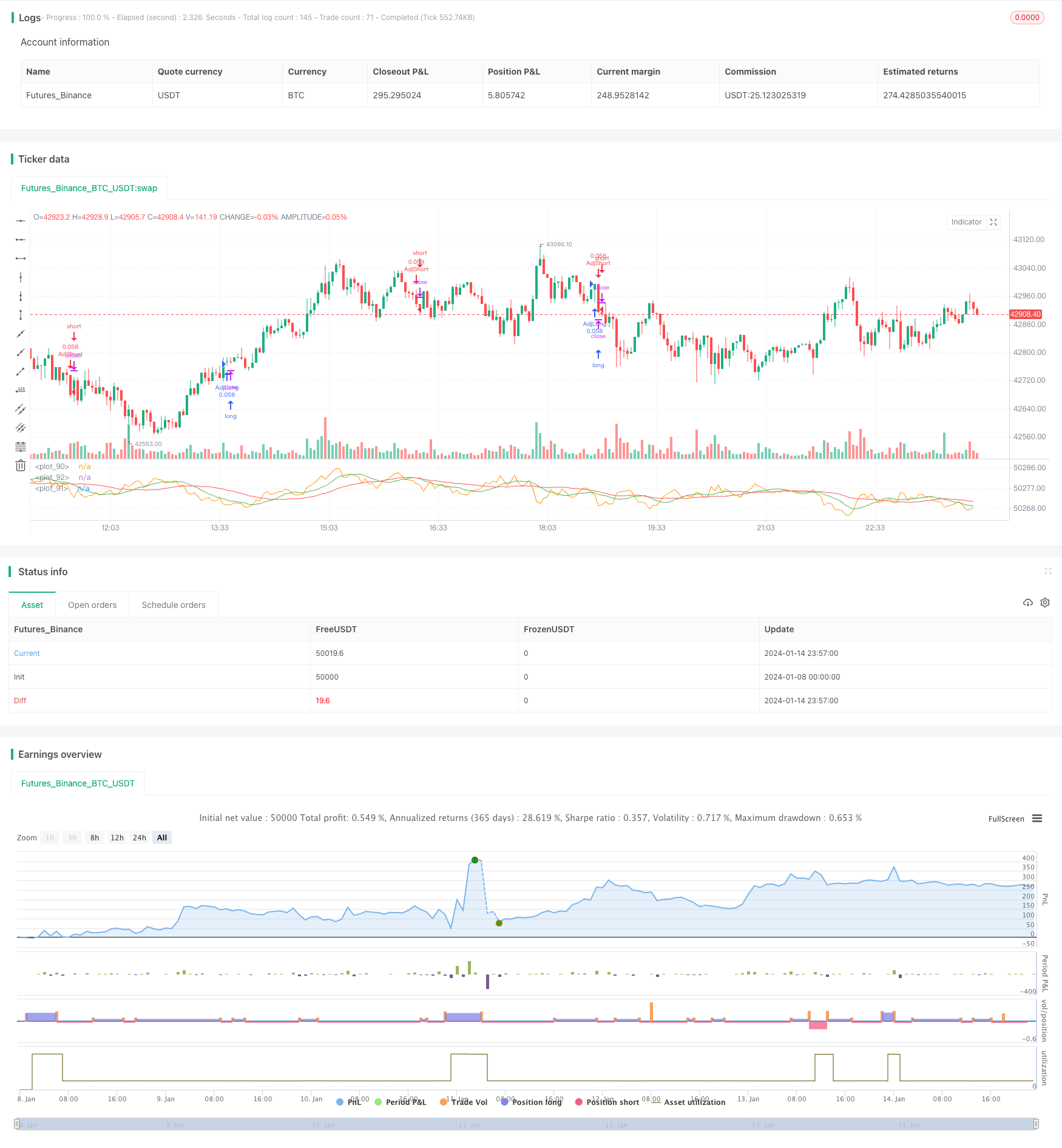
Strategy Overview
The core idea of this strategy is to dynamically adjust position size based on the trend of the equity curve - increase position size during profit and decrease size during loss to control overall risk. The strategy also combines Chande Momentum indicator, SuperTrend indicator and Momentum indicator to identify trading signals.
Strategy Name
Dynamic Position Sizing Strategy Based on Equity Curve
Strategy Logic
The strategy uses two methods to determine if the equity curve is in a downtrend: 1) Calculate fast and slow simple moving averages of the equity curve, if the fast SMA is below the slow one, it is considered a downtrend; 2) Calculate the equity curve against its own longer period simple moving average, if the equity is below the moving average line, it is considered a downtrend.
When equity curve downtrend is determined, the position size will be reduced or increased by a certain percentage based on the settings. For example, if 50% reduction is set, the original 10% position size will be reduced to 5%. This mechanism increases position size during profit and decreases size during loss to control overall risk.
Advantages
- Uses equity curve to judge the overall profit/loss and dynamically adjusts position size to control risk
- Combining multiple indicators to identify entry signals can improve win rate
- Customizable parameters for position adjustment suit different risk appetites
Risks
- Loss can be amplified with increased position size during profit
- Aggressive adjustment due to improper parameter settings
- Position sizing alone cannot completely avoid system risk
Enhancement Directions
- Test effectiveness of different position adjustment parameters
- Try other indicators to determine equity curve trend
- Optimize entry conditions to improve win rate
Conclusion
The overall logic of this strategy is clear - it dynamically adjusts position size based on equity curve, which helps effectively control risk. Further testing and optimization of parameters and stop loss strategies are needed to avoid the risk of aggressive maneuvers.
Parameters
| Name | Default | What it controls |
|---|---|---|
| v_input_bool_1 | true | Use Trading the Equity Curve Position Sizing |
| v_input_float_1 | 10 | Initial % Equity |
| v_input_int_1 | 25 | Slow SMA Period |
| v_input_int_2 | 9 | Fast SMA Period |
| v_input_bool_2 | true | Use Fast/Slow Avg |
| v_input_string_1 | 0 | Position Size Adjustment: Reduce size by (%) | Increase size by (%) |
| v_input_int_3 | 50 | Increase/Decrease % Equity by: |
| v_input_int_4 | 9 | Chande Momentum Length |
| v_input_int_5 | 10 | Chande Momentum Signal |
| v_input_int_6 | 10 | SuperTrend ATR Length |
| v_input_float_2 | 3 | SuperTrend Factor |
| v_input_int_7 | 12 | Momentum Length |
Source Pine Script
/*backtest
start: 2024-01-08 00:00:00
end: 2024-01-15 00:00:00
period: 3m
basePeriod: 1m
exchanges: [{"eid":"Futures_Binance","currency":"BTC_USDT"}]
*/

// This source code is subject to the terms of the Mozilla Public License 2.0 at https://mozilla.org/MPL/2.0/
// © shardison
//@version=5

//EXPLANATION
//"Trading the equity curve" as a risk management method is the
//process of acting on trade signals depending on whether a system's performance
//is indicating the strategy is in a profitable or losing phase.
//The point of managing equity curve is to minimize risk in trading when the equity curve is  in a downtrend.
//This strategy has two modes to determine the equity curve downtrend:
//By creating two simple moving averages of a portfolio's equity curve - a short-term
//and a longer-term one - and acting on their crossings. If the fast SMA is below
//the slow SMA, equity downtrend is detected (smafastequity < smaslowequity).
//The second method is by using the crossings of equity itself with the longer-period SMA (equity < smasloweequity).
//When "Reduce size by %" is active, the position size will be reduced by a specified percentage
//if the equity is "under water" according to a selected rule. If you're a risk seeker, select "Increase size by %"
//- for some robust systems, it could help overcome their small drawdowns quicker.

strategy("Use Trading the Equity Curve Postion Sizing", shorttitle="TEC", default_qty_type = strategy.percent_of_equity, default_qty_value = 10, initial_capital = 100000)

//TRADING THE EQUITY CURVE INPUTS
useTEC           = input.bool(true, title="Use Trading the Equity Curve Position Sizing")
defulttraderule  = useTEC ? false: true
initialsize      = input.float(defval=10.0, title="Initial % Equity")
slowequitylength = input.int(25, title="Slow SMA Period")
fastequitylength = input.int(9, title="Fast SMA Period")
seedequity = 100000 * .10
if strategy.equity == 0
    seedequity
else
    strategy.equity
slowequityseed   = strategy.equity > seedequity ? strategy.equity : seedequity
fastequityseed   = strategy.equity > seedequity ? strategy.equity : seedequity
smaslowequity    = ta.sma(slowequityseed, slowequitylength)
smafastequity    = ta.sma(fastequityseed, fastequitylength)
equitycalc       = input.bool(true, title="Use Fast/Slow Avg", tooltip="Fast Equity Avg is below Slow---otherwise if unchecked uses Slow Equity Avg below Equity")
sizeadjstring    = input.string("Reduce size by (%)", title="Position Size Adjustment", options=["Reduce size by (%)","Increase size by (%)"])
sizeadjint       = input.int(50, title="Increase/Decrease % Equity by:")
equitydowntrendavgs = smafastequity < smaslowequity
slowequitylessequity = strategy.equity < smaslowequity

equitymethod = equitycalc ? equitydowntrendavgs : slowequitylessequity

if sizeadjstring == ("Reduce size by (%)")
    sizeadjdown = initialsize * (1 - (sizeadjint/100))
else
    sizeadjup = initialsize * (1 + (sizeadjint/100))
c = close
qty = 100000 * (initialsize / 100) / c
if useTEC and equitymethod
    if sizeadjstring == "Reduce size by (%)"
        qty := (strategy.equity * (initialsize / 100) * (1 - (sizeadjint/100))) / c
    else
        qty := (strategy.equity * (initialsize / 100) * (1 + (sizeadjint/100))) / c

//EXAMPLE TRADING STRATEGY INPUTS
CMO_Length = input.int(defval=9, minval=1, title='Chande Momentum Length')
CMO_Signal = input.int(defval=10, minval=1, title='Chande Momentum Signal')

chandeMO = ta.cmo(close, CMO_Length)
cmosignal = ta.sma(chandeMO, CMO_Signal)

SuperTrend_atrPeriod = input.int(10, "SuperTrend ATR Length")
SuperTrend_Factor = input.float(3.0, "SuperTrend Factor", step = 0.01)
Momentum_Length = input.int(12, "Momentum Length")
price = close

mom0 = ta.mom(price, Momentum_Length)
mom1 = ta.mom( mom0, 1)
[supertrend, direction] = ta.supertrend(SuperTrend_Factor, SuperTrend_atrPeriod)
stupind = (direction < 0 ? supertrend : na)
stdownind = (direction < 0? na : supertrend)

//TRADING CONDITIONS
longConditiondefault = ta.crossover(chandeMO, cmosignal) and (mom0 > 0 and mom1 > 0 and close > stupind) and defulttraderule
if (longConditiondefault)
    strategy.entry("DefLong", strategy.long, qty=qty)

shortConditiondefault = ta.crossunder(chandeMO, cmosignal) and (mom0 < 0 and mom1 < 0 and close < stdownind) and defulttraderule
if (shortConditiondefault)
    strategy.entry("DefShort", strategy.short, qty=qty)

longCondition = ta.crossover(chandeMO, cmosignal) and (mom0 > 0 and mom1 > 0 and close > stupind) and useTEC
if (longCondition)
    strategy.entry("AdjLong", strategy.long, qty = qty)

shortCondition = ta.crossunder(chandeMO, cmosignal) and (mom0 < 0 and mom1 < 0 and close < stdownind) and useTEC
if (shortCondition)
    strategy.entry("AdjShort", strategy.short, qty = qty)
plot(strategy.equity)
plot(smaslowequity, color=color.new(color.red, 0))
plot(smafastequity, color=color.new(color.green, 0))Published by ChaoZhang on the FMZ strategy square · last modified 2024-01-16. Collected in the Quant Trading Vault. Unvalidated research: re-test with your own data and costs before trusting it.
Build this with AgenKit
A spec is not a trading system. Paste this into your coding agent and AgenKit runs a specialist team — architecture, test-first build, risk gates, review — with paper trading on by default.
/agenkit build a production-grade trading bot with a backtest engine, risk controls and paper trading by default from strategies/Dynamic-Position-Sizing-Strategy-Based-on-Equity-Curve.md- npx agenkit install engineering-kit in your project
- Paste the command into your agent and approve each phase
- Get tests, backtest, risk controls and a paper-trading switch
Understand it first
Before you run this, read the lesson behind the idea and how to backtest it honestly. Specs like this one are the survivors of an unknown number of trials; deflate their results accordingly.
Related specs
- Momentum Trend Following SuperTrend and Stochastic Crossover StrategyPine Script · Momentum · 2d
- Moving Average Candle Regression StrategyPine Script · Momentum · 15m
- Adaptive Momentum Trading Strategy with SMA Crossover and SuperTrendPine Script · Momentum · 2h
- The Momentum Tracking and Trend StrategyPine Script · Momentum · 1d
- Trend Following Strategy Based on Support Resistance and Momentum Indicators Across Multiple TimeframesPine Script · Momentum · 1d
- Momentum Trend Synergy StrategyPine Script · Momentum · 1h