Strategy vault / Trend following
Dynamic Trailing Stop Long Only Trend Following Strategy with Seasonality Filter
This strategy designs a long-only trend following strategy based on the Dynamic Movement Index (DMI), with an Average True Range (ATR) trailing stop loss to control downside risks. It also incorporates trading hours…
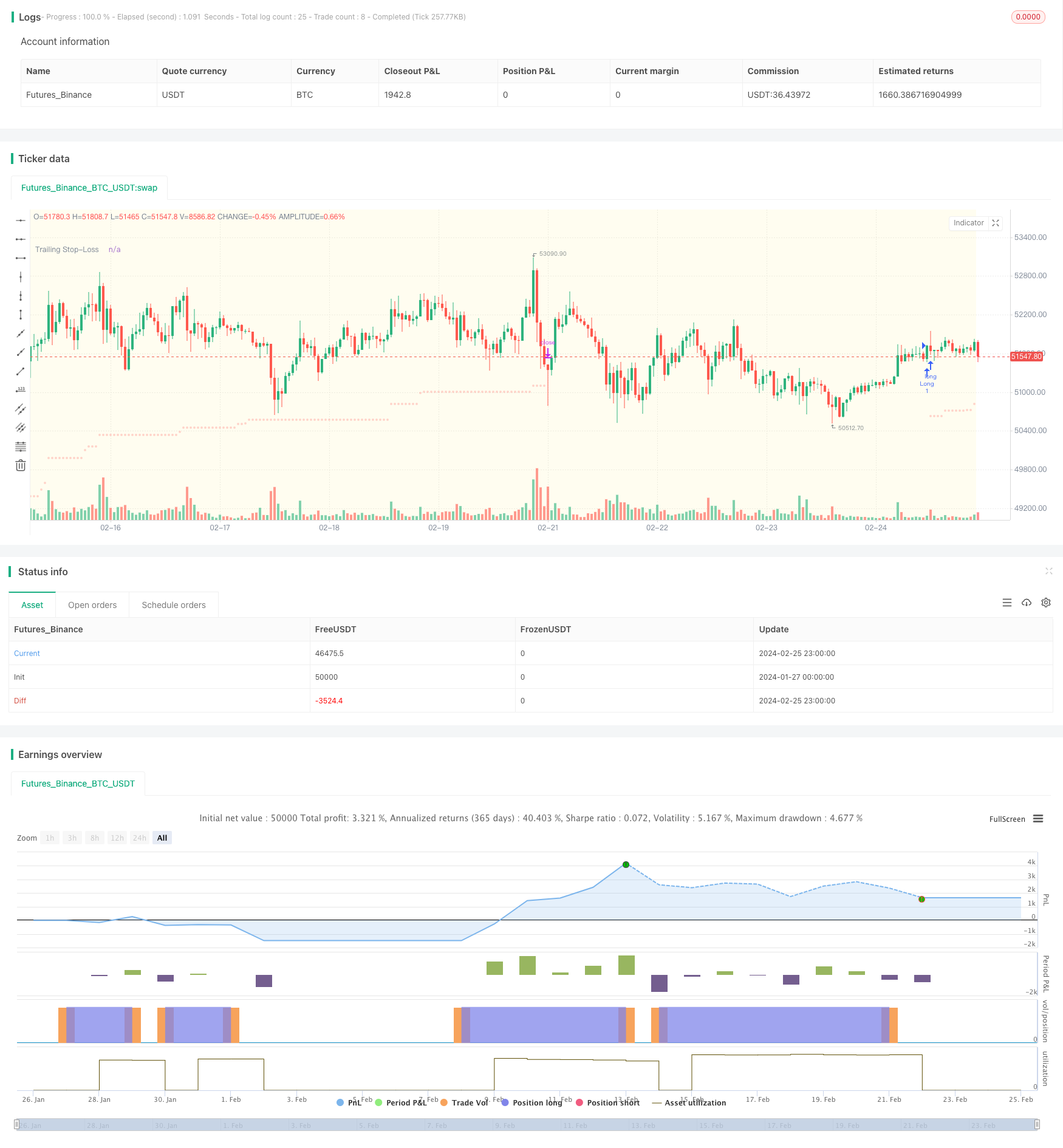
Overview
This strategy designs a long-only trend following strategy based on the Dynamic Movement Index (DMI), with an Average True Range (ATR) trailing stop loss to control downside risks. It also incorporates trading hours and S&P500 seasonality filters for further optimization and edge.
Strategy Logic
The strategy only enters trades on specified trading days (Mon-Fri) and trading hours (default 9:30am - 8:30pm local time).
When ADX is above 27, it signals that the market is in a trend. If the +DI crosses above -DI, a long signal is generated.
After opening a position, the stop loss is set at 5.5 x ATR from the entry price, and it trails upwards as price rises to lock in profits.
Optionally, S&P500 seasonal patterns are enabled, so that trades happen only during historically bullish periods.
Advantage Analysis
Combining trend metrics and stop loss helps effectively ride trends and control loss per trade.
Trading hours and seasonality filters help avoid abnormal volatility and reduce false signals.
DMI and ATR are mature technical indicators with flexibility in parameter tuning suitable for quant optimization.
Risk Analysis
Improper DMI and ATR parameters may lead to too many or too few signals. Parameter tuning is needed.
Stop loss set too wide may cause unnecessary stops. Set too tight may fail to control losses.
Trading hours and seasonality rules may filter some profitable opportunities. Filter effect needs evaluation.
Optimization Directions
Consider combining other indicators like MACD, Bollinger Bands for entry and exit rules.
Test different ATR multiples for stop loss, or dynamic adjustment of stop loss scale.
Test adjusting trading hours, or optimizing seasonal entry and exit dates.
Try applying machine learning methods to auto-tune parameters.
Conclusion
This strategy integrates trend following and risk control techniques to overcome high volatility issues with trend systems. Adding trading hours and seasonal filters further reduces false signals. With parameter tuning and feature expansion, this strategy can achieve more steady profits.
Parameters
| Name | Default | What it controls |
|---|---|---|
| v_input_int_1 | 14 | DI Length |
| v_input_int_2 | 14 | ADX Smoothing |
| v_input_float_1 | 27 | ADX Threshold for Long |
| v_input_int_3 | 14 | ATR Length |
| v_input_float_2 | 5.5 | ATR Multiplier for Trailing SL (Long) |
| v_input_int_4 | 9 | startTime hh |
| v_input_int_5 | 30 | startTime mm |
| v_input_int_6 | 20 | endTime hh |
| v_input_int_7 | 30 | endTime mm |
| v_input_int_8 | true | Timezone Offset (Hours from UTC) |
| v_input_bool_1 | false | Enable SP500 Seasonality |
| v_input_bool_2 | true | Trade on Monday |
| v_input_bool_3 | true | Trade on Tuesday |
| v_input_bool_4 | true | Trade on Wednesday |
| v_input_bool_5 | true | Trade on Thursday |
| v_input_bool_6 | true | Trade on Friday |
Source Pine Script
/*backtest
start: 2024-01-27 00:00:00
end: 2024-02-26 00:00:00
period: 1h
basePeriod: 15m
exchanges: [{"eid":"Futures_Binance","currency":"BTC_USDT"}]
*/

//@version=5
strategy(title="DMI Strategy with ADX and ATR-based Trailing SL (Long Only) and Seasonality", shorttitle="MBV-SP500-CLIMBER", overlay=true)

// Eingabeparameter für Long-Positionen
len = input.int(14, minval=1, title="DI Length")
lensig = input.int(14, title="ADX Smoothing", minval=1, maxval=50)
adxLongThreshold = input.float(27.0, title="ADX Threshold for Long", minval=0)
atrLength = input.int(14, title="ATR Length")
atrLongMultiplier = input.float(5.5, title="ATR Multiplier for Trailing SL (Long)")

startTimeHH = input.int(09, title="startTime hh")
startTimeMM = input.int(30, title="startTime mm")

endTimeHH = input.int(20, title="endTime hh")
endTimeMM = input.int(30, title="endTime mm")

// Zeitzone des Nutzers als Eingabeparameter
timezoneOffset = input.int(1, title="Timezone Offset (Hours from UTC)", minval=-12, maxval=14)


// Zusätzliche Einstellung für SP500-Saisonalität
enableSeasonality = input.bool(false, title="Enable SP500 Seasonality")
seasonColor = color.new(color.blue, 90)
activeTimeColor = color.new(color.yellow, 90) // Farbe für aktive Handelszeiten

// Handelstage und -zeiten
tradeMonday = input.bool(true, title="Trade on Monday")
tradeTuesday = input.bool(true, title="Trade on Tuesday")
tradeWednesday = input.bool(true, title="Trade on Wednesday")
tradeThursday = input.bool(true, title="Trade on Thursday")
tradeFriday = input.bool(true, title="Trade on Friday")

// Konvertierung der Uhrzeit in Unix-Zeitstempel
getUnixTime(hour, minute) =>
    adjustedHour = hour - timezoneOffset
    sessionDate = timestamp(year, month, dayofmonth, 0, 0)
    sessionDate + adjustedHour * 60 * 60000 + minute * 60000

// Start- und Endzeit als Unix-Zeitstempel
// + 1 Stunde wegen UTC
startTime = getUnixTime(startTimeHH, startTimeMM)
endTime = getUnixTime(endTimeHH, endTimeMM)


// Überprüfen, ob der aktuelle Zeitpunkt innerhalb der Handelszeit liegt
isTradingTime() => true

// Saisonale Zeiträume definieren
isSeason(time) =>
    m = month(time)
    d = dayofmonth(time)
    (m == 1 and d >= 1) or (m == 2 and d <= 15) or (m == 3 and d >= 23) or (m == 4 and d <= 17) or (m == 5 and d >= 12) or (m == 6 and d >= 27 and d <= 8) or (m == 7 and d <= 29) or (m == 10 and d >= 15) or (m == 11 and d >= 1) or (m == 12 and d <= 2) or (m == 12 and d >= 20 and d <= 27)

// Hintergrundfarbe für saisonale Bereiche und aktive Handelszeiten
bgcolor(enableSeasonality and isSeason(time) ? seasonColor : na)
bgcolor(isTradingTime() ? color.new(activeTimeColor, 90) : na)

// Berechnung von +DM, -DM, ATR
up = ta.change(high)
down = -ta.change(low)
plusDM = na(up) ? na : (up > down and up > 0 ? up : 0)
minusDM = na(down) ? na : (down > up and down > 0 ? down : 0)
trur = ta.rma(ta.tr, len)
atr = ta.atr(atrLength)

// Berechnung von +DI, -DI und ADX
plus = fixnan(100 * ta.rma(plusDM, len) / trur)
minus = fixnan(100 * ta.rma(minusDM, len) / trur)
sum = plus + minus
adx = 100 * ta.rma(math.abs(plus - minus) / (sum == 0 ? 1 : sum), lensig)

// Logik für LONG Signale unter Berücksichtigung der Saisonalität und Zeitfilter
longSignal = ta.crossover(adx, adxLongThreshold) and plus > minus and isTradingTime()
longSignal := longSignal and (not enableSeasonality or (enableSeasonality and isSeason(time)))


// Variable für Trailing Stop-Loss
var float longTrailingSL = na

// Variablen für die Eröffnungszeit und den Eröffnungspreis der Position
var int openBarIndex = na
var float openPrice = na

// Handelslogik für Long-Positionen
// ohne strategy.position_size == 0 gilt die Kondition für ALLE Signale und nicht nur für das erste
if (longSignal and strategy.position_size == 0)
    strategy.entry("Long", strategy.long)
    openBarIndex := bar_index
    openPrice := close
    longTrailingSL := close - atr * atrLongMultiplier

//if (longSignal)
   //longTrailingSL := close - atr * atrLongMultiplier

// Aktualisierung des Trailing Stop-Loss
if strategy.position_size > 0
    longTrailingSL := math.max(longTrailingSL, close - atr * atrLongMultiplier)

// Ausstieg aus Long-Positionen
strategy.exit("Close Long", "Long", stop=longTrailingSL)

// Anzeige des ATR-basierten Trailing Stops für Long-Positionen
//plot(strategy.position_size > 0 ? longTrailingSL : na, color=color.red, title="ATR Trailing Stop Long")

// Anzeige des ATR-basierten Trailing Stops für Long-Positionen
plot(strategy.position_size > 0 ? longTrailingSL : na, color=color.new(color.red, 75), style=plot.style_circles, linewidth=1, title="Trailing Stop-Loss")


// Wenn eine Position geschlossen wird, zeichnen Sie die Linie
// if strategy.position_size[1] > 0 and strategy.position_size == 0
//     lineColor = longTrailingSL > openPrice ? color.new(color.green, 50) : color.new(color.red, 50) // Hellgrün für Gewinne, Hellrot für Verluste
//     line.new(openBarIndex, openPrice, bar_index, longTrailingSL, width=3, color=lineColor)
Published by ChaoZhang on the FMZ strategy square · last modified 2024-02-27. Collected in the Quant Trading Vault. Unvalidated research: re-test with your own data and costs before trusting it.
Build this with AgenKit
A spec is not a trading system. Paste this into your coding agent and AgenKit runs a specialist team — architecture, test-first build, risk gates, review — with paper trading on by default.
/agenkit build a production-grade trading bot with a backtest engine, risk controls and paper trading by default from strategies/Dynamic-Trailing-Stop-Long-Only-Trend-Following-Strategy-with-Seasonality-Filter.md- npx agenkit install engineering-kit in your project
- Paste the command into your agent and approve each phase
- Get tests, backtest, risk controls and a paper-trading switch
Understand it first
Before you run this, read the lesson behind the idea and how to backtest it honestly. Specs like this one are the survivors of an unknown number of trials; deflate their results accordingly.
Related specs
- Adaptive Dual Strategy System for Trend Following and Range TradingPine Script · Trend following · 1h
- Multi Indicator Trend Following Strategy with Bollinger Bands and ATR Dynamic Stop LossPine Script · Trend following · 1d
- Dual Moving Average Crossover Persistent Uptrend StrategyPine Script · Trend following · 15m
- Dual EMA Crossover Trading Strategy 429465Pine Script · Trend following · 1h
- Indicator Verification Automated Trading StrategyPine Script · Trend following · 10m
- Multi Period Bollinger Bands Crossover Trend Following StrategyPine Script · Trend following · 1h