Dynamic Two way Add Position Strategy
This is a strategy that takes positions in both directions by using signals of strong breakthroughs in both directions. It will choose a direction to open positions after two consecutive strong candlesticks appear in…
Overview
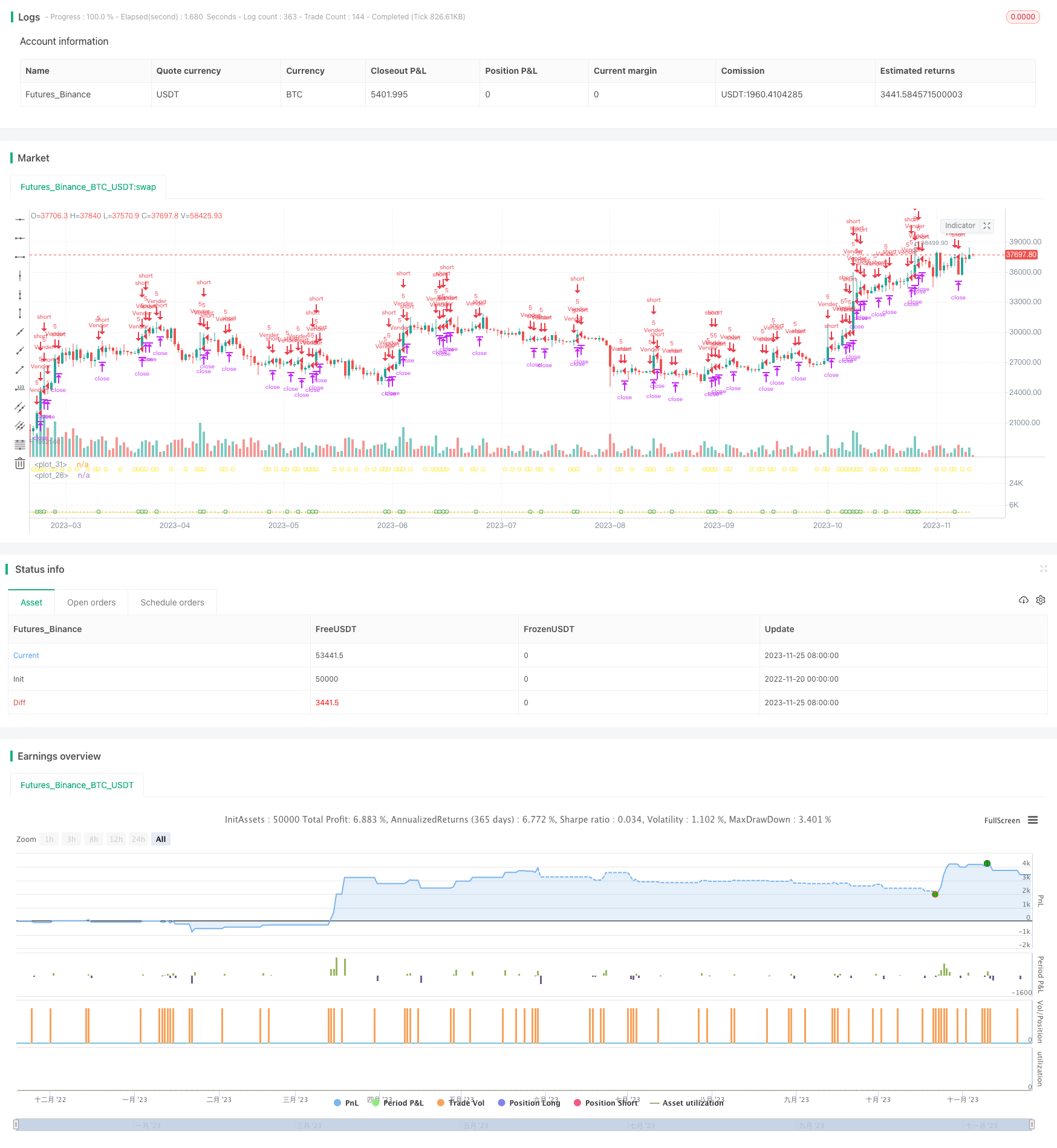
This is a strategy that takes positions in both directions by using signals of strong breakthroughs in both directions. It will choose a direction to open positions after two consecutive strong candlesticks appear in the same direction, then set stop profit and stop loss for risk management.
Strategy Principle
This strategy judges market direction based on the signals of two consecutive strong candlesticks. Specifically, it calculates the increase/decrease percentage of each candlestick. When the increase/decrease percentage of two consecutive candlesticks both exceed the threshold set by user (such as 6%), it determines that the direction is strong, and opens long/short position in the third candlestick.
Long condition: The close prices of two consecutive candlesticks rise over 6% compared to previous close price
Short condition: The close prices of two consecutive candlesticks fall over 6% compared to previous close price
After opening positions, it will set stop profit and stop loss distances to control risks. The stop profit distance is input by user, and the stop loss distance is a multiple (such as 8 times) of the opening price.
This strategy also has some auxiliary functions to control risks, such as only allowing to open positions during specific time periods, setting maximum loss amount, etc.
Advantage Analysis
This is a relatively stable and reliable dual-direction trading strategy. The main advantages are:
Dual-direction trading can obtain profits when market goes up and down, improving stability.
Judging the trend based on two strong signals can effectively filter out noises and improve quality of opened positions.
The settings of stop profit and stop loss are reasonable, which is beneficial for risk control and limits losses.
The auxiliary functions are comprehensive, such as time control, maximum loss control, etc. They can control risks very well.
It is easy to backtest and optimize this strategy as the logic is simple and clear.
Risk Analysis
The main risks of this strategy are:
It is prone to suffering stop loss during market consolidation. We can properly adjust the parameter of first signal to ensure signal quality.
The probability of three consecutive super strong candlesticks is relatively small, which may lead to fewer opportunities to open positions. We can reduce the parameter appropriately but need to balance the signal quality.
Irrational behaviors caused by sudden events may lead to huge losses exceeding the stop loss distance. We need to set maximum loss amount to solve this problem.
For the implementation of dual-direction trading, we need to pay attention to the fund allocation problems, otherwise it may lead to making profits without stop losses.
Optimization Directions
This strategy can be further optimized in the following aspects:
Optimize the logic of first signal judgment to improve signal quality. More factors can be considered such as change of transaction volume, volatility rate etc.
Optimize standards of stop profit and stop loss. Adjust parameters based on different markets to make risk-reward ratio more reasonable. Stop loss distance can also be set as dynamic stop loss.
Add more risk control modules. For example, maximum daily loss, maximum consecutive loss etc. To ensure efficient and safe use of funds.
Optimize allocation ratio of funds, to make the capital allocation of dual-direction trading more reasonable, preventing making profits without stop losses.
Set different parameter combinations for backtesting optimization towards different trading varieties, to improve adaptability.
Summary
This strategy is a relatively robust dual-direction add position strategy. It has high signal quality and certain risk control capabilities. It also has large room for optimization to further improve profit stability. The strategy is suitable for mid-long term trending markets, and it can also seize opportunities during market consolidations.
Parameters
| Name | Default | What it controls |
|---|---|---|
| v_input_1 | 6 | Sinal |
| v_input_2 | 10000 | Sinal |
| v_input_3 | 2021 | Ano |
| v_input_4 | true | Mes |
| v_input_5 | true | Dia |
| v_input_6 | false | hora |
| v_input_7 | false | minuto |
| v_input_8 | 10 | hora Inicio Operacao Robo |
| v_input_9 | 40 | Minuto Encerra Tudo |
| v_input_10 | 17 | hora Fechamento |
| v_input_11 | 50 | Minuto Encerra Novas Operacoes |
| v_input_12 | 50 | Minuto Encerra Tudo |
| v_input_13 | 150000 | Meta de Lucro |
| v_input_14 | 5 | Contratos |
| v_input_15 | 3 | Gain |
| v_input_16 | 8 | Loss |
Source Pine Script
/*backtest
start: 2022-11-20 00:00:00
end: 2023-11-26 00:00:00
period: 1d
basePeriod: 1h
exchanges: [{"eid":"Futures_Binance","currency":"BTC_USDT"}]
*/

//@version=4

strategy(title="GAVAD", shorttitle="GAVAD", overlay=false, initial_capital=36000)

////////////////////////////////////////////////////////
//                                                    //
//                                                    //
//                     GAVAD %                        //
//                                                    //
//                                                    //
////////////////////////////////////////////////////////
Sinal = input(6, title="Sinal", type=input.integer, minval=1, maxval=150)
//Objetivo = input(6, title="Objetivo", type=input.integer, minval=1, maxval=100)
Multip = input(10000, title="Sinal", type=input.integer, minval=1, maxval=100000)


//GavadEntrada1 = (close - low [1])/close[1]
//plot(GavadEntrada1, style=plot.style_line, linewidth=3, color=color.yellow)

//sombra
//DownOL = (low - open ) / open * -10000
//plot(DownOL, style=plot.style_area, linewidth=3, color=color.silver)


// imprime o GAVAD
GavadEntrada = (close - close [1])/close[1] * Multip
plot(GavadEntrada, style=plot.style_histogram, linewidth=3, color=color.purple)

//linha do Sinal
plot(Sinal, style=plot.style_line, linewidth=1, color=color.yellow)
//linha do Objetivo
//plot(Objetivo, style=plot.style_line, linewidth=1, color=color.white)

Fura1 = GavadEntrada [0] >= Sinal
Fura2 = GavadEntrada [1] >= Sinal

Alert = Fura1
plotshape(Alert, style=shape.circle,  location = location.top, color= color.yellow)

SinalON = Fura1 and Fura2
plotshape(SinalON, style=shape.circle,  location = location.bottom, color= color.green)


////////////////////////////////////////////////////////
//                                                    //
//                                                    //
//              CONDIÇÕES DE OPERACAO                 //
//                                                    //
//                                                    //
////////////////////////////////////////////////////////


Sell_Forte2 = SinalON
//plotshape(Sell_Forte2, style=shape.xcross, color=color.yellow, location=location.bottom)

//Call_Forte2 = SinalON
//plotshape(Call_Forte2, style=shape.xcross, color=color.yellow, location=location.top)


////////////////////////////////////////////////////////
//                                                    //
//                                                    //
//                    CALENDARIO                      //
//                                                    //
//                                                    //
////////////////////////////////////////////////////////

//052)
// trading view solicita que se ja informado data para gerar backtest a partir de tal data
//começa backtest do trading sistem em qual data ?

ano = input(2021, minval=1, title="Ano")
mes = input(1, minval=1, maxval=12, title="Mes")
dia = input(1, minval=1, maxval=30, title="Dia")
hora = input(0, minval=1, maxval=23, title="hora")
minuto = input(0, minval=1, maxval=59, title="minuto")
horaabertura = input(10, minval=1, maxval=23, title="hora Inicio Operacao Robo")
minutoabertura = input(40, minval=1, maxval=59, title="Minuto Encerra Tudo")
horaencerra = input(17, minval=1, maxval=23, title="hora Fechamento")
minutoencerra = input(50, minval=1, maxval=59, title="Minuto Encerra Novas Operacoes")
minutofinaliza = input(50, minval=1, maxval=59, title="Minuto Encerra Tudo")


//valida se o dia de hoje é posterior ao dia informado acima
Validadia = year >= ano and month >= mes and dayofmonth >= dia


//cria horario de abertura de negociaçao, considerar default 10 hs, pois os indicadores ja estarão corrigidos
abreloja = year >= ano and month >= mes and dayofmonth >= dia and hour >= horaabertura
//and minute >= minutoabertura)


//cria horario de fechamento de todas as negociaçoes, considerar default 17:00 hs
//nenhuma ordem pode ser aberta depois dessa data e as abertas devem ser fechadas
fechaloja = year >= ano and month >= mes and dayofmonth >= dia and hour >= horaencerra
//and minute >= minutoencerra)

fechaloja2 = year >= ano and month >= mes and dayofmonth >= dia and hour >= horaencerra
//and minute >= minutofinaliza)


//valida horario de negociação, pra liberar as operacoes.
lojaaberta = abreloja == true and fechaloja == false and fechaloja2 == false


////////////////////////////////////////////////////////
//                                                    //
//                                                    //
//             GERENCIAMENTO DE RISCO                 //
//                                                    //
//                                                    //
////////////////////////////////////////////////////////

//seta meta mensal
meta = input(150000, "Meta de Lucro")
Contratos= input(5, "Contratos")

//seta tamanho do lote (ordem inicial-unica)
tamanhodolote = Contratos

//seta stop gain final em pontos (metade da barra anterior)
//gaintotal = input(30, "Gain")
gaintotal = input(3, "Gain")

//seta stop loss final em pontos
lossmaximo = input(8, "Loss")
//lossmaximo = (open- close)*100

////////////////////////////////////////////////////////
//                                                    //
//                     Checkbox                       //
//                                                    //
////////////////////////////////////////////////////////

//ativacomprasretorno = input(title="Ativar Compras Retorno", type=input.bool , defval=true)
//ativavendasretorno = input(title="Ativar Vendas Retorno", type=input.bool , defval=true)


////////////////////////////////////////////////////////
//                                                    //
//                                                    //
//                  COMPRA E VENDA                    //
//                                                    //
//                                                    //
////////////////////////////////////////////////////////

Tradenumber = strategy.closedtrades + 1
Batemeta = strategy.netprofit < meta

//COMPRA RETORNO
//longcondition2 = Validadia and Call_Forte2 and Batemeta


//strategy.entry("Comprar", strategy.long, tamanhodolote, when=longcondition2, comment="[Oper=" + tostring(Tradenumber) + "]win=" + tostring(strategy.wintrades) + " | Loss=" + tostring(strategy.losstrades))
//strategy.exit("Saida Compra", "Comprar", profit=gaintotal, loss=lossmaximo)
//if (CruzamentoFechaCallGG)
    //strategy.close(id="Comprar")
//if (EscapeFechaCall)
  // strategy.close(id="Comprar")


//plotchar(longcondition2, char="C", location=location.bottom, color=color.lime, transp=0)
//alertcondition(longcondition2, "Comprar", "Compra Rápida!")

//VENDA RETORNO
Shortcondition2 = Validadia and Sell_Forte2 and Batemeta

strategy.entry("Vender", strategy.short, tamanhodolote, when=Shortcondition2)
strategy.exit("Fecha Venda", "Vender", profit=gaintotal, loss=lossmaximo)
//if (CruzamentoFechaSellGG)
   // strategy.close(id="Vender")
//if (EscapeFechaSell)
   // strategy.close(id="Comprar")
//plotchar(CruzamentoFechaSellGG, char="Y", location=location.top, color=color.lime, transp=0)

//plotchar(longcondition2, char="S", location=location.bottom, color=color.lime, transp=0)
//alertcondition(longcondition2, "Vender", "Venda Rápida!")

//fim do codigoPublished by ChaoZhang on the FMZ strategy square · last modified 2023-11-27. Collected in the Quant Trading Vault. Unvalidated research: re-test with your own data and costs before trusting it.
Build this with AgenKit
A spec is not a trading system. Paste this into your coding agent and AgenKit runs a specialist team — architecture, test-first build, risk gates, review — with paper trading on by default.
/agenkit build a production-grade trading bot with a backtest engine, risk controls and paper trading by default from strategies/Dynamic-Two-way-Add-Position-Strategy.md- npx agenkit install engineering-kit in your project
- Paste the command into your agent and approve each phase
- Get tests, backtest, risk controls and a paper-trading switch
Understand it first
Before you run this, read the lesson behind the idea and how to backtest it honestly. Specs like this one are the survivors of an unknown number of trials; deflate their results accordingly.
Related specs
- 5 Day Moving Average Channel Breakout Strategy Combined With Mileage ConceptPine Script · Breakout · 1d
- ATR Trailing Stops StrategyPine Script · Breakout · 1h
- ATR Trend Breakout StrategyPine Script · Breakout · 1d
- Adaptive Bollinger Breakout with Moving Average Quantitative Strategy SystemPine Script · Breakout · 1h
- Adaptive Channel Breakout StrategyPine Script · Breakout · 1d
- Adaptive Multi Period Trading Strategy Based on Wave Trend Momentum BreakoutPine Script · Breakout · 2h