Strategy vault / Mean reversion
Dynamic Volatility Index VIDYA with ATR Trend Following Reversal Strategy
This strategy is a trend-following trading system based on the Variable Index Dynamic Average (VIDYA), combined with ATR bands to enhance trend identification and risk management capabilities. The strategy…
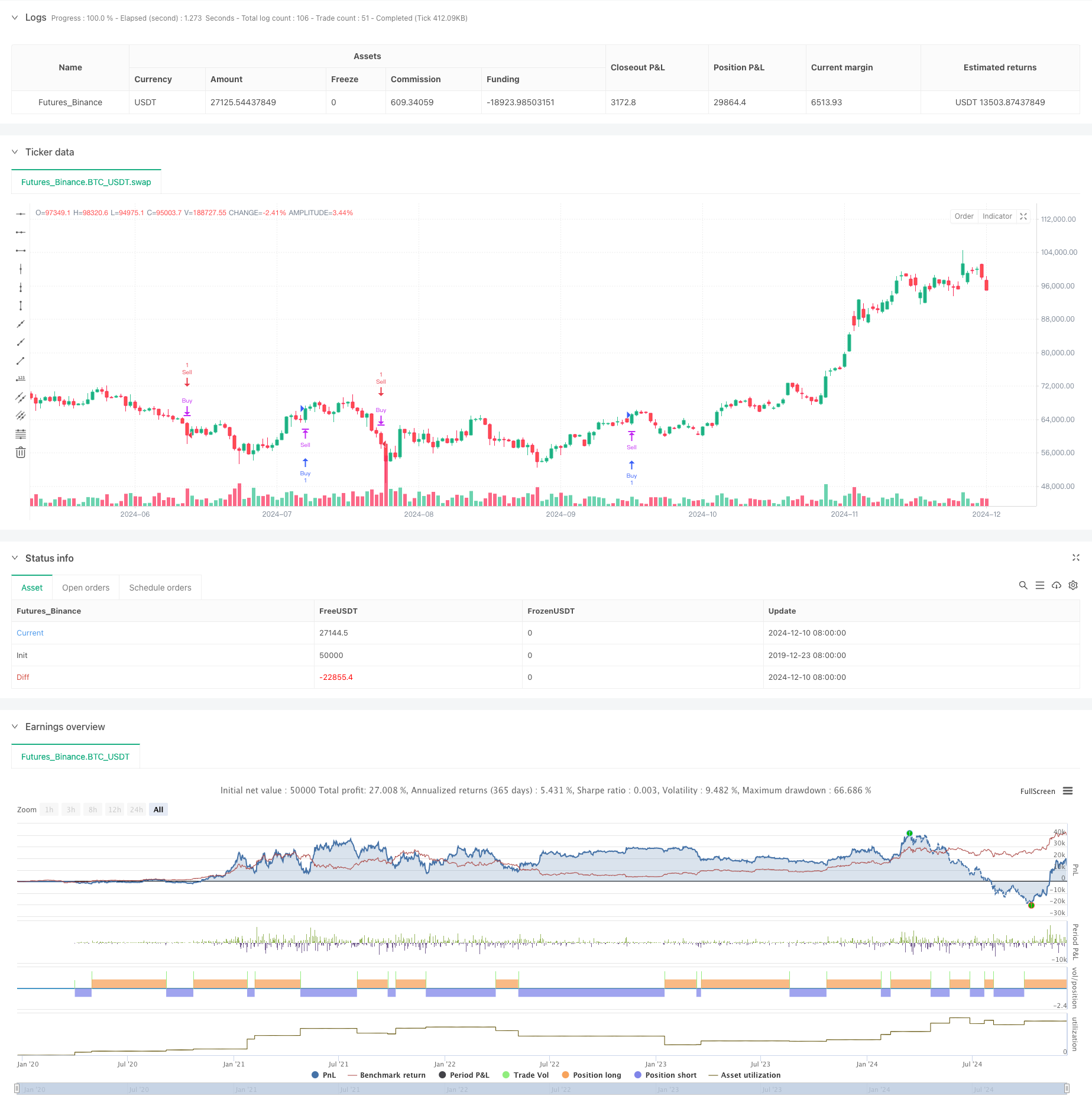
Overview
This strategy is a trend-following trading system based on the Variable Index Dynamic Average (VIDYA), combined with ATR bands to enhance trend identification and risk management capabilities. The strategy dynamically adjusts its response to market volatility while maintaining trend-following capabilities and capturing market reversal signals. The system uses VIDYA as its core indicator and ATR bands for dynamic stop-loss placement.
Strategy Principles
The core principle lies in utilizing VIDYA's dynamic characteristics for trend identification. VIDYA adjusts moving average weights through momentum calculations, providing different sensitivities in various market conditions:
- Uses Chande Momentum Oscillator (CMO) for price momentum calculation
- Calculates adaptive factor alpha based on momentum
- Constructs dynamic volatility bands using ATR
- Generates long signals on upper band breakout and short signals on lower band breakout
- Employs position reversal logic - new signals close existing positions and open new ones
Strategy Advantages
- Strong Dynamic Adaptation: VIDYA automatically adjusts parameters based on market volatility
- Comprehensive Risk Control: Uses ATR dynamic bands for stop-loss adaptation
- Clear Signals: Employs trend reversal logic with distinct trading signals
- Excellent Visualization: Distinguishes upward and downward trends through color coding
- Flexible Parameters: Key parameters can be optimized for different market characteristics
Strategy Risks
- Choppy Market Risk: Prone to false signals in ranging markets
- Slippage Impact: Dual-direction trades on each signal increase slippage exposure
- Money Management Risk: Fixed position sizing may lead to significant losses in volatile markets
- Parameter Sensitivity: Strategy performance heavily depends on VIDYA and ATR parameters
- Market Environment Dependency: Performs well in trending markets but may struggle in others
Optimization Directions
- Add Trend Filters: Implement long-term trend assessment to filter signals in ranging markets
- Improve Position Management: Introduce dynamic position sizing based on market volatility
- Enhance Entry Logic: Add technical indicator confirmation for improved signal reliability
- Refine Stop-Loss Mechanism: Consider trailing stops or volatility-based dynamic stops
- Include Time Filters: Adjust strategy parameters based on different time period characteristics
Summary
This strategy achieves dynamic trend tracking and risk control by combining VIDYA and ATR. Its core strength lies in adapting to market volatility while maintaining trend-following capabilities and capturing reversal opportunities. Though it may face risks in certain market conditions, the strategy maintains practical value through proper parameter optimization and risk management measures. Investors should focus on risk control, appropriate parameter settings, and timely strategy adjustments based on market conditions in live trading.
Source Pine Script
/*backtest
start: 2019-12-23 08:00:00
end: 2024-12-11 08:00:00
period: 1d
basePeriod: 1d
exchanges: [{"eid":"Futures_Binance","currency":"BTC_USDT"}]
*/

// This Pine Script™ code is subject to the terms of the Mozilla Public License 2.0 at https://mozilla.org/MPL/2.0/
// © PakunFX

//@version=5
strategy("VIDYA Auto-Trading(Reversal Logic)", overlay=true)

// INPUTS ――――――――――――――――――――――――――――――――――――――――――――――――――――――――――――――――――――――――――――――――――――――――――
int   vidya_length   = input.int(10, "VIDYA Length")
int   vidya_momentum = input.int(20, "VIDYA Momentum")
float band_distance  = input.float(2, "Distance factor for upper/lower bands", step = 0.1)
float source         = input.source(close, "Source")
color up_trend_color   = input(#17dfad, "+")
color down_trend_color = input(#dd326b, "-")
bool  shadow           = input.bool(true, "Shadow")

// Define VIDYA (Variable Index Dynamic Average) function
vidya_calc(src, vidya_length, vidya_momentum) =>
    float momentum         = ta.change(src)
    float sum_pos_momentum = math.sum((momentum >= 0) ? momentum : 0.0, vidya_momentum)
    float sum_neg_momentum = math.sum((momentum >= 0) ? 0.0 : -momentum, vidya_momentum)
    float abs_cmo          = math.abs(100 * (sum_pos_momentum - sum_neg_momentum) / (sum_pos_momentum + sum_neg_momentum))
    float alpha            = 2 / (vidya_length + 1)
    var float vidya_value  = 0.0
    vidya_value           := alpha * abs_cmo / 100 * src + (1 - alpha * abs_cmo / 100) * nz(vidya_value[1])

    ta.sma(vidya_value, 15)

// Calculate VIDYA
float vidya_value = vidya_calc(source, vidya_length, vidya_momentum)

// Calculate upper and lower bands
float atr_value = ta.atr(200)
float upper_band = vidya_value + atr_value * band_distance
float lower_band = vidya_value - atr_value * band_distance

// Detect trend direction
bool is_trend_up = na
if ta.crossover(source, upper_band)
    is_trend_up := true
if ta.crossunder(source, lower_band)
    is_trend_up := false

// Smooth the trend line
float smoothed_value = na
if is_trend_up
    smoothed_value := lower_band
if not is_trend_up
    smoothed_value := upper_band

// Detect trend change
bool trend_cross_up = ta.crossover(source, upper_band)
bool trend_cross_down = ta.crossunder(source, lower_band)

// ENTRY & EXIT ―――――――――――――――――――――――――――――――――――――――――――――――――――――――――――――――――――――――――――――――――――――
// Long logic: Enter long when down arrow appears and exit when up arrow appears
if trend_cross_up
    strategy.close("Sell")  // Close short position if any
    strategy.entry("Buy", strategy.long)

if trend_cross_down
    strategy.close("Buy")  // Close long position if any
strategy.entry("Sell", strategy.short)Published by ChaoZhang on the FMZ strategy square · last modified 2024-12-13. Collected in the Quant Trading Vault. Unvalidated research: re-test with your own data and costs before trusting it.
Build this with AgenKit
A spec is not a trading system. Paste this into your coding agent and AgenKit runs a specialist team — architecture, test-first build, risk gates, review — with paper trading on by default.
/agenkit build a production-grade trading bot with a backtest engine, risk controls and paper trading by default from strategies/Dynamic-Volatility-Index-VIDYA-with-ATR-Trend-Following-Reversal-Strategy.md- npx agenkit install engineering-kit in your project
- Paste the command into your agent and approve each phase
- Get tests, backtest, risk controls and a paper-trading switch
Understand it first
Before you run this, read the lesson behind the idea and how to backtest it honestly. Specs like this one are the survivors of an unknown number of trials; deflate their results accordingly.
Related specs
- Adaptive Trading Strategy Combining Dynamic Trend Reversal and Stochastic IndicatorPine Script · Mean reversion · 1d
- Advanced Momentum EMA Trend Following with RSI Overbought Oversold Trading StrategyPine Script · Mean reversion · 1d
- Advanced Quantitative Trend Following and Cloud Reversal Composite Trading StrategyPine Script · Mean reversion · 1d
- Advanced Strategy with Volume and Price Pullback Multiple Take ProfitPine Script · Mean reversion · 1h
- Bidirectional Moving Average Reversion Trading StrategyPine Script · Mean reversion · 1h
- Bollinger Bands ATR Risk Reward Trading StrategyPine Script · Mean reversion · 1d