Strategy vault / Machine learning
Gradient Trailing Stop Loss Strategy
The Gradient Trailing Stop Loss strategy dynamically adjusts the stop loss line to balance risk control and profit taking. It uses the Average True Range (ATR) to calculate the stop loss line and effectively tracks…
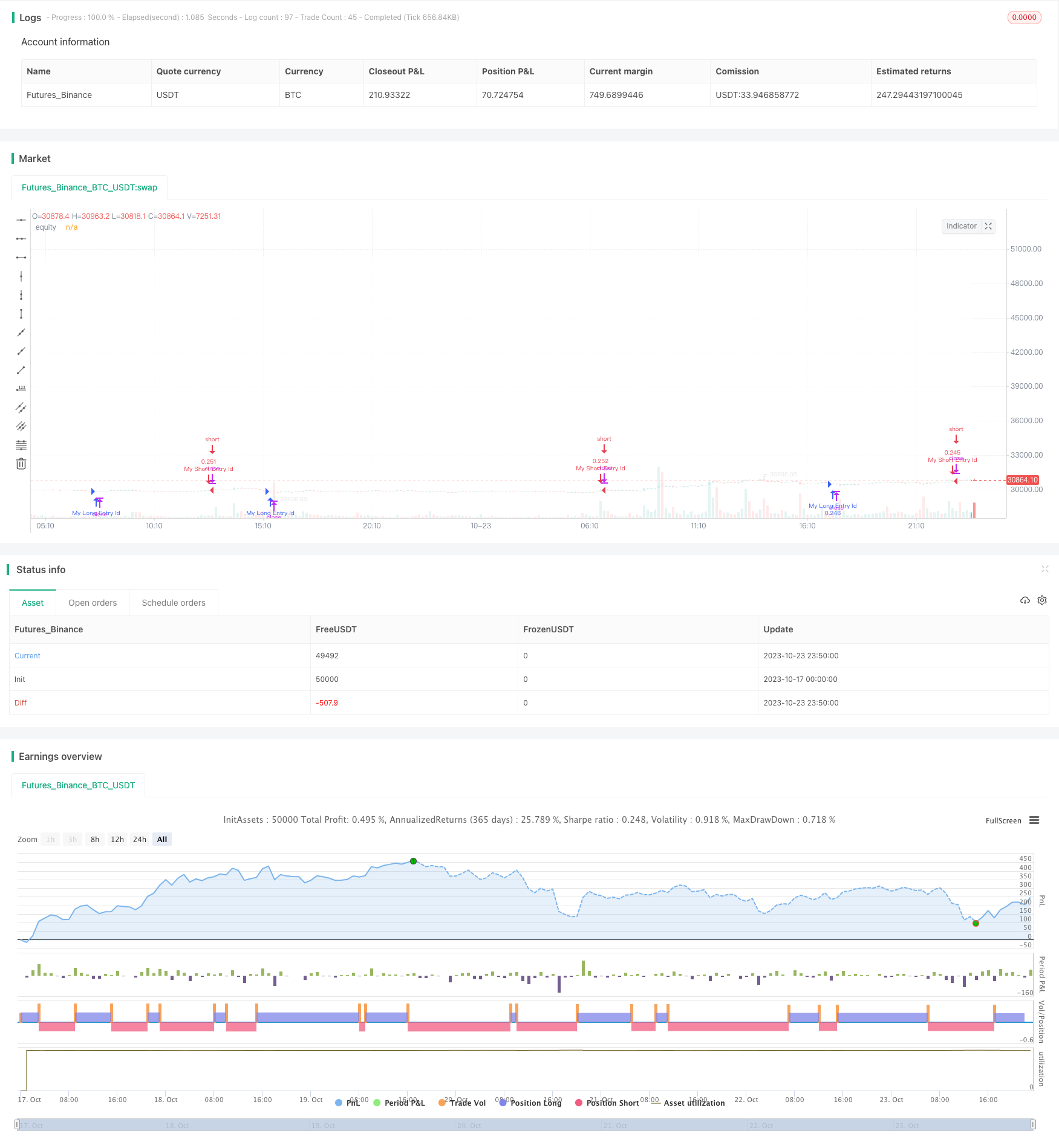
Overview
The Gradient Trailing Stop Loss strategy dynamically adjusts the stop loss line to balance risk control and profit taking. It uses the Average True Range (ATR) to calculate the stop loss line and effectively tracks price trends, protecting profits while reducing unnecessary stop outs. This strategy works well for stocks with strong trends and can generate steady returns.
Principles
The strategy uses the Average True Range (ATR) as the basis for dynamic stop loss. ATR effectively reflects the volatility of a stock. The strategy first takes the ATR period as input, typically 10 days. Then the ATR value is calculated. As the price rises, the stop loss line also moves up to trail the price. When the price drops, the stop loss line remains unchanged to lock in profits. Also, the strategy allows fine tuning the stop loss distance from the price using a "factor" parameter.
Specifically, the strategy calculates the current ATR, then multiplies it by the "factor" to get the stop loss distance. If the price is above the stop loss price, a long position is opened. If the price is below, a short position is opened. Thus, the stop loss line closely follows the price, achieving a gradient trailing effect.
Advantages
- Dynamic trailing stop loss adjusts stop distance based on market conditions
- ATR calculates stop distance based on market volatility
- Simple and easy to automate trading
- Customizable ATR period and stop loss factor for different assets
- Balances between stopping loss and profit taking
- Reduces unnecessary stop outs
Risks
- Choosing proper ATR parameters is crucial
- Stop loss too close may increase unnecessary stop outs
- Stop loss too far may fail to control risks
- Strategy itself cannot determine market trends
- Need to evaluate ATR period and factor settings
Enhancements
- Add filters like moving averages to reduce false signals
- Auto-optimize ATR period and stop loss factor via machine learning
- Incorporate profit taking strategy to lock in profits
- Combine with other indicators to verify buy/sell signals
- Research better ATR calculation or dynamic ATR period
- Explore other dynamic trailing stop algorithms
- Further optimize the stop loss effect
Conclusion
The Gradient Trailing Stop Loss strategy effectively balances risk and profit by dynamically adjusting the stop loss distance. With simple logic and high configurability, it is suitable for algorithmic trading. Proper parameter tuning and indicator combinations still rely on human expertise. Further optimizations can make this strategy even more profitable.
Parameters
| Name | Default | What it controls |
|---|---|---|
| v_input_1 | 2020 | Start Year |
| v_input_2 | true | Start Month |
| v_input_3 | true | Start Day |
| v_input_4 | 9999 | End Year |
| v_input_5 | 12 | End Month |
| v_input_6 | 31 | End Day |
| v_input_7 | 10 | ATR Length |
| v_input_float_1 | 3 | Factor |
Source Pine Script
/*backtest
start: 2023-10-17 00:00:00
end: 2023-10-24 00:00:00
period: 10m
basePeriod: 1m
exchanges: [{"eid":"Futures_Binance","currency":"BTC_USDT"}]
*/

//@version=5
strategy("Supertrend Strategy, by Ho.J.", overlay=true, default_qty_type=strategy.percent_of_equity, default_qty_value=15)

// 백테스팅 시작일과 종료일 입력
startYear = input(2020, title="Start Year")
startMonth = input(1, title="Start Month")
startDay = input(1, title="Start Day")

endYear = input(9999, title="End Year")
endMonth = input(12, title="End Month")
endDay = input(31, title="End Day")

// 백테스팅 시간 범위 확인
backtestingTimeBool = (year >= startYear and month >= startMonth and dayofmonth >= startDay) and (year <= endYear and month <= endMonth and dayofmonth <= endDay)

atrPeriod = input(10, "ATR Length")
factor = input.float(3.0, "Factor", step = 0.01)

[_, direction] = ta.supertrend(factor, atrPeriod)

var bool longCondition = false
var bool shortCondition = false

if backtestingTimeBool
    prevDirection = direction[1]
    if direction < 0
        longCondition := false
        shortCondition := true
    else if direction > 0
        longCondition := true
        shortCondition := false

if longCondition
    strategy.entry("My Long Entry Id", strategy.long)

if shortCondition
    strategy.entry("My Short Entry Id", strategy.short)

plot(strategy.equity, title="equity", color=color.rgb(255, 255, 255), linewidth=2, style=plot.style_area)
Published by ChaoZhang on the FMZ strategy square · last modified 2023-10-25. Collected in the Quant Trading Vault. Unvalidated research: re-test with your own data and costs before trusting it.
Build this with AgenKit
A spec is not a trading system. Paste this into your coding agent and AgenKit runs a specialist team — architecture, test-first build, risk gates, review — with paper trading on by default.
/agenkit build a production-grade trading bot with a backtest engine, risk controls and paper trading by default from strategies/Gradient-Trailing-Stop-Loss-Strategy.md- npx agenkit install engineering-kit in your project
- Paste the command into your agent and approve each phase
- Get tests, backtest, risk controls and a paper-trading switch
Understand it first
Before you run this, read the lesson behind the idea and how to backtest it honestly. Specs like this one are the survivors of an unknown number of trials; deflate their results accordingly.
Related specs
- Machine Learning Adaptive SuperTrend Quantitative Trading StrategyPine Script · Machine learning · 10m
- Comprehensive Futures Automated Trading Strategy for Both Long and ShortPine Script · Machine learning · 1h
- Multi Dynamic Indicator Combination StrategyPine Script · Machine learning · 2d
- AI Optimized Adaptive Stop Loss Trading System with Multiple Technical Indicator IntegrationPine Script · Machine learning · 1h
- Multi indicator Combination StrategyPine Script · Machine learning · 1d
- AI Driven Dynamic Volatility Adaptive Trend Breakout Trading StrategyPine Script · Machine learning · 2d