High Performance Algorithmic Trading Strategy Based on Quantitative Models
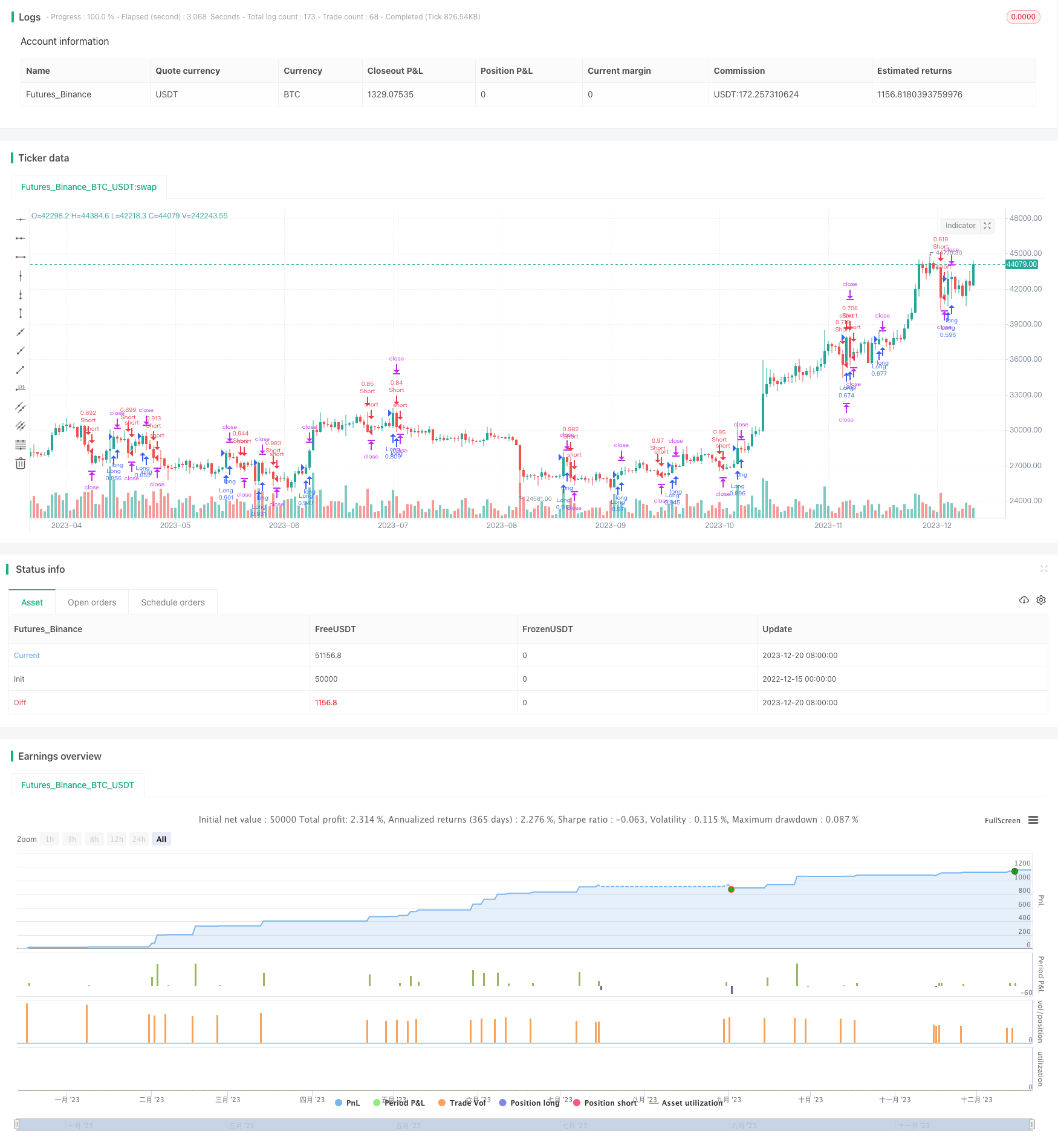
This strategy is a high-performance algorithmic trading strategy based on quantitative models. It uses the Modelius Volume model as the basic model and further extends and optimizes it. This strategy can capture…
Overview
This strategy is a high-performance algorithmic trading strategy based on quantitative models. It uses the Modelius Volume model as the basic model and further extends and optimizes it. This strategy can capture quantitative trading opportunities in the market and achieve steady profits.
Strategy Principle
The core of this strategy is the Modelius Volume model. This model identifies quantitative trading opportunities in the market by detecting price and volume changes. Specifically, the strategy combines close price, open price, highest price, lowest price to calculate the direction of the current K-line based on certain rules. When the K-line direction changes, the quality of the quantitative trading opportunity is judged based on the trading volume. In addition, the strategy also combines the SAR indicator and moving average indicator to assist in determining entry and exit timing.
The basic trading logic is to go long when the indicator breaks through from negative to positive and go short when the indicator breaks through from positive to negative. In addition, stop loss, take profit, trailing stop loss are set up to control risks.
Advantage Analysis
The biggest advantage of this strategy is that the Modelius Volume model can effectively identify quantitative trading opportunities. Compared with traditional technical indicators, this model pays more attention to volume changes, which is very practical in today's high-frequency quantitative trading. In addition, the entry rules of the strategy are relatively strict, which can effectively avoid missing quantitative trading opportunities while reducing the probability of disorder as much as possible.
Risk Analysis
The main risk of this strategy is that the Modelius Volume model itself cannot completely avoid noise. When there is abnormal market fluctuation, it will lead to wrong trading signals. In addition, the parameter settings in the strategy will also affect the final results.
To control risks, parameters can be adjusted accordingly and combined with other indicators for auxiliary judgment. In addition, stop loss and take profit should be set reasonably.
Optimization Directions
There is still room for optimizing this strategy. For example, machine learning algorithms can be considered to dynamically optimize parameter settings. Or combine sentiment analysis and other indicators to improve decision accuracy. In addition, the correlation between different varieties can be studied to establish a multi-variety arbitrage model.
Summary
In summary, this strategy utilizes the advantages of the Modelius Volume quantitative model and designs a set of algorithmic trading strategies with high operability. It can be further optimized and enhanced through parameter tuning, model expansion, machine learning, etc. to obtain relatively good and steady returns in actual trading.
Parameters
| Name | Default | What it controls |
|---|---|---|
| v_input_1 | 0 | Renko Assignment Method: ATR | Traditional | Part of Price |
| v_input_2 | 14 | Value |
| v_input_3 | 0 | Price Source: Close | Open / Close | High / Low |
| v_input_4 | 0 | Use True Range instead of Volume: Auto | Always | Never |
| v_input_5 | true | Oscillating |
| v_input_6 | false | Normalize |
| v_input_7 | false | TP |
| v_input_8 | false | SL |
| v_input_9 | true | TS |
| v_input_10 | 3 | TO |
Source Pine Script
/*backtest
start: 2022-12-15 00:00:00
end: 2023-12-21 00:00:00
period: 1d
basePeriod: 1h
exchanges: [{"eid":"Futures_Binance","currency":"BTC_USDT"}]
*/


//@version=3
strategy(title="strategy modelius volume model ", shorttitle="mvm",overlay=true, calc_on_order_fills=true, default_qty_type=strategy.percent_of_equity, default_qty_value=50, overlay=false)

method = input(defval="ATR", options=["ATR", "Traditional", "Part of Price"], title="Renko Assignment Method")
methodvalue = input(defval=14.0, type=float, minval=0, title="Value")
pricesource = input(defval="Close", options=["Close", "Open / Close", "High / Low"], title="Price Source")
useClose = pricesource == "Close"
useOpenClose = pricesource == "Open / Close" or useClose
useTrueRange = input(defval="Auto", options=["Always", "Auto", "Never"], title="Use True Range instead of Volume")
isOscillating=input(defval=true, type=bool, title="Oscillating")
normalize=input(defval=false, type=bool, title="Normalize")
vol = useTrueRange == "Always" or (useTrueRange == "Auto" and na(volume))? tr : volume
op = useClose ? close : open
hi = useOpenClose ? close >= op ? close : op : high
lo = useOpenClose ? close <= op ? close : op : low

if method == "ATR"
    methodvalue := atr(round(methodvalue))
if method == "Part of Price"
    methodvalue := close/methodvalue

currclose = na
prevclose = nz(currclose[1])
prevhigh = prevclose + methodvalue
prevlow = prevclose - methodvalue
currclose := hi > prevhigh ? hi : lo < prevlow ? lo : prevclose

direction = na
direction := currclose > prevclose ? 1 : currclose < prevclose ? -1 : nz(direction[1])
directionHasChanged = change(direction) != 0
directionIsUp = direction > 0
directionIsDown = direction < 0

barcount = 1
barcount := not directionHasChanged and normalize ? barcount[1] + barcount : barcount
vol := not directionHasChanged ? vol[1] + vol : vol
res = barcount > 1 ? vol/barcount : vol


x=isOscillating and directionIsDown ? -res : res

TP = input(0) * 10
SL = input(0) * 10
TS = input(1) * 10
TO = input(3) * 10
CQ = 100

TPP = (TP > 0) ? TP : na
SLP = (SL > 0) ? SL : na
TSP = (TS > 0) ? TS : na
TOP = (TO > 0) ? TO : na

longCondition = crossover(x,0)
if (longCondition)
    strategy.entry("Long", strategy.long)


shortCondition = crossunder(x,0)
if (shortCondition)
    strategy.entry("Short", strategy.short)

strategy.exit("Close Short", "Short", qty_percent=CQ, profit=TPP, loss=SLP, trail_points=TSP, trail_offset=TOP)
strategy.exit("Close Long", "Long", qty_percent=CQ, profit=TPP, loss=SLP, trail_points=TSP, trail_offset=TOP)Published by ChaoZhang on the FMZ strategy square · last modified 2023-12-22. Collected in the Quant Trading Vault. Unvalidated research: re-test with your own data and costs before trusting it.
Build this with AgenKit
A spec is not a trading system. Paste this into your coding agent and AgenKit runs a specialist team — architecture, test-first build, risk gates, review — with paper trading on by default.
/agenkit build a spread arbitrage engine with WebSocket order routing and leg-risk controls from strategies/High-Performance-Algorithmic-Trading-Strategy-Based-on-Quantitative-Models.md- npx agenkit install engineering-kit in your project
- Paste the command into your agent and approve each phase
- Get tests, backtest, risk controls and a paper-trading switch
Understand it first
Before you run this, read the lesson behind the idea and how to backtest it honestly. Specs like this one are the survivors of an unknown number of trials; deflate their results accordingly.
Related specs
- Time based Strategy with ATR Take ProfitPine Script · Arbitrage · 1h
- Oscillating Market Long StrategyPine Script · Arbitrage · 1d
- Cross Cycle Arbitrage Strategy Based on Multiple IndicatorsPine Script · Arbitrage · 1h
- Triple Moving Average Quantitative Trading Strategy 433095Pine Script · Arbitrage · 1d
- Momentum Tracking Adaptive Statistical Arbitrage StrategyPine Script · Arbitrage · 1d
- RSI Statistical Arbitrage StrategyJavaScript · Arbitrage