Strategy vault / Mean reversion
Momentum TD Reversal Trading Strategy
The Momentum TD Reversal Trading Strategy is a quantitative trading strategy that utilizes the TD Sequential indicator to identify price reversal signals. This strategy is based on momentum analysis and takes long or…
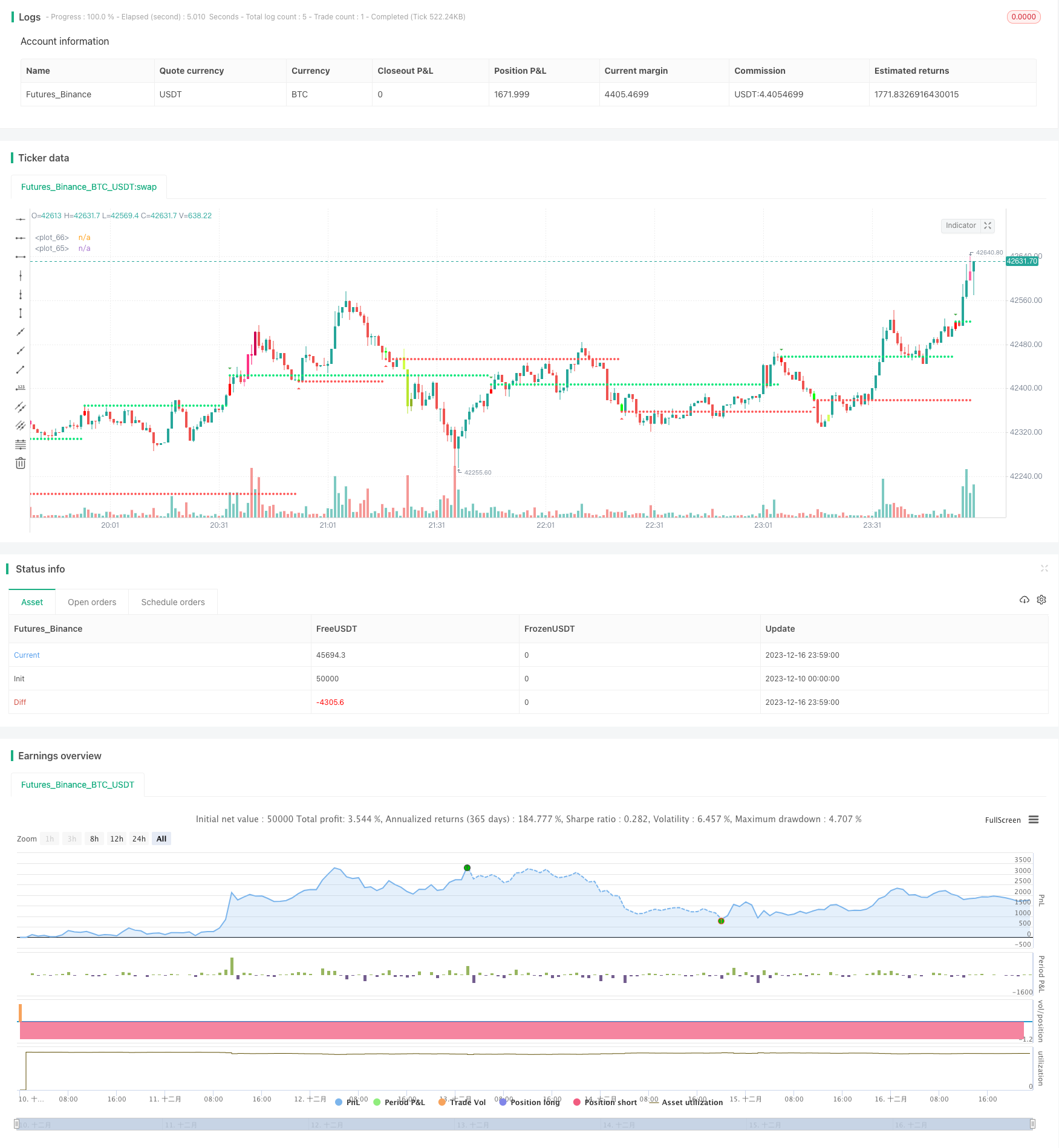
Overview
The Momentum TD Reversal Trading Strategy is a quantitative trading strategy that utilizes the TD Sequential indicator to identify price reversal signals. This strategy is based on momentum analysis and takes long or short positions after confirming the price reversal signals.
Strategy Logic
This strategy uses the TD Sequential indicator to analyze price fluctuations and identify the price reversal pattern after 9 consecutive candlesticks. Specifically, when it detects a downturn candlestick after 9 consecutive rising candlesticks, the strategy determines it as a short opportunity. On the contrary, when it identifies an upturn candlestick after 9 consecutive falling candlesticks, the strategy regards it as a long opportunity.
By leveraging the advantage of the TD Sequential indicator, the strategy can capture price reversal signals ahead of the market. Together with the chase-rise-kill-drop mechanism in this strategy, it can timely establish long or short positions after confirming the reversal signals, so as to obtain relatively better entry opportunities at the beginning stage of price reversals.
Pros Analysis
- Use the TD Sequential indicator to identify price reversal opportunities in advance
- Establish the chase-rise-kill-drop mechanism to determine the confirmation of price reversals more timely
- Enter positions at the forming stage of reversals to obtain relatively better entry points
Risks Analysis
- TD Sequential indicator may have false breakouts. Other factors are needed to confirm the signals
- Appropriately control the position sizing and holding period to mitigate risks
Optimization Directions
- Incorporate other indicators to validate reversal signals to avoid false breakout risks
- Establish stop loss mechanism to control single trade loss
- Optimize position sizing and holding period to balance profit scale and risk management
Conclusion
The Momentum TD Reversal Trading Strategy utilizes the TD Sequential indicator to judge price reversals beforehand and establishes positions swiftly after confirmations, making it very suitable for momentum traders. This strategy has the advantage of identifying reversal opportunities, but still calls for proper risk control to avoid huge losses caused by false breakouts. With further optimizations, it can become a balanced strategy regarding risk-reward ratio.
Parameters
| Name | Default | What it controls |
|---|---|---|
| v_input_1_close | 0 | source: close | high | low | open | hl2 | hlc3 | hlcc4 | ohlc4 |
| v_input_2 | 9 | Count of consecutive bars |
| v_input_3 | false | useLinearRegression |
| v_input_4 | 13 | Linear Regression length |
| v_input_5 | true | Shows Supports and Resistance lines |
| v_input_6 | true | Color bars when there is a signal |
| v_input_7 | false | Transparency of triangle Up or Downs |
| v_input_8 | true | Plot triangle Up or Downs at signal |
| v_input_9 | false | Take Profit Points |
| v_input_10 | false | Stop Loss Points |
| v_input_11 | 100 | Trailing Stop Loss Points |
| v_input_12 | false | Trailing Stop Loss Offset Points |
Source Pine Script
/*backtest
start: 2023-12-10 00:00:00
end: 2023-12-17 00:00:00
period: 1m
basePeriod: 1m
exchanges: [{"eid":"Futures_Binance","currency":"BTC_USDT"}]
*/

//@version=4
//This strategy is based on TD sequential study from glaz.
//I made some improvement and modification to comply with pine script version 4.
//Basically, it is a strategy based on proce action, supports and resistance.

strategy("Sequential Up/Down", overlay=true )
source = input(close)
BarsCount = input(9, "Count of consecutive bars")
useLinearRegression = input(false)
LR_length = input(13,"Linear Regression length")
SR = input(true,"Shows Supports and Resistance lines")
Barcolor = input(true,"Color bars when there is a signal")
transp = input(0, "Transparency of triangle Up or Downs")
Numbers = input(true,"Plot triangle Up or Downs at signal")

//Calculation
src=useLinearRegression?linreg(source,LR_length,0):source
UP = 0
DW = 0
UP := src > src[4] ? nz(UP[1]) + 1 : 0
DW := src < src[4] ? nz(DW[1]) + 1 : 0

UPUp = UP - valuewhen(UP < UP[1], UP, 1)
DWDn = DW - valuewhen(DW < DW[1], DW, 1)

plotshape(Numbers ? UPUp == BarsCount ? true : na : na, style=shape.triangledown, text="", color=color.green, location=location.abovebar, transp=transp)
plotshape(Numbers ? DWDn == BarsCount ? true : na : na, style=shape.triangleup, text="", color=color.red, location=location.belowbar, transp=transp)


// S/R Code By johan.gradin
//------------//
// Sell Setup //
//------------//
priceflip = barssince(src < src[4])
sellsetup = src > src[4] and priceflip
sell = sellsetup and barssince(priceflip != BarsCount)
sellovershoot = sellsetup and barssince(priceflip != BarsCount+4)
sellovershoot1 = sellsetup and barssince(priceflip != BarsCount+5)
sellovershoot2 = sellsetup and barssince(priceflip != BarsCount+6)
sellovershoot3 = sellsetup and barssince(priceflip != BarsCount+7)

//----------//
// Buy setup//
//----------//
priceflip1 = barssince(src > src[4])
buysetup = src < src[4] and priceflip1
buy = buysetup and barssince(priceflip1 != BarsCount)
buyovershoot = barssince(priceflip1 != BarsCount+4) and buysetup
buyovershoot1 = barssince(priceflip1 != BarsCount+5) and buysetup
buyovershoot2 = barssince(priceflip1 != BarsCount+6) and buysetup
buyovershoot3 = barssince(priceflip1 != BarsCount+7) and buysetup

//----------//
// TD lines //
//----------//
TDbuyh = valuewhen(buy, high, 0)
TDbuyl = valuewhen(buy, low, 0)
TDsellh = valuewhen(sell, high, 0)
TDselll = valuewhen(sell, low, 0)

//----------//
//   Plots  //
//----------//

plot(SR ? TDbuyh ? TDbuyl : na : na, style=plot.style_circles, linewidth=1, color=color.red)
plot(SR ? TDselll ? TDsellh : na : na, style=plot.style_circles, linewidth=1, color=color.lime)
barcolor(Barcolor ? sell ? #FF0000 : buy ? #00FF00 : sellovershoot ? #FF66A3 : sellovershoot1 ? #FF3385 : sellovershoot2 ? #FF0066 : sellovershoot3 ? #CC0052 : buyovershoot ? #D6FF5C : buyovershoot1 ? #D1FF47 : buyovershoot2 ? #B8E62E : buyovershoot3 ? #8FB224 : na : na)

//  Strategy: (Thanks to JayRogers)
// === STRATEGY RELATED INPUTS ===
//tradeInvert     = input(defval = false, title = "Invert Trade Direction?")
// the risk management inputs
inpTakeProfit   = input(defval = 0, title = "Take Profit Points", minval = 0)
inpStopLoss     = input(defval = 0, title = "Stop Loss Points", minval = 0)
inpTrailStop    = input(defval = 100, title = "Trailing Stop Loss Points", minval = 0)
inpTrailOffset  = input(defval = 0, title = "Trailing Stop Loss Offset Points", minval = 0)

// === RISK MANAGEMENT VALUE PREP ===
// if an input is less than 1, assuming not wanted so we assign 'na' value to disable it.
useTakeProfit   = inpTakeProfit  >= 1 ? inpTakeProfit  : na
useStopLoss     = inpStopLoss    >= 1 ? inpStopLoss    : na
useTrailStop    = inpTrailStop   >= 1 ? inpTrailStop   : na
useTrailOffset  = inpTrailOffset >= 1 ? inpTrailOffset : na

// === STRATEGY - LONG POSITION EXECUTION ===
enterLong() => buy or buyovershoot or buyovershoot1 or buyovershoot2 or buyovershoot3// functions can be used to wrap up and work out complex conditions
//exitLong() => oscillator <= 0
strategy.entry(id = "Buy", long = true, when = enterLong() )// use function or simple condition to decide when to get in
//strategy.close(id = "Buy", when = exitLong() )// ...and when to get out

// === STRATEGY - SHORT POSITION EXECUTION ===
enterShort() => sell or sellovershoot or sellovershoot2 or sellovershoot3
//exitShort() => oscillator >= 0
strategy.entry(id = "Sell", long = false, when = enterShort())
//strategy.close(id = "Sell", when = exitShort() )

// === STRATEGY RISK MANAGEMENT EXECUTION ===
// finally, make use of all the earlier values we got prepped
strategy.exit("Exit Buy", from_entry = "Buy", profit = useTakeProfit, loss = useStopLoss, trail_points = useTrailStop, trail_offset = useTrailOffset)
strategy.exit("Exit Sell", from_entry = "Sell", profit = useTakeProfit, loss = useStopLoss, trail_points = useTrailStop, trail_offset = useTrailOffset)
Published by ChaoZhang on the FMZ strategy square · last modified 2023-12-18. Collected in the Quant Trading Vault. Unvalidated research: re-test with your own data and costs before trusting it.
Build this with AgenKit
A spec is not a trading system. Paste this into your coding agent and AgenKit runs a specialist team — architecture, test-first build, risk gates, review — with paper trading on by default.
/agenkit build a production-grade trading bot with a backtest engine, risk controls and paper trading by default from strategies/Momentum-TD-Reversal-Trading-Strategy.md- npx agenkit install engineering-kit in your project
- Paste the command into your agent and approve each phase
- Get tests, backtest, risk controls and a paper-trading switch
Understand it first
Before you run this, read the lesson behind the idea and how to backtest it honestly. Specs like this one are the survivors of an unknown number of trials; deflate their results accordingly.
Related specs
- 1 2 3 Pattern Quantitative Trading Strategy with EMAs MACD and 4th Candle ExtensionPine Script · Mean reversion · 1h
- 3 10 Oscillator Profile Flagging StrategyPine Script · Mean reversion · 1d
- A Trend Reversal Strategy Based on Moving Averages Price Patterns and VolumePine Script · Mean reversion · 1d
- ATR and EMA based Dynamic Take Profit and Stop Loss Adaptive StrategyPine Script · Mean reversion · 1h
- Adaptive Mean Reversion Trading Strategy Based on Chande Momentum OscillatorPine Script · Mean reversion · 1d
- Adaptive Moving Average Tracking StrategyPine Script · Mean reversion · 1d