Strategy vault / Trend following
Moving Average Crossover Strategy 430371
The Moving Average Crossover strategy is a momentum strategy that uses the crossover signals of double moving averages to determine the trend direction and generate trading signals. It employs 2 simple moving…
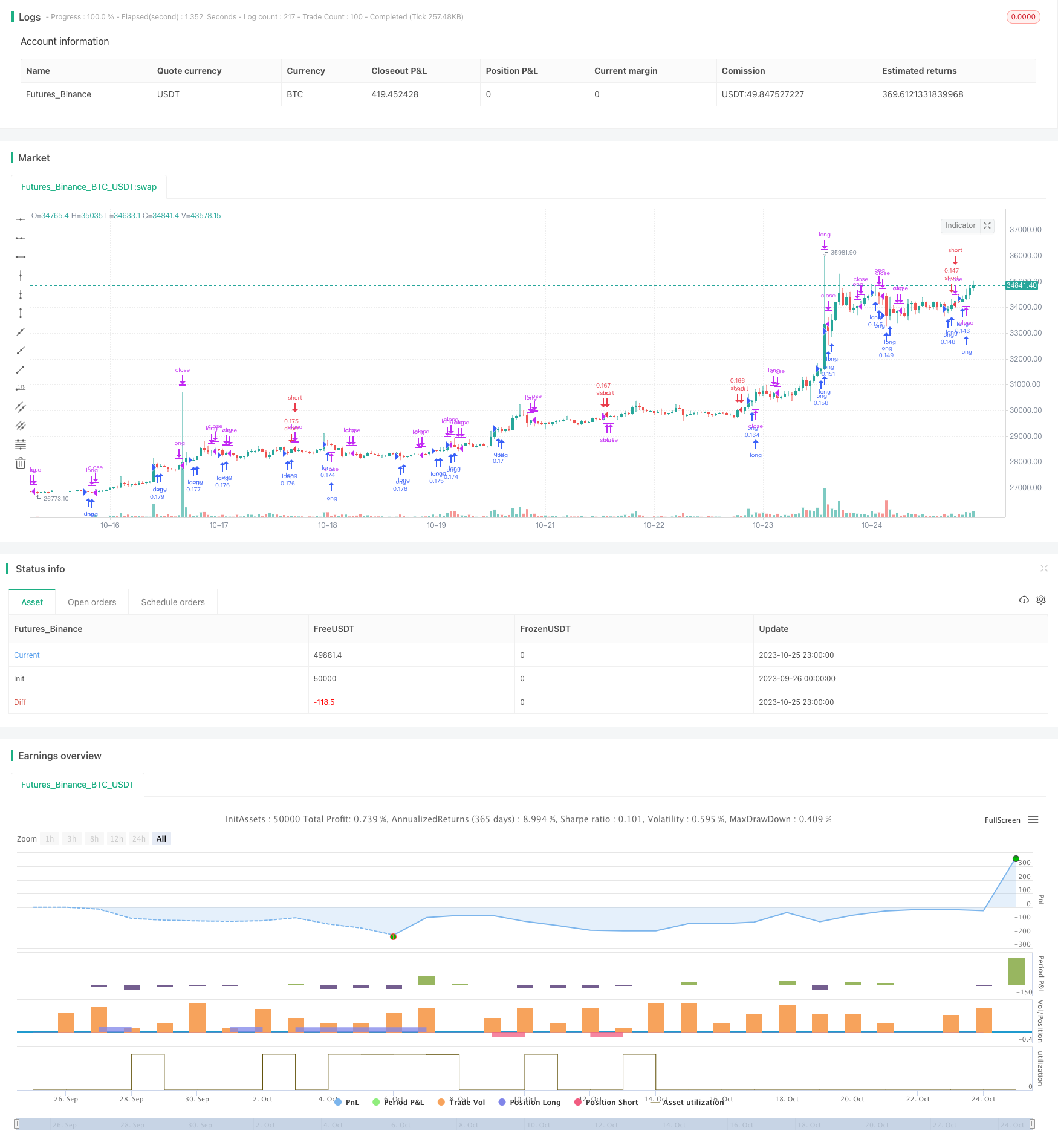
Overview
The Moving Average Crossover strategy is a momentum strategy that uses the crossover signals of double moving averages to determine the trend direction and generate trading signals. It employs 2 simple moving averages and 1 exponential moving average, judging long and short based on their crossover, belonging to a medium-term trading strategy.
Strategy Logic
The strategy uses 3 moving averages:
- EMA1: A shorter period exponential moving average, acting as the fast line
- SMA1: A longer period simple moving average, acting as the slow line
- SMA2: An even longer period simple moving average, determining the trend direction
The strategy judges the trend based on the relationship between EMA1, SMA1 and SMA2:
- Uptrend: EMA1 > SMA1 > SMA2
- Downtrend: EMA1 < SMA1 < SMA2
Entry signals:
- Long entry: When the fast line crosses above the slow line
- Short entry: When the fast line crosses below the slow line
Exit signals:
- Close long: When the fast line crosses below the slow line
- Close short: When the fast line crosses above the slow line
The strategy provides multiple parameter configurations, with customizable moving averages for entry and exit.
Advantage Analysis
The advantages of this strategy:
- Captures momentum: Detects trend changes, momentum strategy
- Flexible configuration: Provides multiple MA choices, flexible parameter tuning
- Trend filtering: Uses long period MA to determine trend, avoids counter-trend trades
- Risk management: Configurable stop loss and take profit controls single trade risk
Risk Analysis
The risks of this strategy:
- Whipsaws: Prolonged choppiness before breakout may cause multiple false signals
- Sensitive to MA parameters: Improper tuning of MA periods may result in over-sensitivity or sluggishness
- Lagging: Inherent lagging nature of moving averages, may miss best entry timing
- No fundamentals: Purely technical indicator driven, no consideration of fundamentals
Whipsaw risk can be mitigated by tuning MA periods; Parameter sensitivity can be solved by optimization; Lagging risk can be reduced by incorporating other leading indicators.
Optimization Directions
Potential optimizations:
- Add other technical filters like RSI, Bollinger Bands to improve signal quality
- Optimize MA periods to find optimum parameters
- Incorporate machine learning models to judge trend and signal reliability
- Consider trading volume to avoid false breakouts in low volume conditions
- Incorporate fundamental factors to avoid trading against economic cycles
Conclusion
The Moving Average Crossover strategy is straight-forward, judging trend and timing by crossing of fast and slow MAs. Its advantage is capturing momentum with flexible configurations, but risks like whipsaw and lagging exist. With optimizations like additional filters, it can become a very practical quantitative trading strategy.
Parameters
| Name | Default | What it controls |
|---|---|---|
| v_input_int_1 | 5 | (?Moving Averages:)Fast EMA |
| v_input_bool_1 | true | Dynamic Exponential Moving Average? |
| v_input_int_2 | 10 | Slow SMA |
| v_input_bool_2 | false | Dynamic Simple Moving Average? |
| v_input_int_3 | 13 | Trend Determining SMA |
| v_input_bool_3 | true | (?Allowed Entries:)Long |
| v_input_bool_4 | true | Short |
| v_input_string_1 | 0 | (?Entry Conditions:)Buy when: Fast-Slow Crossing | Fast-Trend Crossing | Slow-Trend Crossing |
| v_input_bool_5 | true | In trend |
| v_input_string_2 | 0 | Sell when: Fast-Slow Crossing | Fast-Trend Crossing | Slow-Trend Crossing |
| v_input_bool_6 | true | In trend |
| v_input_string_3 | 0 | (?Exit Conditions:)Close long when: Fast-Slow Crossing | Fast-Trend Crossing | Slow-Trend Crossing |
| v_input_string_4 | 0 | Close short when: Fast-Slow Crossing | Fast-Trend Crossing | Slow-Trend Crossing |
| v_input_bool_7 | true | (?Apply Filters to)Long Entries |
| v_input_bool_8 | true | Short Entries |
| v_input_bool_9 | true | Exits |
| v_input_bool_10 | false | (?Relative Volume Filter:)usevol |
| v_input_int_4 | true | Volume > |
| v_input_int_5 | 30 | Avg. Volume Over Period |
| v_input_bool_11 | false | (?Volatility Filter:)useatr |
| v_input_int_6 | 5 | ATR |
| v_input_int_7 | 30 | > ATR |
| v_input_bool_12 | false | (?Overbought/Oversold Filter:)usersi |
| v_input_int_8 | false | rsitrhs1 |
| v_input_int_9 | 100 | < RSI (14) < |
| v_input_bool_13 | false | (?Stop Loss / Take Profit:)SL |
| v_input_float_1 | 10 | , % |
| v_input_bool_14 | false | Trailing |
| v_input_bool_15 | false | TP |
| v_input_float_2 | 20 | , % |
Source Pine Script
/*backtest
start: 2023-09-26 00:00:00
end: 2023-10-26 00:00:00
period: 1h
basePeriod: 15m
exchanges: [{"eid":"Futures_Binance","currency":"BTC_USDT"}]
*/

// This source code is subject to the terms of the Mozilla Public License 2.0 at https://mozilla.org/MPL/2.0/
// © Decam9

//@version=5
strategy(title = "Moving Average Crossover", shorttitle = "MA Crossover Strategy", overlay=true,
     initial_capital = 100000,default_qty_type = strategy.percent_of_equity, default_qty_value = 10)

//Moving Average Inputs
EMA1 = input.int(title="Fast EMA", group = "Moving Averages:",
     inline = "EMAs", defval=5, minval = 1)
isDynamicEMA = input.bool(title = "Dynamic Exponential Moving Average?", defval = true,
     inline = "EMAs", group = "Moving Averages:", tooltip = "Changes the source of the MA based on trend")

SMA1 = input.int(title = "Slow SMA", group = "Moving Averages:",
     inline = "SMAs", defval = 10, minval = 1)
isDynamicSMA = input.bool(title = "Dynamic Simple Moving Average?", defval = false,
     inline = "SMAs", group = "Moving Averages:", tooltip = "Changes the source of the MA based on trend")

SMA2 = input.int(title="Trend Determining SMA", group = "Moving Averages:",
     inline = "MAs", defval=13, minval = 1)

//Moving Averages
Trend = ta.sma(close, SMA2)
Fast = ta.ema(isDynamicEMA ? (close > Trend ? low : high) : close, EMA1)
Slow = ta.sma(isDynamicSMA ? (close > Trend ? low : high) : close, SMA1)

//Allowed Entries
islong = input.bool(title = "Long", group = "Allowed Entries:",
     inline = "Entries",defval = true)
isshort = input.bool(title = "Short", group = "Allowed Entries:",
     inline = "Entries", defval= true)

//Entry Long Conditions
buycond = input.string(title="Buy when", group = "Entry Conditions:",
     inline = "Conditions",defval="Fast-Slow Crossing",
     options=["Fast-Slow Crossing", "Fast-Trend Crossing","Slow-Trend Crossing"])

intrendbuy = input.bool(title = "In trend", defval = true, group = "Entry Conditions:",
     inline = "Conditions", tooltip = "In trend if price is above SMA 2")

//Entry Short Conditions
sellcond = input.string(title="Sell when", group = "Entry Conditions:",
     inline = "Conditions2",defval="Fast-Slow Crossing",
     options=["Fast-Slow Crossing", "Fast-Trend Crossing","Slow-Trend Crossing"])

intrendsell = input.bool(title = "In trend",defval = true, group = "Entry Conditions:",
     inline = "Conditions2", tooltip = "In trend if price is below SMA 2?")

//Exit Long Conditions
closebuy = input.string(title="Close long when", group = "Exit Conditions:",
     defval="Fast-Slow Crossing", options=["Fast-Slow Crossing", "Fast-Trend Crossing","Slow-Trend Crossing"])

//Exit Short Conditions
closeshort = input.string(title="Close short when", group = "Exit Conditions:",
     defval="Fast-Slow Crossing", options=["Fast-Slow Crossing", "Fast-Trend Crossing","Slow-Trend Crossing"])


//Filters
filterlong =input.bool(title = "Long Entries", inline = 'linefilt', group = 'Apply Filters to',
     defval = true)
filtershort =input.bool(title = "Short Entries", inline = 'linefilt', group = 'Apply Filters to',
     defval = true)
filterend =input.bool(title = "Exits", inline = 'linefilt', group = 'Apply Filters to',
     defval = true)
usevol =input.bool(title = "", inline = 'linefiltvol', group = 'Relative Volume Filter:',
     defval = false)
rvol = input.int(title = "Volume >", inline = 'linefiltvol', group = 'Relative Volume Filter:',
     defval = 1)
len_vol = input.int(title = "Avg. Volume Over Period", inline = 'linefiltvol', group = 'Relative Volume Filter:',
     defval = 30, minval = 1,
     tooltip="The current volume must be greater than N times the M-period average volume.")
useatr =input.bool(title = "", inline = 'linefiltatr', group = 'Volatility Filter:',
     defval = false)
len_atr1 = input.int(title = "ATR", inline = 'linefiltatr', group = 'Volatility Filter:',
     defval = 5, minval = 1)
len_atr2 = input.int(title = "> ATR", inline = 'linefiltatr', group = 'Volatility Filter:',
     defval = 30, minval = 1,
     tooltip="The N-period ATR must be greater than the M-period ATR.")
usersi =input.bool(title = "", inline = 'linersi', group = 'Overbought/Oversold Filter:',
     defval = false)
rsitrhs1 = input.int(title = "", inline = 'linersi', group = 'Overbought/Oversold Filter:',
     defval = 0, minval=0, maxval=100)
rsitrhs2 = input.int(title = "< RSI (14) <", inline = 'linersi', group = 'Overbought/Oversold Filter:',
     defval = 100, minval=0, maxval=100,
     tooltip="RSI(14) must be in the range between N and M.")
issl =  input.bool(title = "SL", inline = 'linesl1', group = 'Stop Loss / Take Profit:',
     defval = false)
slpercent =  input.float(title = ", %", inline = 'linesl1', group = 'Stop Loss / Take Profit:',
     defval = 10, minval=0.0)
istrailing =  input.bool(title = "Trailing", inline = 'linesl1', group = 'Stop Loss / Take Profit:',
     defval = false)
istp =  input.bool(title = "TP", inline = 'linetp1', group = 'Stop Loss / Take Profit:',
     defval = false)
tppercent =  input.float(title = ", %", inline = 'linetp1', group = 'Stop Loss / Take Profit:',
     defval = 20)

//Conditions for Crossing
fscrossup = ta.crossover(Fast,Slow)
fscrossdw = ta.crossunder(Fast,Slow)
ftcrossup = ta.crossover(Fast,Trend)
ftcrossdw = ta.crossunder(Fast,Trend)
stcrossup = ta.crossover(Slow,Trend)
stcrossdw = ta.crossunder(Slow,Trend)

//Defining in trend
uptrend = Fast >= Slow and Slow >= Trend
downtrend = Fast <= Slow and Slow <= Trend
justCrossed = ta.cross(Fast,Slow) or ta.cross(Slow,Trend)


//Entry Signals
crosslong = if intrendbuy
    (buycond =="Fast-Slow Crossing" and uptrend ? fscrossup:(buycond =="Fast-Trend Crossing" and uptrend ? ftcrossup:(buycond == "Slow-Trend Crossing" and uptrend ? stcrossup : na)))
else
    (buycond =="Fast-Slow Crossing"?fscrossup:(buycond=="Fast-Trend Crossing"?ftcrossup:stcrossup))

crossshort = if intrendsell
    (sellcond =="Fast-Slow Crossing" and downtrend ? fscrossdw:(sellcond =="Fast-Trend Crossing" and downtrend ? ftcrossdw:(sellcond == "Slow-Trend Crossing" and downtrend ? stcrossdw : na)))
else
    (sellcond =="Fast-Slow Crossing"?fscrossdw:(buycond=="Fast-Trend Crossing"?ftcrossdw:stcrossdw))
crossexitlong = (closebuy =="Fast-Slow Crossing"?fscrossdw:(closebuy=="Fast-Trend Crossing"?ftcrossdw:stcrossdw))
crossexitshort = (closeshort =="Fast-Slow Crossing"?fscrossup:(closeshort=="Fast-Trend Crossing"?ftcrossup:stcrossup))


// Filters
rsifilter = usersi?(ta.rsi(close,14) > rsitrhs1 and ta.rsi(close,14) < rsitrhs2):true
volatilityfilter = useatr?(ta.atr(len_atr1) > ta.atr(len_atr2)):true
volumefilter = usevol?(volume > rvol*ta.sma(volume,len_vol)):true
totalfilter = volatilityfilter and volumefilter and rsifilter

//Filtered signals
golong  = crosslong  and islong  and (filterlong?totalfilter:true)
goshort = crossshort and isshort and (filtershort?totalfilter:true)
endlong  = crossexitlong and (filterend?totalfilter:true)
endshort = crossexitshort and (filterend?totalfilter:true)

// Entry price and TP
startprice = ta.valuewhen(condition=golong or goshort, source=close, occurrence=0)
pm = golong?1:goshort?-1:1/math.sign(strategy.position_size)
takeprofit = startprice*(1+pm*tppercent*0.01)
// fixed stop loss
stoploss = startprice * (1-pm*slpercent*0.01)
// trailing stop loss
if istrailing and strategy.position_size>0
    stoploss := math.max(close*(1 - slpercent*0.01),stoploss[1])
else if istrailing and strategy.position_size<0
    stoploss := math.min(close*(1 + slpercent*0.01),stoploss[1])

if golong and islong
    strategy.entry("long",   strategy.long )
if goshort and isshort
    strategy.entry("short",  strategy.short)
if endlong
    strategy.close("long")
if endshort
    strategy.close("short")

// Exit via SL or TP
strategy.exit(id="sl/tp long", from_entry="long", stop=issl?stoploss:na,
              limit=istp?takeprofit:na)
strategy.exit(id="sl/tp short",from_entry="short",stop=issl?stoploss:na,
              limit=istp?takeprofit:na)
Published by ChaoZhang on the FMZ strategy square · last modified 2023-10-27. Collected in the Quant Trading Vault. Unvalidated research: re-test with your own data and costs before trusting it.
Build this with AgenKit
A spec is not a trading system. Paste this into your coding agent and AgenKit runs a specialist team — architecture, test-first build, risk gates, review — with paper trading on by default.
/agenkit build a production-grade trading bot with a backtest engine, risk controls and paper trading by default from strategies/Moving-Average-Crossover-Strategy-430371.md- npx agenkit install engineering-kit in your project
- Paste the command into your agent and approve each phase
- Get tests, backtest, risk controls and a paper-trading switch
Understand it first
Before you run this, read the lesson behind the idea and how to backtest it honestly. Specs like this one are the survivors of an unknown number of trials; deflate their results accordingly.
Related specs
- Bollinger Bands and RSI Trend Following StrategyPine Script · Trend following · 1h
- EMA Cross Trend Following Strategy with SMA Stop Loss and Re Entry MechanismPine Script · Trend following · 1h
- EMA and RSI Trend Trading StrategyPine Script · Trend following · 1d
- Fixed Range Volume Profile And Anchored VWAP Trend Identification Strategy With Dynamic Stop LossPine Script · Trend following · 1h
- AlphaTrend Dual Tracking StrategyPine Script · Trend following · 1h
- Dynamic ATR Trailing Stop with EMA Cross Combination StrategyPine Script · Trend following · 2h