Strategy vault / Machine learning
Multi factor Quantitative Trading Strategy
This strategy combines multiple technical indicators such as RSI, MACD, OBV, CCI, CMF, MFI and VWMACD to detect divergences between price and volume to identify potential entry opportunities. The strategy also…
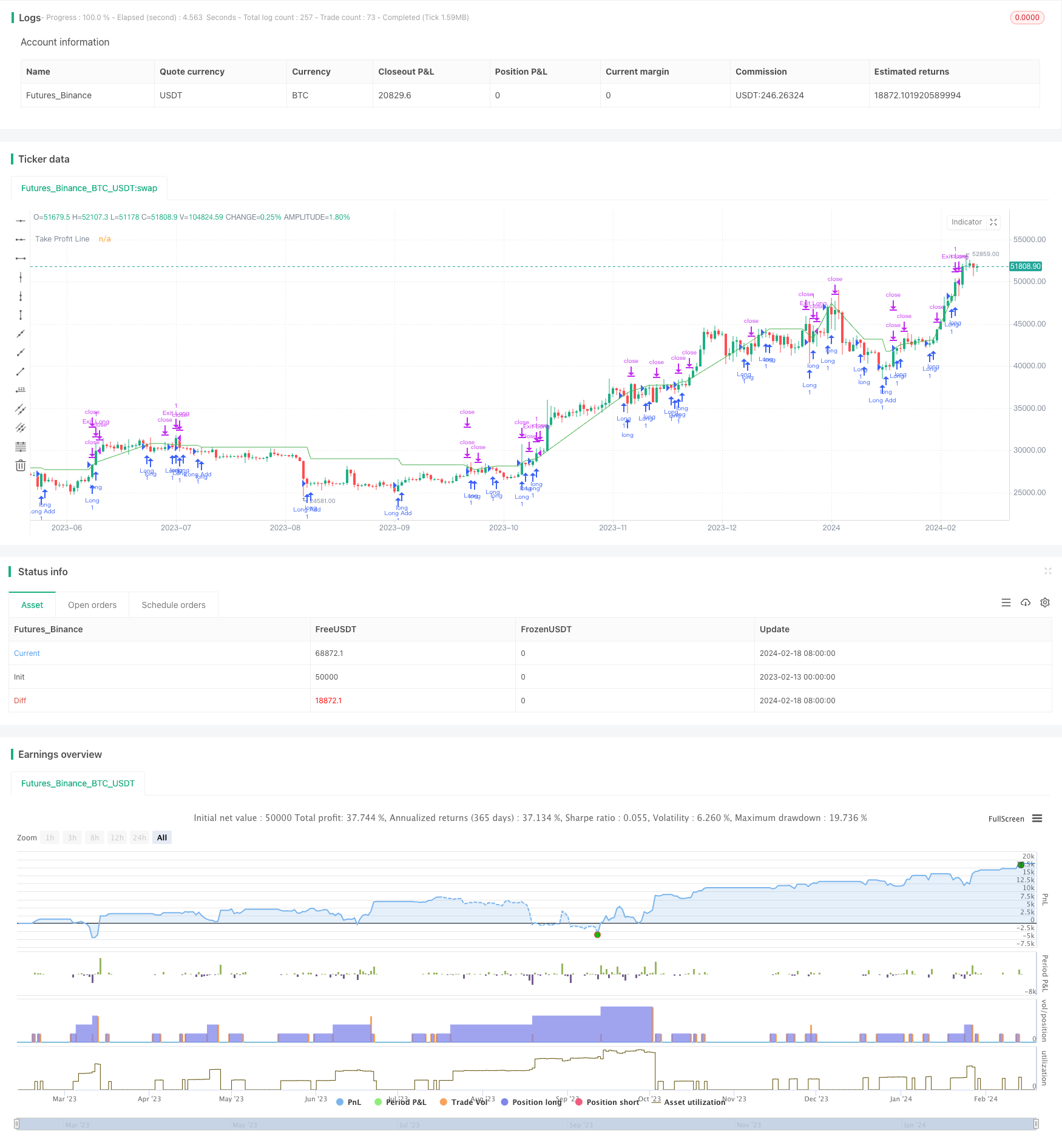
Overview
This strategy combines multiple technical indicators such as RSI, MACD, OBV, CCI, CMF, MFI and VWMACD to detect divergences between price and volume to identify potential entry opportunities. The strategy also incorporates user dip detection indicators to generate trading signals when high volatility and depth or VFI conditions are met. The strategy only goes long and uses tracking stop loss to gradually accumulate positions.
Strategy Logic
Calculate indicators like RSI, MACD, OBV, CCI, CMF, MFI and VWMACD, and detect divergences between the indicators and historical prices using an adaptive linear regression method. Generate buy signals when an indicator makes a new low while the price does not.
Based on user input volatility threshold and depth percentage threshold, combined with VFI indicator filtering, generate signals on candlesticks that meet high volatility and depth tests.
After initial long entry, if the price breaks the last long entry price by a configured percentage, add another long position.
Use tracking stop loss to close positions when reaching configured take profit ratio.
Advantage Analysis
Multi-factor combination makes comprehensive use of price and volume indicators to improve signal reliability.
Adaptive linear regression method detects divergences and avoids subjectivity of manual judgment.
Incorporating volatility, depth/VFI indicators helps discover reversal opportunities.
Multi-entry accumulation allows full use of pullbacks, and tracking stop profit helps lock in profits.
Risk Analysis
Complex multi-factor judgment may affect actual performance depending on parameter optimization and divergence detection effectiveness.
Unidirectional holding has higher risk, large losses may occur if judgment is wrong.
Loss may be amplified in repeated adding model, position size needs to be carefully controlled.
Pay attention to impact of trading fees on actual profit.
Optimization Directions
Test combinations of different parameters and indicators to select optimal configuration.
Add stop loss strategies to control per trade and maximum losses.
Consider opportunities in both directions to diversify risks.
Incorporate machine learning methods to automatically optimize parameters.
Summary
This strategy identifies entry timing through a combination of technical indicators, and uses user defined conditions and VFI filtering to eliminate false signals. It takes advantage of pullbacks to accumulate positions chasing the trend, which helps capture opportunities in trends. But it also faces risks of wrong judgment and unidirectional holding. Appropriate optimization on indicator parameters, stop loss strategies etc. is needed to reduce risks and expand profit space.
Parameters
| Name | Default | What it controls |
|---|---|---|
| v_input_float_1 | 1.005 | Volume Percentage Threshold |
| v_input_float_2 | 1.005 | Deep Percentage Threshold |
| v_input_string_1 | 3Commas Entry Comment | |
| v_input_string_2 | 3Commas Exit Comment | |
| v_input_float_3 | true | Take Profit Percentage (%) |
| v_input_float_4 | 5 | Percentage for Additional Buy (%) |
Source Pine Script
/*backtest
start: 2023-02-13 00:00:00
end: 2024-02-19 00:00:00
period: 1d
basePeriod: 1h
exchanges: [{"eid":"Futures_Binance","currency":"BTC_USDT"}]
*/

// This Pine Script™ code is subject to the terms of the Mozilla Public License 2.0 at https://mozilla.org/MPL/2.0/
// © mkose81

//@version=5
strategy("RSI ve MACD Uyumsuzluğu Stratejisi (Sadece Long)", overlay=true, max_bars_back=4000,use_bar_magnifier= true,pyramiding=40)


// RSI Hesaplama
rsi = ta.rsi(close, 14)
float botRSI = na
botRSI := ta.pivotlow(5, 5)
botcRSI = 0
botcRSI := botRSI ? 5 : nz(botcRSI[1]) + 1

newbotRSI = ta.pivotlow(5, 0)
emptylRSI = true
if not na(newbotRSI) and newbotRSI < low[botcRSI]
    diffRSI = (newbotRSI - low[botcRSI]) / botcRSI
    llineRSI = newbotRSI - diffRSI
    for x = 1 to botcRSI - 1 by 1
        if close[x] < llineRSI
            emptylRSI := false
            break
        llineRSI -= diffRSI
    emptylRSI

// Pozitif Uyumsuzluk Alım Sinyali - RSI
alRSI = 0
if emptylRSI and not na(newbotRSI)
    if rsi[botcRSI] < rsi
        alRSI := 1

// MACD Hesaplama
[macd, signal, _] = ta.macd(close, 21, 55, 8)
float botMACD = na
botMACD := ta.pivotlow(5, 5)
botcMACD = 0
botcMACD := botMACD ? 5 : nz(botcMACD[1]) + 1

newbotMACD = ta.pivotlow(5, 0)
emptylMACD = true
if not na(newbotMACD) and newbotMACD < low[botcMACD]
    diffMACD = (newbotMACD - low[botcMACD]) / botcMACD
    llineMACD = newbotMACD - diffMACD
    for x = 1 to botcMACD - 1 by 1
        if close[x] < llineMACD
            emptylMACD := false
            break
        llineMACD -= diffMACD
    emptylMACD

// Pozitif Uyumsuzluk Alım Sinyali - MACD
alMACD = 0
if emptylMACD and not na(newbotMACD)
    if macd[botcMACD] < macd
        alMACD := 1
// OBV Hesaplama ve Uyumsuzluk Tespiti
obv = ta.cum(ta.change(close) > 0 ? volume : ta.change(close) < 0 ? -volume : 0)
float botOBV = na
botOBV := ta.pivotlow(5, 5)
botcOBV = 0
botcOBV := botOBV ? 5 : nz(botcOBV[1]) + 1

newbotOBV = ta.pivotlow(5, 0)
emptylOBV = true
if not na(newbotOBV) and newbotOBV < obv[botcOBV]
    diffOBV = (newbotOBV - obv[botcOBV]) / botcOBV
    llineOBV = newbotOBV - diffOBV
    for x = 1 to botcOBV - 1 by 1
        if obv[x] < llineOBV
            emptylOBV := false
            break
        llineOBV -= diffOBV
    emptylOBV

// Pozitif Uyumsuzluk Alım Sinyali - OBV
alOBV = 0
if emptylOBV and not na(newbotOBV)
    if obv[botcOBV] < obv
        alOBV := 1

// CCI Hesaplama ve Uyumsuzluk Tespiti
cci = ta.cci(close, 20)
float botCCI = na
botCCI := ta.pivotlow(5, 5)
botcCCI = 0
botcCCI := botCCI ? 5 : nz(botcCCI[1]) + 1

newbotCCI = ta.pivotlow(5, 0)
emptylCCI = true
if not na(newbotCCI) and newbotCCI < cci[botcCCI]
    diffCCI = (newbotCCI - cci[botcCCI]) / botcCCI
    llineCCI = newbotCCI - diffCCI
    for x = 1 to botcCCI - 1 by 1
        if cci[x] < llineCCI
            emptylCCI := false
            break
        llineCCI -= diffCCI
    emptylCCI

// Pozitif Uyumsuzluk Alım Sinyali - CCI
alCCI = 0
if emptylCCI and not na(newbotCCI)
    if cci[botcCCI] < cci
        alCCI := 1

// CMF Hesaplama
length = 20
mfm = ((close - low) - (high - close)) / (high - low)
mfv = mfm * volume
cmf = ta.sma(mfv, length) / ta.sma(volume, length)

float botCMF = na
botCMF := ta.pivotlow(5, 5)
botcCMF = 0
botcCMF := botCMF ? 5 : nz(botcCMF[1]) + 1

newbotCMF = ta.pivotlow(5, 0)
emptylCMF = true
if not na(newbotCMF) and newbotCMF < cmf[botcCMF]
    diffCMF = (newbotCMF - cmf[botcCMF]) / botcCMF
    llineCMF = newbotCMF - diffCMF
    for x = 1 to botcCMF - 1 by 1
        if cmf[x] < llineCMF
            emptylCMF := false
            break
        llineCMF -= diffCMF
    emptylCMF

// Pozitif Uyumsuzluk Alım Sinyali - CMF
alCMF = 0
if emptylCMF and not na(newbotCMF)
    if cmf[botcCMF] < cmf
        alCMF := 1

// MFI Hesaplama
lengthMFI = 14
mfi = ta.mfi(close, lengthMFI)

float botMFI = na
botMFI := ta.pivotlow(mfi, 5, 5)
botcMFI = 0
botcMFI := botMFI ? 5 : nz(botcMFI[1]) + 1

newbotMFI = ta.pivotlow(mfi, 5, 0)
emptylMFI = true
if not na(newbotMFI) and newbotMFI < mfi[botcMFI]
    diffMFI = (newbotMFI - mfi[botcMFI]) / botcMFI
    llineMFI = newbotMFI - diffMFI
    for x = 1 to botcMFI - 1 by 1
        if mfi[x] < llineMFI
            emptylMFI := false
            break
        llineMFI -= diffMFI
    emptylMFI

// Pozitif Uyumsuzluk Alım Sinyali - MFI
alMFI = 0
if emptylMFI and not na(newbotMFI)
    if mfi[botcMFI] < mfi
        alMFI := 1

// VWMACD Hesaplama
fastLength = 12
slowLength = 26
signalSmoothing = 9
vwmacd = ta.ema(close, fastLength) - ta.ema(close, slowLength)
signalLine = ta.ema(vwmacd, signalSmoothing)
histogram = vwmacd - signalLine
// VWMACD Uyumsuzluk Tespiti
float botVWMACD = na
botVWMACD := ta.pivotlow(histogram, 5, 5)
botcVWMACD = 0
botcVWMACD := botVWMACD ? 5 : nz(botcVWMACD[1]) + 1

newbotVWMACD = ta.pivotlow(histogram, 5, 0)
emptylVWMACD = true
if not na(newbotVWMACD) and newbotVWMACD < histogram[botcVWMACD]
    diffVWMACD = (newbotVWMACD - histogram[botcVWMACD]) / botcVWMACD
    llineVWMACD = newbotVWMACD - diffVWMACD
    for x = 1 to botcVWMACD - 1 by 1
        if histogram[x] < llineVWMACD
            emptylVWMACD := false
            break
        llineVWMACD -= diffVWMACD
    emptylVWMACD

// Pozitif Uyumsuzluk Alım Sinyali - VWMACD
alVWMACD = 0
if emptylVWMACD and not na(newbotVWMACD)
    if histogram[botcVWMACD] < histogram
        alVWMACD := 1
//Dipci indikator
lengthd= 130
coef = 0.2
vcoef = 2.5
signalLength = 5
smoothVFI = false

ma(x, y) =>
    smoothVFI ? ta.sma(x, y) : x

typical = hlc3
inter = math.log(typical) - math.log(typical[1])
vinter = ta.stdev(inter, 30)
cutoff = coef * vinter * close
vave = ta.sma(volume, lengthd)[1]
vmax = vave * vcoef
vc = volume < vmax ? volume : vmax  //min( volume, vmax )
mf = typical - typical[1]
iff_4 = mf < -cutoff ? -vc : 0
vcp = mf > cutoff ? vc : iff_4

vfi = ma(math.sum(vcp, lengthd) / vave, 3)
vfima = ta.ema(vfi, signalLength)
d = vfi - vfima

// Kullanıcı girdileri
volatilityThreshold = input.float(1.005, title="Volume Percentage Threshold")
pinThreshold = input.float(1.005, title="Deep Percentage Threshold")
// Hesaplamalar
volatilityPercentage = (high - low) / open
pinPercentage = close > open ? (high - close) / open : (close - low) / open
// Volatilite koşulu ve VFI ile filtreleme
voldip = volatilityPercentage >= volatilityThreshold or pinPercentage >= pinThreshold
volCondition = voldip and vfi< 0  // VFI değeri 0'dan küçükse volCondition aktif olacak


threeCommasEntryComment = input.string(title="3Commas Entry Comment", defval="")
threeCommasExitComment = input.string(title="3Commas Exit Comment", defval="")


takeProfitPerc = input.float(1, title="Take Profit Percentage (%)") / 100
fallPerc = input.float(5, title="Percentage for Additional Buy (%)") / 100
// Değişkenlerin tanımlanması
var float lastBuyPrice = na
var float tpPrice = na
var int lastTpBar = na

// Alım koşulları
longCondition = alRSI or alMACD or alOBV or alCCI or alCMF or alMFI or alVWMACD or volCondition
// Son alım fiyatını saklamak için değişken

// İlk alım stratejisi
if (longCondition and strategy.position_size == 0)
    strategy.entry("Long", strategy.long,comment=threeCommasEntryComment)
    lastBuyPrice := open


// İkinci ve sonraki alım koşulları (son alım fiyatının belirlenen yüzde altında)
if (open < lastBuyPrice * (1 - fallPerc) and strategy.position_size > 0)
    strategy.entry("Long Add", strategy.long,comment=threeCommasEntryComment)
    lastBuyPrice := open


// Kar alma fiyatını hesaplama ve strateji çıkışı
tp_price = strategy.position_avg_price * (1 + takeProfitPerc)
if strategy.position_size > 0
    strategy.exit("Exit Long", "Long", limit=tp_price,comment=threeCommasExitComment)
    strategy.exit("Exit Long Add", "Long Add", limit=tp_price,comment=threeCommasExitComment)
    tpPrice := na // Pozisyon kapandığında TP çizgisini sıfırla

// Kar alma seviyesi çizgisi çizme
plot(strategy.position_size > 0 ? tp_price : na, color=color.green, title="Take Profit Line")
Published by ChaoZhang on the FMZ strategy square · last modified 2024-02-20. Collected in the Quant Trading Vault. Unvalidated research: re-test with your own data and costs before trusting it.
Build this with AgenKit
A spec is not a trading system. Paste this into your coding agent and AgenKit runs a specialist team — architecture, test-first build, risk gates, review — with paper trading on by default.
/agenkit build a production-grade trading bot with a backtest engine, risk controls and paper trading by default from strategies/Multi-factor-Quantitative-Trading-Strategy.md- npx agenkit install engineering-kit in your project
- Paste the command into your agent and approve each phase
- Get tests, backtest, risk controls and a paper-trading switch
Understand it first
Before you run this, read the lesson behind the idea and how to backtest it honestly. Specs like this one are the survivors of an unknown number of trials; deflate their results accordingly.
Related specs
- Triple Moving Average Combined with MACD Quantitative StrategyPine Script · Machine learning · 1d
- Multi indicator Assisted StrategyPine Script · Machine learning · 1d
- Multi indicator Combination StrategyPine Script · Machine learning · 1d
- EMA and RSI Quantitative Trading StrategyPine Script · Machine learning · 1h
- MACD Robot Trading StrategyPine Script · Machine learning · 1d
- Multi Indicator Dynamic Adaptive Quantitative Trading StrategyPine Script · Machine learning · 1h