Multi Indicator Synergistic Dynamic Risk Management Scalping Strategy EMAMACDRSI with ATR Adaptive Stop Loss Take Profit Technique
The Multi-Indicator Synergistic Dynamic Risk Management Scalping Strategy is a trading system optimized for 15-minute charts that cleverly combines trend, momentum, and volatility indicators to identify…
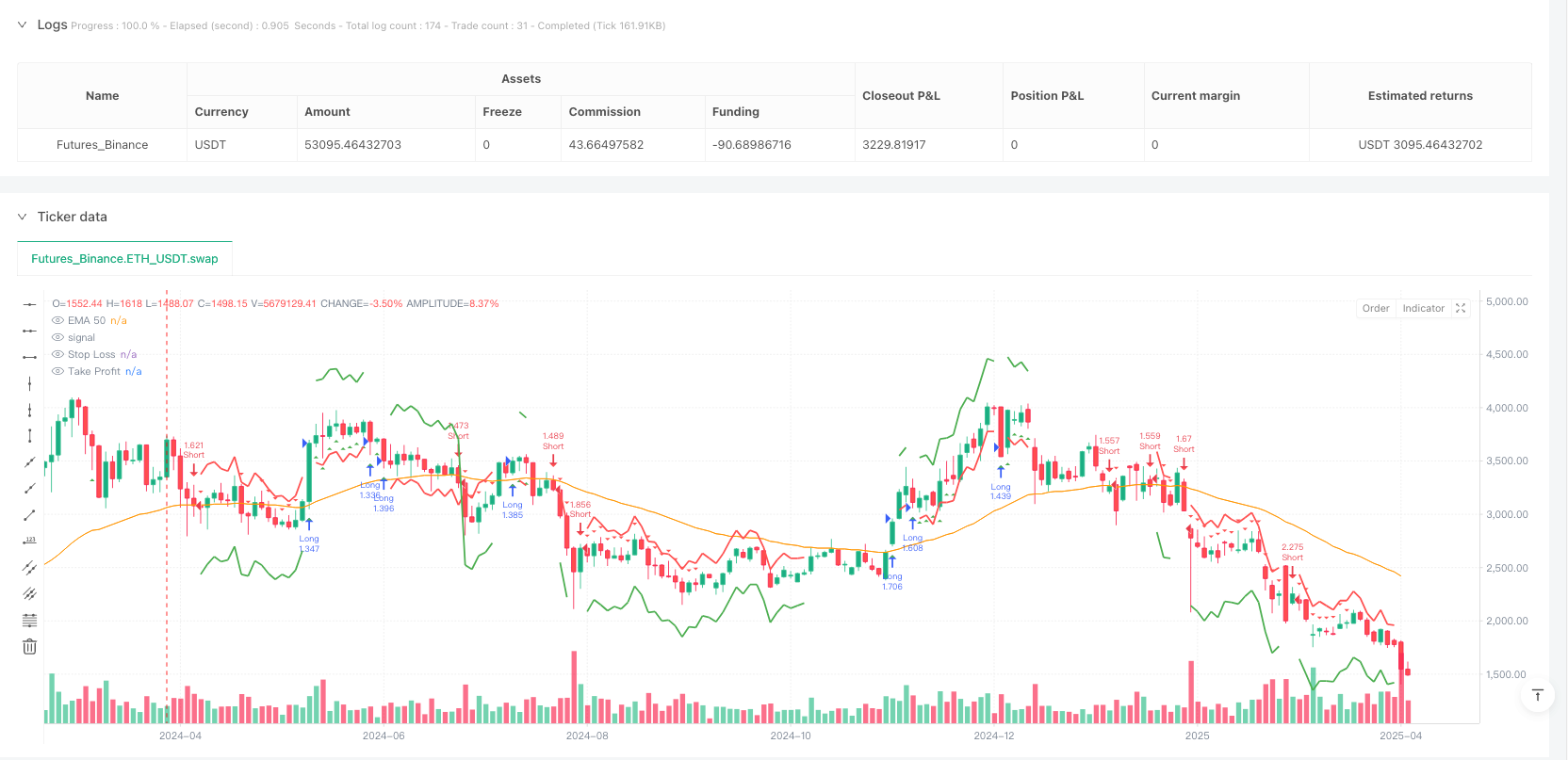
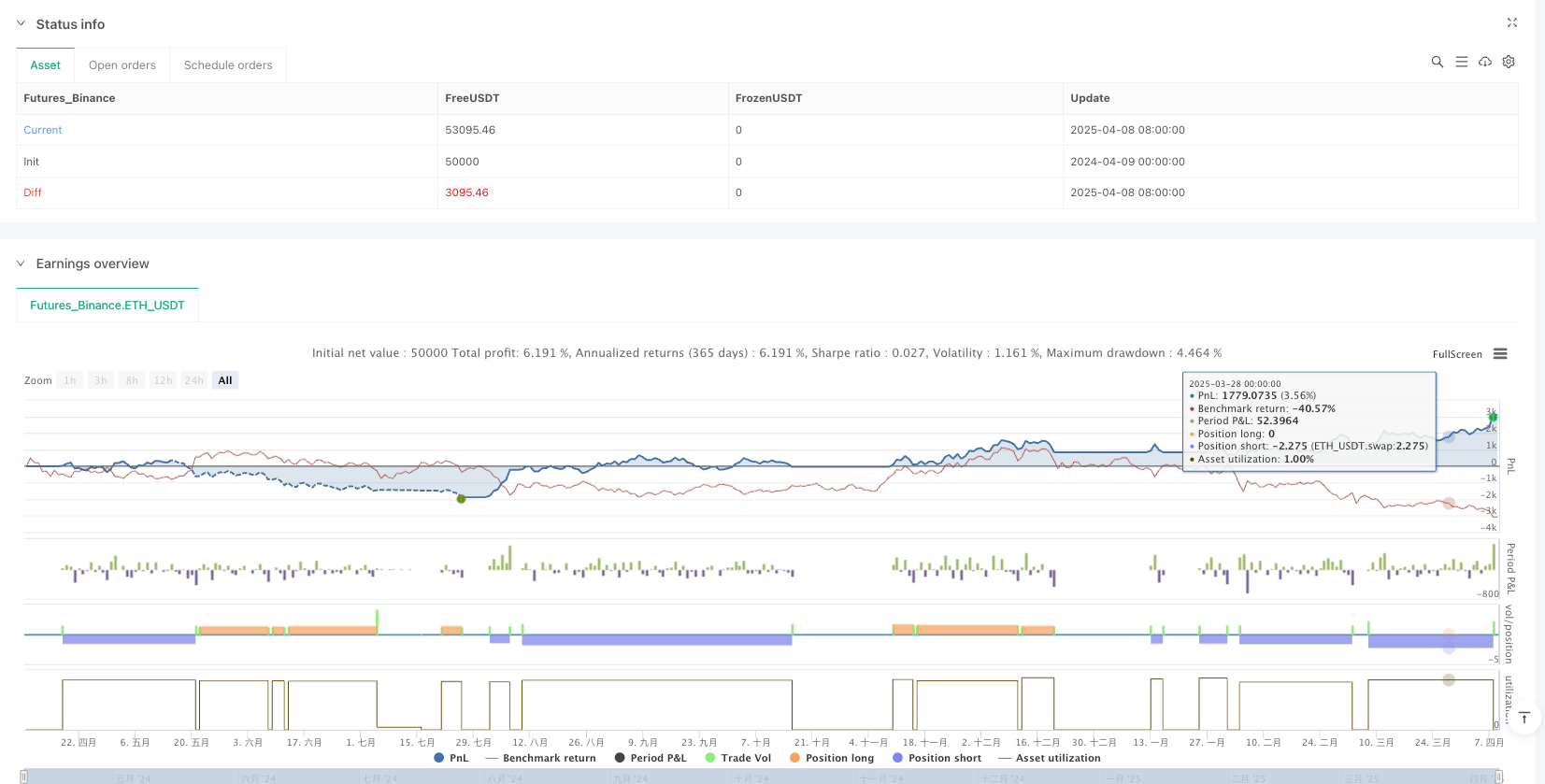
Overview
The Multi-Indicator Synergistic Dynamic Risk Management Scalping Strategy is a trading system optimized for 15-minute charts that cleverly combines trend, momentum, and volatility indicators to identify high-probability trading opportunities with automated risk management. This strategy uses Exponential Moving Average (EMA) as the primary trend filter, MACD indicator to measure market momentum and confirm trend direction, while the Relative Strength Index (RSI) identifies potential reversal zones and avoids overbought/oversold traps. Its most distinctive feature is the adaptive risk management system built using Average True Range (ATR), which allows stop-loss and take-profit levels to dynamically adjust based on market volatility.
Strategy Principles
The core trading logic of this strategy is based on the synergistic action of three technical indicators:
50-period Exponential Moving Average (EMA): Acts as a trend filter to determine overall market direction. Price above the EMA suggests an uptrend, while price below indicates a downtrend.
MACD(12,26,9): Measures market momentum and confirms trend direction. A positive MACD histogram indicates upward momentum, while a negative value indicates downward momentum.
RSI(14): Identifies potential reversal zones, with the 50-70 range indicating moderate upward momentum and the 30-50 range indicating moderate downward momentum.
Entry conditions are strictly set to a combination of indicator confirmations:
- Long (Buy) Signal: Price above EMA + positive MACD histogram + RSI between 50-70
- Short (Sell) Signal: Price below EMA + negative MACD histogram + RSI between 30-50
The risk management strategy uses the ATR indicator for dynamic adjustment:
- Stop Loss: Automatically calculated at 1x ATR from entry price
- Take Profit: Set at 2x ATR, creating a consistent 1:2 risk-to-reward ratio
- Position Sizing: Defaults to 10% of equity per trade for conservative account growth
Strategy Advantages
Multiple Confirmation Mechanism: Combines trend, momentum, and oscillator indicators to provide more reliable trading signals, reducing false breakout trades.
Adaptive Risk Management: Uses ATR for risk calculation, allowing stop-loss and take-profit levels to dynamically adjust based on market volatility, rather than using fixed points or percentages.
Optimized Risk-Reward Ratio: By setting a 2:1 take-profit to stop-loss ratio, long-term profitability can be achieved even with a lower win rate.
Avoids Extreme Zone Trading: The RSI filter function avoids trading in excessively overbought or oversold areas, reducing the risk of counter-trend trading.
Executable Signal Transmission: Built-in alert system can transmit trading signals to external execution systems, facilitating automated trading.
Visual Support: Trading signals, stop-loss, and take-profit levels are all intuitively displayed on the chart, making it easy for traders to monitor and understand the strategy logic.
Conservative Money Management: Default use of 10% equity per trade balances capital growth and risk control.
Strategy Risks
False Signals at Trend Inflection Points: In environments where market trends suddenly change, the EMA-based filter may lead to delayed reactions or false signals. The solution is to consider adding a short-term EMA as auxiliary confirmation or increase vigilance during high volatility periods.
Frequent Trading in Ranging Markets: In sideways markets without clear trends, it may lead to frequent entries and exits, increasing trading costs. This can be optimized by adding volatility filters or trade frequency controls adapted to market conditions.
Market Gap Risk: Significant news or overnight gaps may cause prices to jump past preset stop-loss levels, resulting in actual losses exceeding expectations. It's advisable to implement maximum loss limits or consider adjusting trading sessions to avoid major news announcements.
Parameter Sensitivity: Strategy performance is highly dependent on selected parameters (such as EMA length, RSI thresholds, etc.). Changing market conditions may require parameter re-optimization. The solution is to conduct periodic backtesting and parameter optimization, or develop adaptive parameter adjustment mechanisms.
Money Management Risk: Fixed proportion money management may lead to rapid equity reduction in cases of consecutive losses. Consider implementing a decremental money management strategy, reducing trade size after consecutive losses.
Strategy Optimization Directions
Add Market State Filters: Develop a mechanism to identify trending and ranging markets, and adjust the trading strategy accordingly. Use the current strategy during clear trends, while possibly pausing trading or using different entry conditions during sideways periods.
Introduce Multi-Timeframe Analysis: Enhance the quality of trading signals through trend confirmation from higher timeframes. For example, add trend analysis on 60-minute or daily charts, only trading when the higher timeframe trend direction is consistent.
Optimize Money Management: Implement more sophisticated money management rules, such as the Kelly Criterion or position sizing algorithms that dynamically adjust based on historical volatility and win rate, to maximize capital growth curves and reduce drawdowns.
Add Trailing Take-Profit Techniques: Implement ATR-based trailing take-profits to lock in more profits when trends continue to develop, rather than using fixed take-profit levels.
Integrate Trading Session Filters: Add time filters for trading activity and volatility patterns, avoiding low volatility or unpredictable market sessions.
Add Volume Confirmation: Integrate volume analysis as part of signal confirmation, ensuring trade direction aligns with institutional money flow.
Summary
The Multi-Indicator Synergistic Dynamic Risk Management Scalping Strategy represents a comprehensive trading system that not only combines multiple layers of technical analysis (trend, momentum, and oscillators) but also implements adaptive risk management through ATR. Its main advantages lie in its multiple confirmation mechanisms and dynamic risk control, allowing it to maintain consistent risk-reward characteristics across various market conditions.
However, like all trading strategies, it faces challenges such as delayed reactions at trend inflection points, frequent trading in ranging markets, and parameter sensitivity. There is significant optimization potential through the addition of market state filters, multi-timeframe analysis, and improved money management techniques.
Ultimately, successful implementation of this strategy requires strict discipline, continuous monitoring, and regular backtesting to ensure its effectiveness in changing market conditions. For traders seeking to balance opportunity and risk in scalping, this approach based on multiple indicators and adaptive risk management provides a structured framework.
Source Pine Script
/*backtest
start: 2024-04-09 00:00:00
end: 2025-04-09 00:00:00
period: 2d
basePeriod: 2d
exchanges: [{"eid":"Futures_Binance","currency":"ETH_USDT"}]
*/

//@version=5
strategy("Scalping 15min: EMA + MACD + RSI + ATR-based SL/TP", overlay=true, default_qty_type=strategy.percent_of_equity, default_qty_value=10)

// === INPUTS ===
emaLength      = input.int(50, title="EMA Length", group="Indicators")
macdFast       = input.int(12, title="MACD Fast Length", group="Indicators")
macdSlow       = input.int(26, title="MACD Slow Length", group="Indicators")
macdSignal     = input.int(9, title="MACD Signal Smoothing", group="Indicators")
rsiLength      = input.int(14, title="RSI Length", group="Indicators")
rsiOB          = input.int(70, title="RSI Overbought", group="Indicators")
rsiOS          = input.int(30, title="RSI Oversold", group="Indicators")
atrLength      = input.int(14, title="ATR Length", group="Risk Management")
slATRmult      = input.float(1.0, title="SL Multiplier (ATR)", group="Risk Management")
tpATRmult      = input.float(2.0, title="TP Multiplier (ATR)", group="Risk Management")
enableAlerts   = input.bool(true, title="Enable Webhook Alerts", group="Alerts")

// === CALCULATIONS ===
ema = ta.ema(close, emaLength)
[macdLine, signalLine, _] = ta.macd(close, macdFast, macdSlow, macdSignal)
macdHist = macdLine - signalLine
rsi = ta.rsi(close, rsiLength)
atr = ta.atr(atrLength)

// === ENTRY CONDITIONS ===
longCond  = close > ema and macdHist > 0 and rsi > 50 and rsi < rsiOB
shortCond = close < ema and macdHist < 0 and rsi < 50 and rsi > rsiOS

// === STOP LOSS & TAKE PROFIT ===
var float stopLevel = na
var float takeLevel = na

// === TRADE EXECUTION & ALERTS ===
if (longCond)
    strategy.entry("Long", strategy.long)

    // Calculate initial SL/TP for long position
    longSL = close - slATRmult * atr
    longTP = close + tpATRmult * atr

    // Create and send alert
    if (enableAlerts)
        message = '{"action": "buy", "contracts": "' + str.tostring(strategy.position_size) + '", "ticker": "' + syminfo.ticker + '", "price": "' + str.tostring(close) + '", "position_size": "' + str.tostring(strategy.position_size) + '", "stop_loss": "' + str.tostring(longSL) + '", "take_profit": "' + str.tostring(longTP) + '"}'
        alert(message, alert.freq_once_per_bar_close)

if (shortCond)
    strategy.entry("Short", strategy.short)

    // Calculate initial SL/TP for short position
    shortSL = close + slATRmult * atr
    shortTP = close - tpATRmult * atr

    // Create and send alert
    if (enableAlerts)
        message = '{"action": "sell", "contracts": "' + str.tostring(strategy.position_size) + '", "ticker": "' + syminfo.ticker + '", "price": "' + str.tostring(close) + '", "position_size": "' + str.tostring(strategy.position_size) + '", "stop_loss": "' + str.tostring(shortSL) + '", "take_profit": "' + str.tostring(shortTP) + '"}'
        alert(message, alert.freq_once_per_bar_close)

// Update dynamic SL/TP levels based on current position
if (strategy.position_size > 0)
    stopLevel := close - slATRmult * atr
    takeLevel := close + tpATRmult * atr
else if (strategy.position_size < 0)
    stopLevel := close + slATRmult * atr
    takeLevel := close - tpATRmult * atr
else
    stopLevel := na
    takeLevel := na

strategy.exit("Exit", from_entry="", stop=stopLevel, limit=takeLevel)

// === VISUALIZATION ===
plot(ema, color=color.orange, title="EMA 50")
plotshape(longCond, location=location.belowbar, color=color.green, style=shape.triangleup, title="Long Signal", size=size.small)
plotshape(shortCond, location=location.abovebar, color=color.red, style=shape.triangledown, title="Short Signal", size=size.small)
plot(stopLevel, color=color.red, style=plot.style_linebr, linewidth=2, title="Stop Loss")
plot(takeLevel, color=color.green, style=plot.style_linebr, linewidth=2, title="Take Profit")Published by ianzeng123 on the FMZ strategy square · last modified 2025-04-10. Collected in the Quant Trading Vault. Unvalidated research: re-test with your own data and costs before trusting it.
Build this with AgenKit
A spec is not a trading system. Paste this into your coding agent and AgenKit runs a specialist team — architecture, test-first build, risk gates, review — with paper trading on by default.
/agenkit build a production-grade trading bot with a backtest engine, risk controls and paper trading by default from strategies/Multi-Indicator-Synergistic-Dynamic-Risk-Management-Scalping-Strategy-EMAMACDRSI-with-ATR-Adaptive-Stop-Loss-Take-Profit-Technique.md- npx agenkit install engineering-kit in your project
- Paste the command into your agent and approve each phase
- Get tests, backtest, risk controls and a paper-trading switch
Understand it first
Before you run this, read the lesson behind the idea and how to backtest it honestly. Specs like this one are the survivors of an unknown number of trials; deflate their results accordingly.
Related specs
- Vitalik ScalpePine Script · Scalping
- 20Bitcoin and Gold 5 Minute Scalping Strategy 20Pine Script · Scalping · 1h
- Super ScalperPine Script · Scalping · 1m
- MACD Willy StrategyPine Script · Scalping · 1h
- Super Scalper 5 Min 15 MinPine Script · Scalping · 5m
- EMA MACD Composite Strategy for Trend ScalpingPine Script · Scalping · 1d