Nifty Trading Strategy Based on RSI Indicator
This strategy designs a quantitative investment strategy for trading Nifty index based on the Relative Strength Index (RSI) indicator. It identifies overbought and oversold opportunities using RSI to implement low…
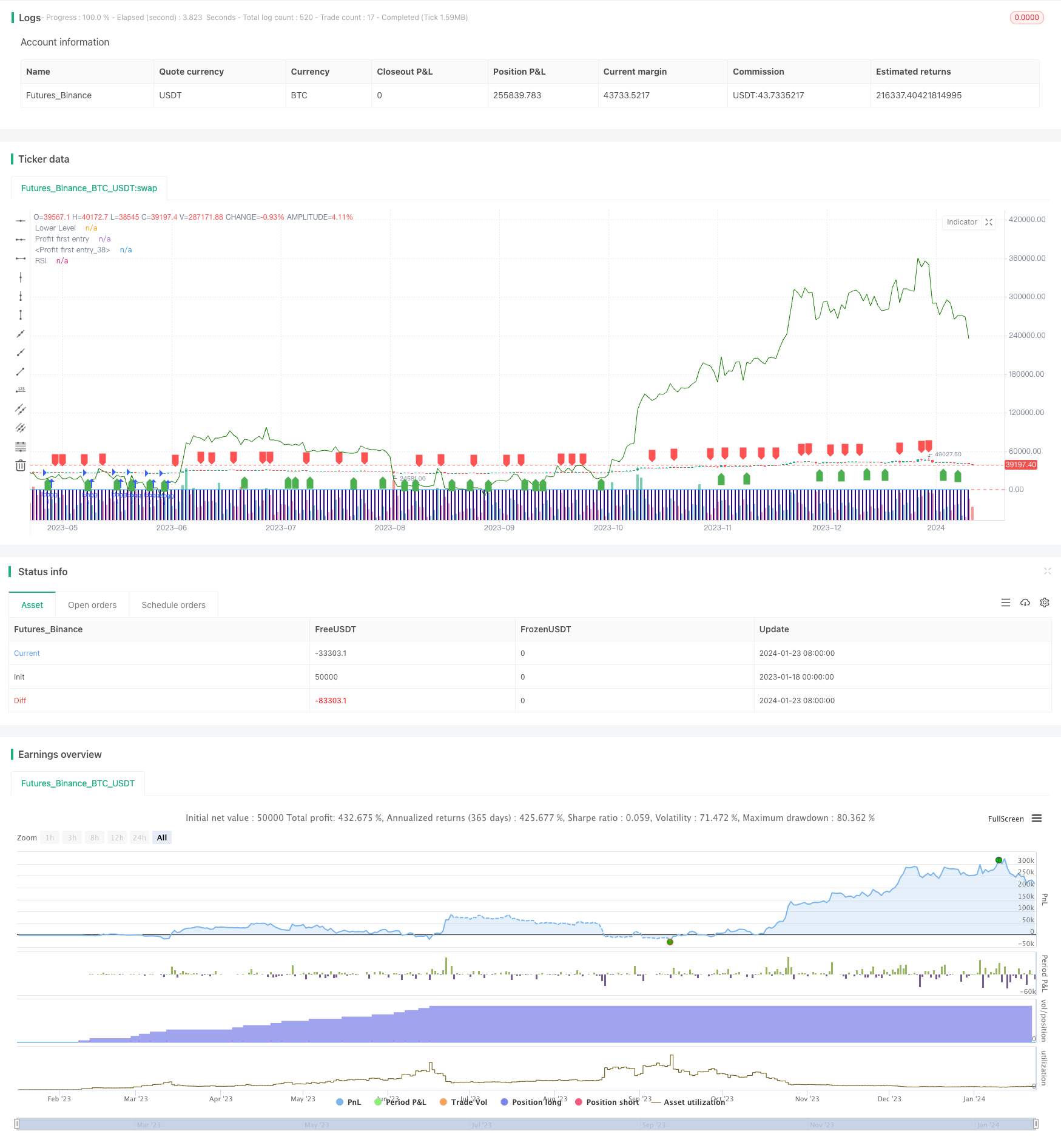
Overview
This strategy designs a quantitative investment strategy for trading Nifty index based on the Relative Strength Index (RSI) indicator. It identifies overbought and oversold opportunities using RSI to implement low buying and high selling for excess returns.
Strategy Principle
The strategy sets 2-period RSI as trading signals. It goes long when RSI crosses above 20, and closes position when RSI crosses below 70. This captures the short-term adjustment opportunities of the index.
The logic is: when RSI is below 20, it indicates oversold status, implying the asset is underestimated and rebound is ahead. When RSI crosses above 20, go long. When RSI is above 70, it indicates overbought status, implying the asset is overvalued and callback is ahead. When RSI crosses below 70, close position.
Advantage Analysis
As a strategy identifying short-term overbought/oversold opportunities with indicators, the main advantages are:
- The principle is simple and clear, easy to understand and validate
- Few indicator parameters, easy to optimize and adjust
- Pursuing short-term excess returns, aligns with scalping trading philosophy
- Customizable trading time period, adapts to different expectations
Risk Analysis
The main risks of this strategy includes:
- Incapable to capture long-term trends, likely to miss big moves
- Overly relying on parameter optimization, overfitting risk
- No stop loss mechanism to effectively control losses
- Frequent trading affects holding period, incurring more transaction costs
To control aforementioned risks, optimizations can be made in below aspects:
- Incorporate trend indicators to identify long-term moves
- Adopt Walk Forward Analysis to prevent overfitting
- Set stop loss points for timely stop loss
- Adjust trading parameters appropriately to control trade frequency
Optimization Directions
Main aspects for optimizing the strategy:
- Optimize RSI parameters to find optimum parameter combinations
- Add stop loss mechanism to limit maximum drawdown
- Incorporate moving averages etc. to judge long-term trend
- Add position sizing module to optimize position allocation
- Add quantitative copyright to automatically adjust parameters
Conclusion
This strategy designs a short-term trading strategy based on RSI indicator, capturing overbought/oversold signals for low buying and high selling. The strategy has simple principle and is easy to implement, but has certain degree of frequent trading, inability to identify long-term trends etc. Future improvements can be made on optimizing RSI parameters, adding stop loss, combining trend judgment etc., to make the strategy more stable and reliable.
Parameters
| Name | Default | What it controls |
|---|---|---|
| v_input_1 | timestamp(01 Nov 2009 00:00 +0000) | (?Time Settings)stary Time |
| v_input_2 | timestamp(01 Nov 2023 00:00 +0000) | End Time |
| v_input_3 | timestamp(01 Dec 2018 00:00 +0000) | Start Time |
| v_input_4 | timestamp(30 Nov 2023 00:00 +0000) | End Time |
Source Pine Script
/*backtest
start: 2023-01-18 00:00:00
end: 2024-01-24 00:00:00
period: 1d
basePeriod: 1h
exchanges: [{"eid":"Futures_Binance","currency":"BTC_USDT"}]
*/

//@version=4
strategy("RSI Strategy", overlay=true,pyramiding = 1000)
rsi_period = 2
rsi_lower = 20
rsi_upper = 70

rsi_value = rsi(close, rsi_period)
buy_signal = crossover(rsi_value, rsi_lower)
sell_signal = crossunder(rsi_value, rsi_upper)
current_date1 =  input(defval=timestamp("01 Nov 2009 00:00 +0000"), title="stary Time", group="Time Settings")

current_date =  input(defval=timestamp("01 Nov 2023 00:00 +0000"), title="End Time", group="Time Settings")
investment_amount = 100000.0
start_time = input(defval=timestamp("01 Dec 2018 00:00 +0000"), title="Start Time", group="Time Settings")
end_time = input(defval=timestamp("30 Nov 2023 00:00 +0000"), title="End Time", group="Time Settings")

in_time = time >= start_time and time <= end_time
// Variable to track accumulation.
var accumulation = 0.0
out_time = time >= end_time

if (buy_signal )
    strategy.entry("long",strategy.long,qty= 1)
    accumulation += 1
if (out_time)
    strategy.close(id="long")

plotshape(series=buy_signal, title="Buy Signal", location=location.belowbar, color=color.green, style=shape.labelup)
plotshape(series=sell_signal, title="Sell Signal", location=location.abovebar, color=color.red, style=shape.labeldown)

plot(rsi_value, title="RSI", color=color.blue)
hline(rsi_lower, title="Lower Level", color=color.red)


plot(strategy.opentrades, style=plot.style_columns,
     color=#2300a1, title="Profit first entry")
plot(strategy.openprofit, style=plot.style_line,
     color=#147a00, title="Profit first entry")
// plot(strategy.position_avg_price, style=plot.style_columns,
//      color=#ca0303, title="Profit first entry")
// log.info(strategy.position_size * strategy.position_avg_price)
Published by ChaoZhang on the FMZ strategy square · last modified 2024-01-25. Collected in the Quant Trading Vault. Unvalidated research: re-test with your own data and costs before trusting it.
Build this with AgenKit
A spec is not a trading system. Paste this into your coding agent and AgenKit runs a specialist team — architecture, test-first build, risk gates, review — with paper trading on by default.
/agenkit build a production-grade trading bot with a backtest engine, risk controls and paper trading by default from strategies/Nifty-Trading-Strategy-Based-on-RSI-Indicator.md- npx agenkit install engineering-kit in your project
- Paste the command into your agent and approve each phase
- Get tests, backtest, risk controls and a paper-trading switch
Understand it first
Before you run this, read the lesson behind the idea and how to backtest it honestly. Specs like this one are the survivors of an unknown number of trials; deflate their results accordingly.
Related specs
- 20Bitcoin and Gold 5 Minute Scalping Strategy 20Pine Script · Scalping · 1h
- Scalping EMA ADX RSI with Buy SellPine Script · Scalping · 5m
- Super ScalperPine Script · Scalping · 1m
- Dual Indicators Combo Crazy Intraday Scalping StrategyPine Script · Scalping · 10m
- Dual Moving Average Crossover Scalping StrategyPine Script · Scalping · 1h
- Super Scalper 5 Min 15 MinPine Script · Scalping · 5m