Strategy vault / Trend following
Pivot Point and Fibonacci Retracement Based Automatic Trend Following Strategy
This strategy automatically identifies ABC patterns in stock prices based on pivot points and Fibonacci retracement ratios, and generates long/short signals. It uses pivot points to determine price waves and…
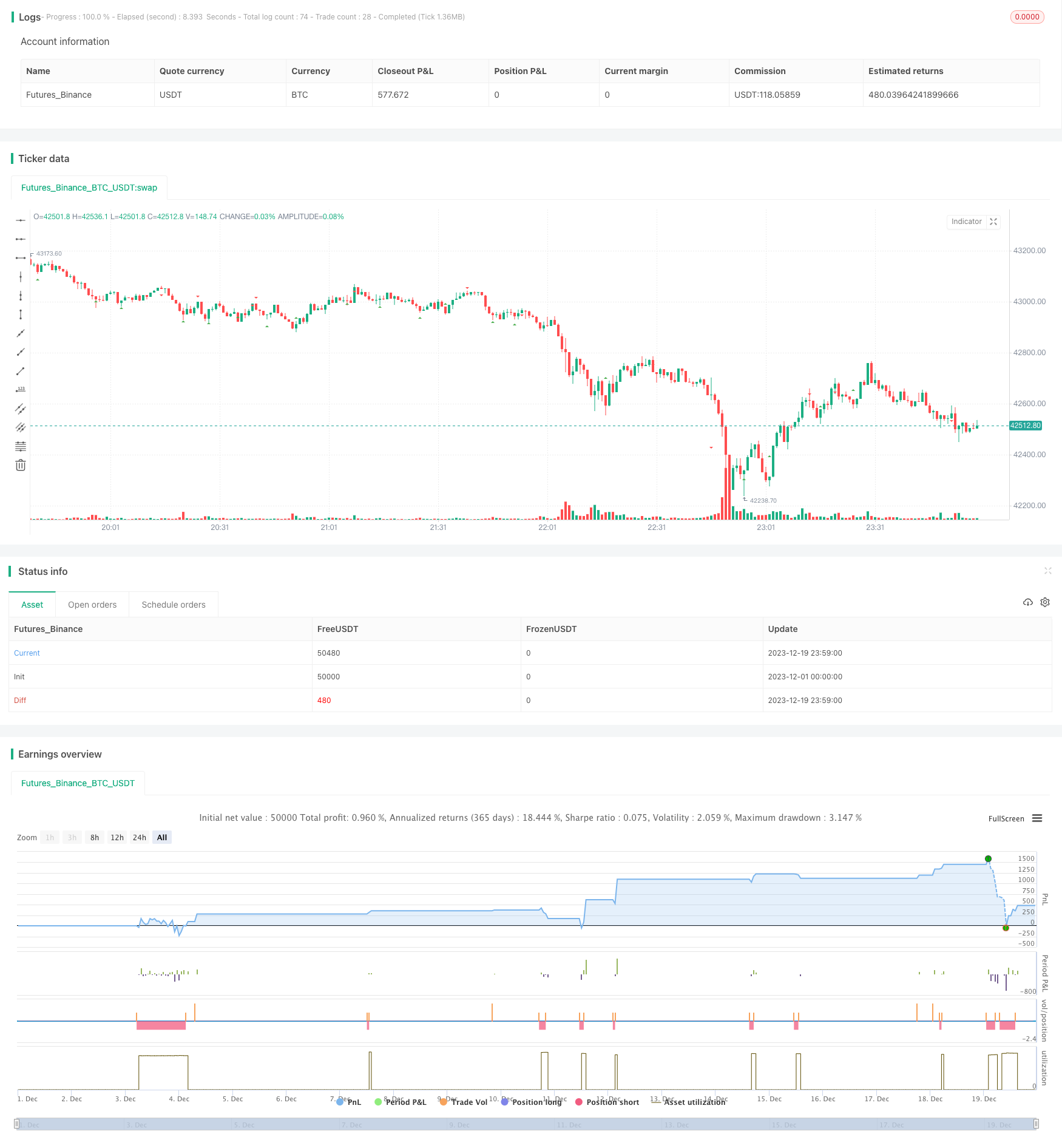
Overview
This strategy automatically identifies ABC patterns in stock prices based on pivot points and Fibonacci retracement ratios, and generates long/short signals. It uses pivot points to determine price waves and calculates Fibonacci retracement ratios between ABC waves. If the ratios meet certain criteria, trading signals are generated.
Strategy Logic
- Calculate the stock's pivot high and low points
- Judge if the price has fallen from the previous high point or risen from the previous low point
- Calculate the Fibonacci retracement ratio between the current wave and previous wave
- If the retracement ratios of both up and down waves are within proper ranges, determine a potential ABC pattern
- After ABC pattern confirmation, set stop loss at Point C for long, and Point A for short. Set take profit at 1.5 times the price wave range.
Advantage Analysis
- Pivot points identify key support/resistance levels to improve signal accuracy
- Fibonacci retracements catch trend turning points by identifying ABC patterns
- Clear profit/loss rules avoid huge losses
Risk Analysis
- Pivot points and Fibonacci retracements cannot ensure perfect identification of every trend turning point. Misjudgements may occur.
- Point C and Point A stops can be broken through, leading to larger losses
- Parameters like Fibonacci retracement ratio ranges need further optimization
Optimization Directions
- Incorporate more technical indicators to assist ABC pattern confirmation, improving signal accuracy
- Optimize Fibonacci retracement ratio ranges to suit more market conditions
- Utilize machine learning methods to train ABC pattern recognition models
Conclusion
This strategy identifies ABC patterns for generating long/short signals at trend turning points, based on pivot point confirmation of key support/resistance levels, and Fibonacci retracement ratio calculations. The logic is simple and clean, with sensible profit/loss rules that effectively control risks. However, certain misjudgement risks remain, requiring further optimizations and improvements to suit more market conditions.
Parameters
| Name | Default | What it controls |
|---|---|---|
| v_input_1 | 5 | len |
Source Pine Script
/*backtest
start: 2023-12-01 00:00:00
end: 2023-12-19 23:59:59
period: 1m
basePeriod: 1m
exchanges: [{"eid":"Futures_Binance","currency":"BTC_USDT"}]
*/

// This source code is subject to the terms of the Mozilla Public License 2.0 at https://mozilla.org/MPL/2.0/
// © kerok3g

//@version=5
strategy("ABCD Strategy", shorttitle="ABCDS", overlay=true, commission_value=0.04)
calcdev(fprice, lprice, fbars, lbars) =>
    rise = lprice - fprice
    run = lbars - fbars
    avg = rise/run
    ((bar_index - lbars) * avg) + lprice

len = input(5)

ph = ta.pivothigh(len, len)
pl = ta.pivotlow(len, len)

var bool ishigh = false
ishigh := ishigh[1]

var float currph = 0.0
var int currphb = 0
currph := nz(currph)
currphb := nz(currphb)

var float oldph = 0.0
var int oldphb = 0
oldph := nz(oldph)
oldphb := nz(oldphb)

var float currpl = 0.0
var int currplb = 0
currpl := nz(currpl)
currplb := nz(currplb)

var float oldpl = 0.0
var int oldplb = 0
oldpl := nz(oldpl)
oldplb := nz(oldplb)

if (not na(ph))
    ishigh := true
    oldph := currph
    oldphb := currphb
    currph := ph
    currphb := bar_index[len]
else
    if (not na(pl))
        ishigh := false
        oldpl := currpl
        oldplb := currplb
        currpl := pl
        currplb := bar_index[len]

endHighPoint = calcdev(oldph, currph, oldphb, currphb)
endLowPoint = calcdev(oldpl, currpl, oldplb, currplb)

plotshape(ph, style=shape.triangledown, color=color.red, location=location.abovebar, offset=-len)
plotshape(pl, style=shape.triangleup, color=color.green, location=location.belowbar, offset=-len)

// var line lnhigher = na
// var line lnlower = na
// lnhigher := line.new(oldphb, oldph, bar_index, endHighPoint)
// lnlower := line.new(oldplb, oldpl, bar_index, endLowPoint)
// line.delete(lnhigher[1])
// line.delete(lnlower[1])

formlong = oldphb < oldplb and oldpl < currphb and currphb < currplb
longratio1 = (currph - oldpl) / (oldph - oldpl)
longratio2 = (currph - currpl) / (currph - oldpl)

formshort = oldplb < oldphb and oldphb < currplb and currplb < currphb
shortratio1 = (oldph - currpl) / (oldph - oldpl)
shortratio2 = (currph - currpl) / (oldph - currpl)

// prevent multiple entry for one pattern
var int signalid = 0
signalid := nz(signalid[1])

longCond = formlong and
           longratio1 < 0.7 and
           longratio1 > 0.5 and
           longratio2 > 1.1 and
           longratio2 < 1.35 and
           close < oldph and
           close > currpl and
           signalid != oldplb
if (longCond)
    signalid := oldplb
    longsl = currpl - ta.tr
    longtp = ((close - longsl) * 1.5) + close
    strategy.entry("Long", strategy.long)
    strategy.exit("Exit Long", "Long", limit=math.min(longtp, oldph), stop=longsl)

shortCond = formshort and
             shortratio1 < 0.7 and
             shortratio1 > 0.5 and
             shortratio2 > 1.1 and
             shortratio2 < 1.35 and
             close > oldpl and
             close < currph and
             signalid != oldphb

if (shortCond)
    signalid := oldphb
    shortsl = currph + ta.tr
    shorttp = close - ((shortsl - close) * 1.5)
    strategy.entry("Short", strategy.short)
    strategy.exit("Exit Short", "Short", limit=math.max(shorttp, oldpl), stop=shortsl)
Published by ChaoZhang on the FMZ strategy square · last modified 2024-01-05. Collected in the Quant Trading Vault. Unvalidated research: re-test with your own data and costs before trusting it.
Build this with AgenKit
A spec is not a trading system. Paste this into your coding agent and AgenKit runs a specialist team — architecture, test-first build, risk gates, review — with paper trading on by default.
/agenkit build a production-grade trading bot with a backtest engine, risk controls and paper trading by default from strategies/Pivot-Point-and-Fibonacci-Retracement-Based-Automatic-Trend-Following-Strategy.md- npx agenkit install engineering-kit in your project
- Paste the command into your agent and approve each phase
- Get tests, backtest, risk controls and a paper-trading switch
Understand it first
Before you run this, read the lesson behind the idea and how to backtest it honestly. Specs like this one are the survivors of an unknown number of trials; deflate their results accordingly.
Related specs
- Automated Fibonacci Retracement Trading System StrategyPine Script · Trend following · 1d
- Incremental Order Size Fibonacci Retracement Trend Following StrategyPine Script · Trend following · 1d
- Double Filtering High Frequency Quantitative Trading StrategyPine Script · Trend following · 1m
- Multi Period Trend Confirmation Dynamic Risk Control Quantitative Trading StrategyPine Script · Trend following · 1h
- Advanced Dynamic Fibonacci Retracement Trend Quantitative Trading StrategyPine Script · Trend following · 1h
- AlphaTradingBot Trading StrategyPine Script · Trend following · 1h