Strategy vault / Machine learning
Price EMA with stochastic optimization based on machine learning
This strategy combines Smooth Moving Average with the Stochastic indicator to capture more opportunities in trends. It mainly uses two exponential moving averages with different periods to generate trading signals…
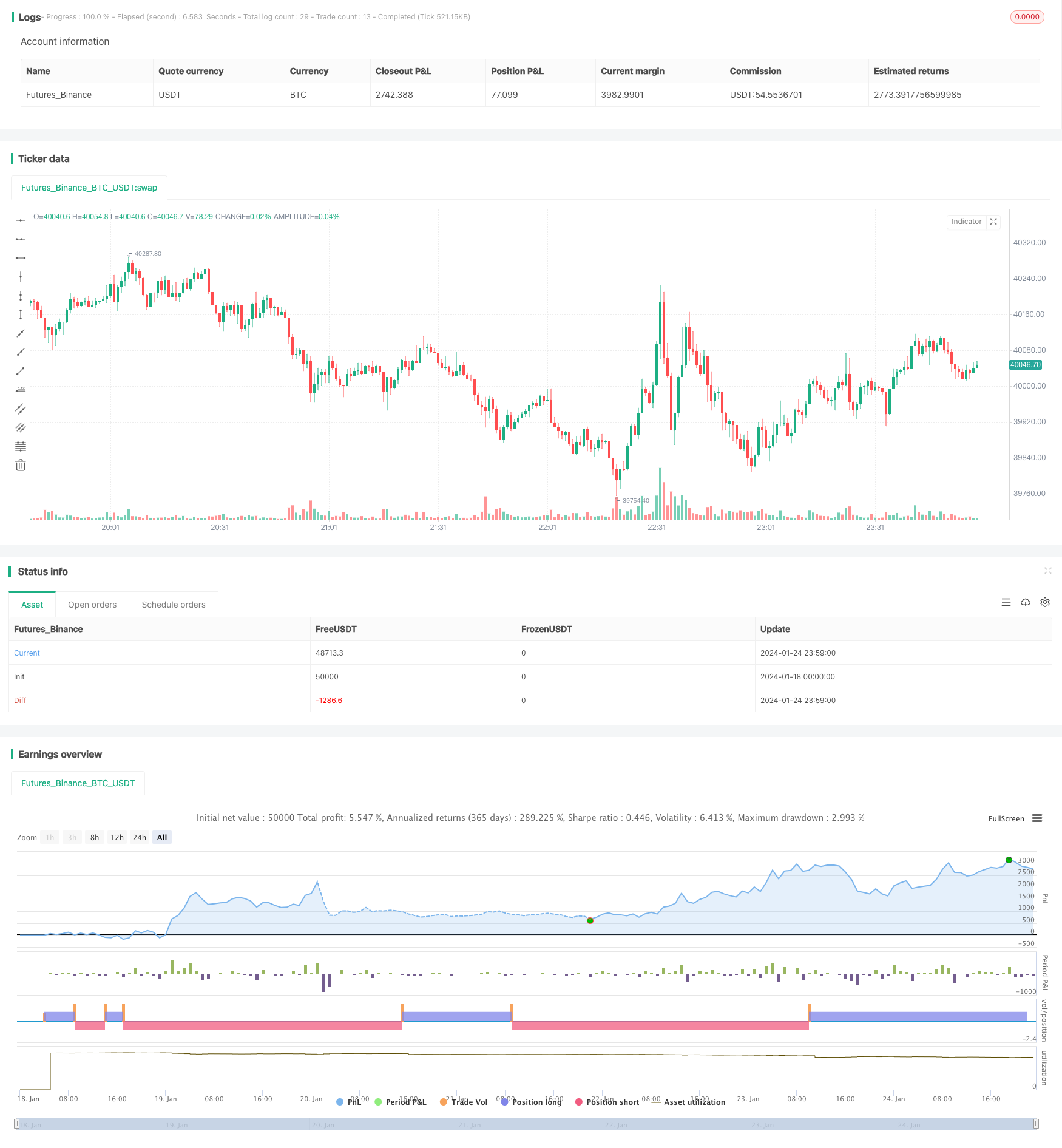
Overview
This strategy combines Smooth Moving Average with the Stochastic indicator to capture more opportunities in trends. It mainly uses two exponential moving averages with different periods to generate trading signals, together with the crossover of K line and D line in Stochastic indicator for entry timing selection, in order to obtain higher profitability in trends.
Strategy Principle
The strategy uses 12-period and 26-period smooth moving averages. When the fast line crosses above the slow line from the bottom, go long. When the fast line crosses below the slow line from the top, go short. To filter fake signals, it requires the fast and slow lines to be in the same direction, with the fast line above the slow line for long, and the fast line below the slow line for short.
The crossover of K line and D line in Stochastic indicator is used for entry timing selection. When K line crosses above D line from below the overbought line, go long. When K line crosses below D line from above the oversold line, go short.
Smooth moving average determines the trend direction, while Stochastic indicator filters Noise and selects entry timing. Their combination could obtain more profitable opportunities in trends.
Advantages of the Strategy
- Smooth moving average itself has the characteristic of trend-following, easy to track trends
- Utilize Stochastic to filter Noise and improve profitability
- The combination of fast and slow MAs allows entering when fast MA pulls back to slow MA, obtaining better risk-reward
- The crossover of K line and D line provides further timing optimization
Therefore, this strategy could follow the trend selectively to capture opportunities, obtaining higher profitability.
Risk Analysis
- High risk of premature exit in the short term. Signals may be denied or trapped when fast MA pulls back to slow MA
- As it follows the trend, it cannot adapt quickly to drastic trend reversal, leading to large loss
To reduce those risks, we could set stop loss, or adopt more moderate MA parameters.
Optimization Directions
The strategy could be further optimized from the follows aspects:
- Test different combinations of MA parameters to find the optimal
- Test different combinations of Stochastic parameters
- Add stop loss strategy
- Add dynamic stop loss based on volatility
- Test parameter optimization across different products and time frames
- Utilize machine learning algorithms to optimize parameters
By testing different parameter combinations, better parameters could be found. Also, stop loss strategies could effectively reduce risk and enhance stability.
Conclusion
The strategy integrates the strengths of Smooth Moving Average and Stochastic for trend-following, while selecting better entry timing. It is easy to operate, with controllable risk and great practical value. Its performance could be further improved through continuous testing and optimization. It provides quant traders an efficient and stable trend tracking model.
Parameters
| Name | Default | What it controls |
|---|---|---|
| v_input_1_close | 0 | Source: close | high | low | open | hl2 | hlc3 | hlcc4 | ohlc4 |
| v_input_2 | 50 | Length |
| v_input_3_close | 0 | Source: close | high | low | open | hl2 | hlc3 | hlcc4 | ohlc4 |
| v_input_4 | 100 | len100 |
| v_input_5_close | 0 | Source: close | high | low | open | hl2 | hlc3 | hlcc4 | ohlc4 |
| v_input_6 | true | Length |
| v_input_7_close | 0 | Source: close | high | low | open | hl2 | hlc3 | hlcc4 | ohlc4 |
| v_input_8 | 5 | length |
| v_input_9 | 80 | OverBought |
| v_input_10 | 20 | OverSold |
| v_input_11 | 12 | Fast Length |
| v_input_12 | 26 | Slow Length |
| v_input_13_close | 0 | Source: close | high | low | open | hl2 | hlc3 | hlcc4 | ohlc4 |
| v_input_14 | 9 | Signal Smoothing |
| v_input_15 | false | Simple MA(Oscillator) |
| v_input_16 | false | Simple MA(Signal Line) |
| v_input_17 | 0.1 | tp |
| v_input_18 | 0.1 | sl |
Source Pine Script
/*backtest
start: 2024-01-18 00:00:00
end: 2024-01-25 00:00:00
period: 1m
basePeriod: 1m
exchanges: [{"eid":"Futures_Binance","currency":"BTC_USDT"}]
*/

//@version=4
// author SoftKill

strategy(title="Price EMA with stock", shorttitle="EMA STOCH", overlay=true)
src = input(title="Source", type=input.source, defval=close)

src_0 = src[0]
src_1 = src[1]
src_2 = src[2]
src_3 = src[3]
src_4 = src[4]

len50 = input(50, minval=1, title="Length")
src50 = input(close, title="Source")
out50 = ema(src50, len50)
len100 = input(100)
src100 = input(close, title="Source")
out100 = ema(src100, len100)

len1 = input(1, minval=1, title="Length")
src1 = input(close, title="Source")
out1 = sma(src1, len1)

length = input(5, minval=1)
OverBought = input(80)
OverSold = input(20)
smoothK = 3
smoothD = 3

k = sma(stoch(close, high, low, length), smoothK)
d = sma(k, smoothD)
cu = crossover(k,OverSold)
co = crossunder(k,OverBought)

sma_down = crossunder(out1, out50)
sma_up = crossover(out1,out50)

//if (not na(k) and not na(d))
  //  if (co and k < OverSold)
    //    strategy.entry("StochLE", strategy.long, comment="StochLE")
    //if (cu and k > OverBought)
     //   strategy.entry("StochSE", strategy.short, comment="StochSE")

crossCandle_4 = crossover(src[4],out50)
crossCandleUnder_4= cross(src[4],out50)
crossCandle_3 = crossover(src[3],out50)
crossCandleUnder_3= crossunder(src[3],out50)
crossCandle_2 = crossover(src[2],out50)
crossCandleUnder_2= crossunder(src[2],out50)
crossCandle_1 = crossover(src[1],out50)
crossCandleUnder_1= crossunder(src[1],out50)
crossCandle_0 = crossover(src[0],out50)
crossCandleUnder_0= crossunder(src[0],out50)

conditionOver = (crossCandle_4 or crossCandle_3 or crossCandle_2 or crossCandle_1 or crossCandle_0)
conditionUnder =(crossCandleUnder_4 or crossCandleUnder_3 or crossCandleUnder_2 or crossCandleUnder_1 or crossCandleUnder_0)

touch4 = (cross(low[4],out50) or cross(high[4],out50))
touch3 = (cross(low[3],out50) or cross(high[3],out50))
touch2 = (cross(low[2],out50) or cross(high[2],out50))
touch1 = (cross(low[1],out50) or cross(high[1],out50))

touch = touch1 or touch2 or touch3 or touch4

//and sma_up
//and sma_down

// Getting inputs
fast_length = input(title="Fast Length", type=input.integer, defval=12)
slow_length = input(title="Slow Length", type=input.integer, defval=26)
src_macd = input(title="Source", type=input.source, defval=close)
signal_length = input(title="Signal Smoothing", type=input.integer, minval = 1, maxval = 50, defval = 9)
sma_source = input(title="Simple MA(Oscillator)", type=input.bool, defval=false)
sma_signal = input(title="Simple MA(Signal Line)", type=input.bool, defval=false)

// Plot colors
col_grow_above = #26A69A
col_grow_below = #FFCDD2
col_fall_above = #B2DFDB
col_fall_below = #EF5350
col_macd = #0094ff
col_signal = #ff6a00

// Calculating
fast_ma = sma_source ? sma(src_macd, fast_length) : ema(src_macd, fast_length)
slow_ma = sma_source ? sma(src_macd, slow_length) : ema(src_macd, slow_length)
macd = fast_ma - slow_ma
signal = sma_signal ? sma(macd, signal_length) : ema(macd, signal_length)
hist = macd - signal

//plot(hist, title="Histogram", style=plot.style_columns, color=(hist>=0 ? (hist[1] < hist ? col_grow_above : col_fall_above) : (hist[1] < hist ? col_grow_below : col_fall_below) ), transp=0 )
//plot(macd, title="MACD", color=col_macd, transp=0)
//plot(signal, title="Signal", color=col_signal, transp=0)


// plot((conditionOver or conditionUnder or touch)  and src[0] >= out50 and close >= out50 and  (cu) and out50 > out100 and hist>=0 , title="Buy", style=plot.style_columns, color=color.lime)
// plot((conditionOver or conditionUnder or touch)  and src[0] <= out50 and close <= out50 and  (co) and out50< out100 and hist<=0 , title="sell", style=plot.style_columns, color=color.red)


long_cond = ((conditionOver or conditionUnder or touch)  and src[0] >= out50 and close > out50 and  (cu) and out50 > out100 and hist>=0)
short_cond = ((conditionOver or conditionUnder or touch)  and src[0] <= out50 and close < out50 and  (co) and out50< out100 and hist<=0)

tp=input(0.1)
sl=input(0.1)

strategy.entry("long",strategy.long, when=long_cond)
strategy.entry("short",strategy.short, when=short_cond)

strategy.exit("X_long", "long", profit=close * tp / syminfo.mintick,  loss=close * sl / syminfo.mintick, when=touch  )
strategy.exit("x_short", "short",profit=close * tp / syminfo.mintick,loss=close * sl / syminfo.mintick,when = touch )

// //tp = input(0.0003, title="tp")
// tp = 0.0003
// //sl = input(1.0 , title="sl")
// sl = 1.0
// strategy.exit("closelong", "long" , profit = close * tp / syminfo.mintick, loss = close * sl / syminfo.mintick, alert_message = "closelong")
// strategy.exit("closeshort", "short" , profit = close * tp / syminfo.mintick, loss = close * sl / syminfo.mintick, alert_message = "closeshort")Published by ChaoZhang on the FMZ strategy square · last modified 2024-01-26. Collected in the Quant Trading Vault. Unvalidated research: re-test with your own data and costs before trusting it.
Build this with AgenKit
A spec is not a trading system. Paste this into your coding agent and AgenKit runs a specialist team — architecture, test-first build, risk gates, review — with paper trading on by default.
/agenkit build a production-grade trading bot with a backtest engine, risk controls and paper trading by default from strategies/Price-EMA-with-stochastic-optimization-based-on-machine-learning.md- npx agenkit install engineering-kit in your project
- Paste the command into your agent and approve each phase
- Get tests, backtest, risk controls and a paper-trading switch
Understand it first
Before you run this, read the lesson behind the idea and how to backtest it honestly. Specs like this one are the survivors of an unknown number of trials; deflate their results accordingly.
Related specs
- Triple Moving Average Combined with MACD Quantitative StrategyPine Script · Machine learning · 1d
- Johns Bitcoin Intraday Trading Strategy Based on Multiple IndicatorsPine Script · Machine learning · 1m
- ADX EFI 50 Moving Average Channel Pullback StrategyPine Script · Machine learning · 1h
- Multi indicator Combination StrategyPine Script · Machine learning · 1d
- Dual MACD StochRSI Trading StrategyPine Script · Machine learning · 1m
- EMA and RSI Quantitative Trading StrategyPine Script · Machine learning · 1h