Strategy vault / Trend following
Quantitative Long Short Trend Tracking Dynamic Stop Loss Strategy
This is a long-short trend tracking strategy based on Average True Range (ATR) and Exponential Moving Average (EMA). The strategy achieves precise market trend capture and risk management through dynamic stop-loss…
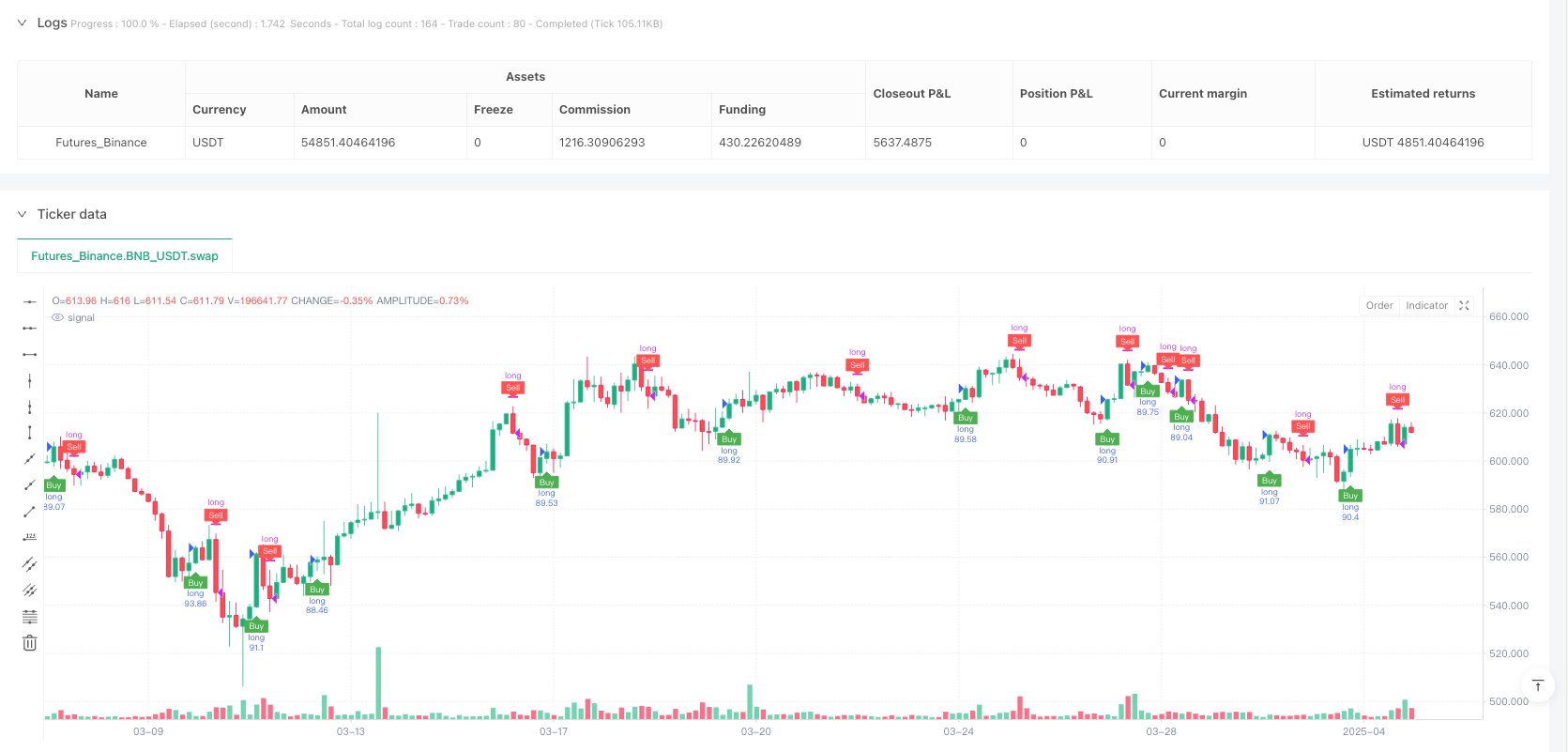
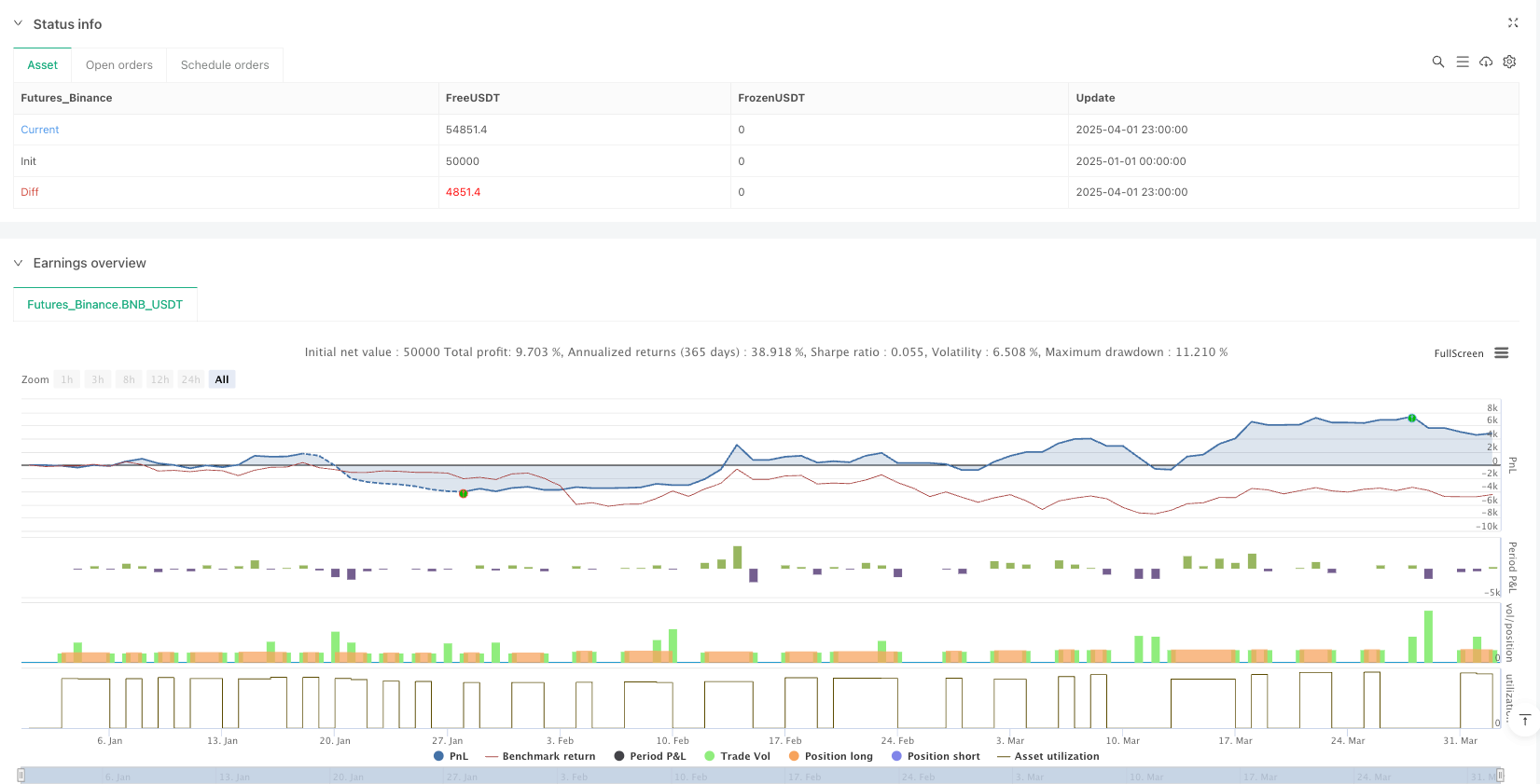
Overview
This is a long-short trend tracking strategy based on Average True Range (ATR) and Exponential Moving Average (EMA). The strategy achieves precise market trend capture and risk management through dynamic stop-loss and trend determination.
Strategy Principle
The core principles include:
- Calculate dynamic stop-loss points using ATR
- Determine price trend direction with EMA
- Confirm trading signals through price and stop-loss point relationship
- Optional Heikin Ashi candle optimization
Key Calculation Logic:
- Dynamic Stop-Loss = Current Price ± (ATR * Sensitivity Coefficient)
- Trend Determined by EMA and Stop-Loss Point Crossover
- Trading Signals Generated When Price Breaks Stop-Loss and EMA Crosses
Strategy Advantages
- Dynamic Risk Management: ATR adaptive stop-loss calculation
- Precise Trend Tracking: EMA quickly responds to price changes
- High Flexibility: Customizable ATR period and sensitivity
- Optional Heikin Ashi Candles for Signal Refinement
- Low-Frequency Trading, Reduced Transaction Costs
- Multi-Market and Multi-Variety Adaptability
Strategy Risks
- Potential Frequent False Signals in Volatile Markets
- Improper Parameter Settings May Cause Over-Trading
- Does Not Consider Fundamental Factors
- Potential Divergence Between Backtesting and Live Trading
Risk Control Recommendations:
- Optimize Parameters
- Combine with Confirmation Indicators
- Implement Stop-Loss and Position Management
- Continuous Monitoring and Dynamic Adjustment
Strategy Optimization Directions
- Introduce Machine Learning for Parameter Optimization
- Add Multi-Timeframe Verification
- Combine with Additional Technical Indicators
- Develop Adaptive Parameter Selection Mechanism
- Enhance Risk Adjustment Module
Optimization Goals: Improve Strategy Stability, Reduce Drawdown, Enhance Profit Efficiency
Summary
A dynamic trend tracking strategy based on ATR and EMA, achieving stable market participation through flexible stop-loss mechanisms and trend judgment. The strategy demonstrates good adaptability and risk management characteristics, requiring continuous optimization and validation.
Source Pine Script
/*backtest
start: 2025-01-01 00:00:00
end: 2025-04-02 00:00:00
period: 3h
basePeriod: 3h
exchanges: [{"eid":"Futures_Binance","currency":"BNB_USDT"}]
*/

//@version=6
strategy("ducanhmaster v1", overlay=true, commission_type=strategy.commission.percent, commission_value=0.1, slippage=3, default_qty_type=strategy.percent_of_equity, default_qty_value=100)

// Inputs
a = input.int(1, title="Key Value. 'This changes the sensitivity'")
c = input.int(10, title="ATR Period")
h = input.bool(false, title="Signals from Heikin Ashi Candles")

xATR  = ta.atr(c)
nLoss = a * xATR

// Compute Heikin Ashi values
heikinAshiOpen = (open + close) / 2
heikinAshiClose = (open + high + low + close) / 4
heikinAshiHigh = math.max(high, math.max(heikinAshiOpen, heikinAshiClose))
heikinAshiLow = math.min(low, math.min(heikinAshiOpen, heikinAshiClose))

src = h ? heikinAshiClose : close

// Declare xATRTrailingStop as a float variable and initialize it with 'na'
var float xATRTrailingStop = na
if (src > nz(xATRTrailingStop[1], 0) and src[1] > nz(xATRTrailingStop[1], 0))
    xATRTrailingStop := math.max(nz(xATRTrailingStop[1]), src - nLoss)
else if (src < nz(xATRTrailingStop[1], 0) and src[1] < nz(xATRTrailingStop[1], 0))
    xATRTrailingStop := math.min(nz(xATRTrailingStop[1]), src + nLoss)
else
    xATRTrailingStop := src > nz(xATRTrailingStop[1], 0) ? src - nLoss : src + nLoss

// Declare 'pos' as an integer variable instead of leaving it undefined
var int pos = na
if (src[1] < nz(xATRTrailingStop[1], 0) and src > nz(xATRTrailingStop[1], 0))
    pos := 1
else if (src[1] > nz(xATRTrailingStop[1], 0) and src < nz(xATRTrailingStop[1], 0))
    pos := -1
else
    pos := nz(pos[1], 0)

xcolor = pos == -1 ? color.red : pos == 1 ? color.green : color.blue

ema = ta.ema(src, 1)
above = ta.crossover(ema, xATRTrailingStop)
below = ta.crossover(xATRTrailingStop, ema)

buy  = src > xATRTrailingStop and above
sell = src < xATRTrailingStop and below

barbuy  = src > xATRTrailingStop
barsell = src < xATRTrailingStop

// Plot buy/sell signals on the chart
plotshape(buy, title="Buy", text='Buy', style=shape.labelup, location=location.belowbar, color=color.new(color.green, 0), textcolor=color.white, size=size.tiny)
plotshape(sell, title="Sell", text='Sell', style=shape.labeldown, location=location.abovebar, color=color.new(color.red, 0), textcolor=color.white, size=size.tiny)

// Change bar color when buy/sell conditions are met
barcolor(barbuy ? color.green : na)
barcolor(barsell ? color.red : na)

// Enter a Long trade when a buy signal appears and exit when a sell signal appears
if (buy)
    strategy.entry("long", strategy.long)

if (sell)
    strategy.close("long")
Published by ianzeng123 on the FMZ strategy square · last modified 2025-04-03. Collected in the Quant Trading Vault. Unvalidated research: re-test with your own data and costs before trusting it.
Build this with AgenKit
A spec is not a trading system. Paste this into your coding agent and AgenKit runs a specialist team — architecture, test-first build, risk gates, review — with paper trading on by default.
/agenkit build a production-grade trading bot with a backtest engine, risk controls and paper trading by default from strategies/Quantitative-Long-Short-Trend-Tracking-Dynamic-Stop-Loss-Strategy.md- npx agenkit install engineering-kit in your project
- Paste the command into your agent and approve each phase
- Get tests, backtest, risk controls and a paper-trading switch
Understand it first
Before you run this, read the lesson behind the idea and how to backtest it honestly. Specs like this one are the survivors of an unknown number of trials; deflate their results accordingly.
Related specs
- ATR Dynamic Trend Following and EMA Crossover Trading StrategyPine Script · Trend following · 1d
- Dual EMA Filtered ATR Adaptive Trend Following StrategyPine Script · Trend following · 1h
- ATR RSI Enhanced Trend Following Trading SystemPine Script · Trend following
- DPO EMA Trend Crossover Quantitative Strategy ResearchPine Script · Trend following · 1d
- Dynamic ATR Trailing Stop with EMA Cross Combination StrategyPine Script · Trend following · 2h
- Dynamic Moving Average Tracking Strategy 433137Pine Script · Trend following · 1d