Quantitative Trading Price Breakthrough Strategy
This is a short-term quantitative trading strategy based on Simple Moving Average (SMA), Exponential Moving Average (EMA), Keltner Channels, MACD indicator and Stochastic oscillator. It uses the price breakthrough of…
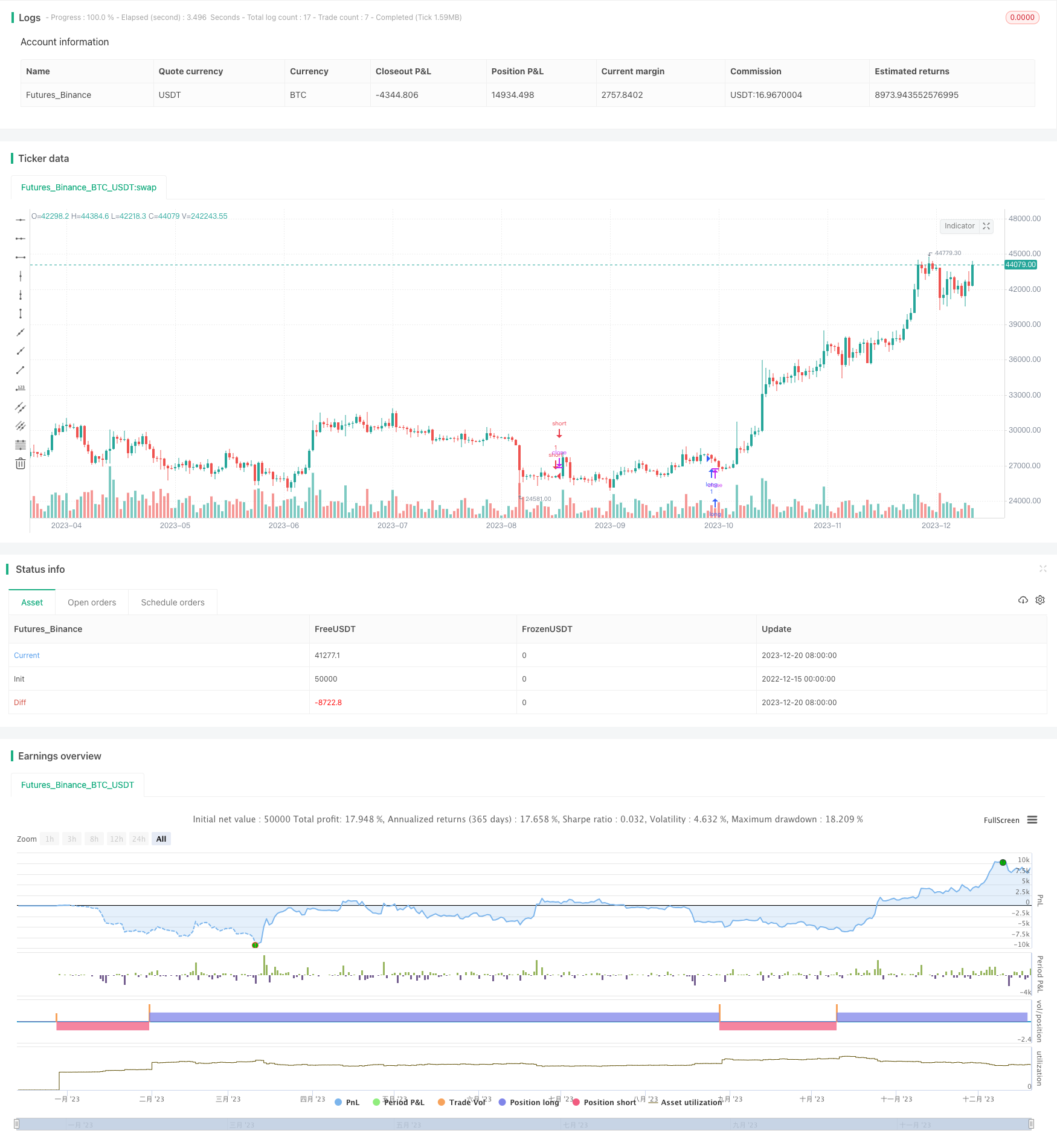
Overview
This is a short-term quantitative trading strategy based on Simple Moving Average (SMA), Exponential Moving Average (EMA), Keltner Channels, MACD indicator and Stochastic oscillator. It uses the price breakthrough of SMA and EMA, combined with long and short signals from Keltner Channels, MACD and Stochastic to automate trading entries and exits.
Strategy Principle
The strategy uses 25-period SMA, 200-period EMA to build dual moving average lines. When price breaks through the dual moving averages upwards, a buy signal is generated. When price breaks through the dual moving averages downwards, a sell signal is generated.
At the same time, this strategy uses 10-period Keltner Channels. The breakthrough of channel upper and lower bands also serves as assistant signals. The MACD indicator generates trading signals with its fast line, slow line and histogram. The Stochastic oscillator also forms long and short signals with the golden cross and dead cross of its %K line and %D line.
Specifically, when close price is above both SMA and EMA, and within the Keltner Channels, MACD histogram is negative and Stochastic %K is below 50, a long entry signal is triggered. When close price is below both SMA and EMA, and within the Keltner Channels, MACD histogram is positive and Stochastic %K is above 50, a short entry signal is triggered.
Strategy Advantages
- Using dual moving average combined with channel indicator can effectively filter false breakouts.
- Integrating signals from multiple technical indicators can improve reliability.
- Clear long/short rules facilitate programmatic execution efficiency.
- Suitable for high-frequency quantitative trading strategies.
Strategy Risks and Optimization
- As a short-term trading strategy, it has high trading frequency risks.
- No stop loss mechanism exists, leading to large loss risks.
- Consider adding volatility indicators to optimize entry and stop loss conditions.
- Different parameter periods can be tested to find optimal combinations.
Conclusion
This strategy integrates four commonly used technical indicators - moving averages, channel, MACD and Stochastic. It determines long/short based on price breakthrough, a typical short-term quantitative trading strategy. Compared to single indicator strategies, its multiple indicator combination improves signal accuracy and is worth further testing and optimization.
Parameters
| Name | Default | What it controls |
|---|---|---|
| v_input_1_low | 0 | Source: low | high | close | open | hl2 | hlc3 | hlcc4 | ohlc4 |
| v_input_int_1 | 25 | (?Moving Averages)Length SMA |
| v_input_int_2 | 200 | Length EMA |
| v_input_int_3 | 10 | (?Keltner)Length Keltner Channel |
| v_input_2 | 2 | Multiplier |
| v_input_string_1 | 0 | Bands Style: Average True Range | True Range | Range |
| v_input_3 | 14 | ATR Length |
| v_input_int_4 | 10 | (?Stochastic)%K Length |
| v_input_int_5 | true | %K Smoothing |
| v_input_int_6 | true | %D Smoothing |
| v_input_4 | 4 | (?MACD Fast)Fast Length MACD |
| v_input_5 | 34 | Slow Length MACD |
| v_input_int_7 | 5 | Signal Smoothing MACD |
| v_input_string_2 | 0 | Oscillator MA Type MACD: EMA | SMA |
| v_input_string_3 | 0 | Signal Line MA Type MACD: EMA | SMA |
Source Pine Script
/*backtest
start: 2022-12-15 00:00:00
end: 2023-12-21 00:00:00
period: 1d
basePeriod: 1h
exchanges: [{"eid":"Futures_Binance","currency":"BTC_USDT"}]
*/

// This source code is subject to the terms of the Mozilla Public License 2.0 at https://mozilla.org/MPL/2.0/
// © exlux99

//@version=5
strategy(title="Scalping Trading System Crypto and Stocks", overlay=true)
src = input(low, title="Source")

//sma and ema
len = input.int(25, minval=1, title="Length SMA" , group="Moving Averages")
len2 = input.int(200, minval=1, title="Length EMA", group="Moving Averages")

out = ta.sma(src, len)
out2 = ta.ema(src, len2)


//keltner
lengthk = input.int(10, minval=1, title="Length Keltner Channel",group="Keltner")
mult = input(2.0, "Multiplier",group="Keltner")
BandsStyle = input.string("Average True Range", options = ["Average True Range", "True Range", "Range"], title="Bands Style",group="Keltner")
atrlength = input(14, "ATR Length",group="Keltner")

ma = ta.sma(src, lengthk)
rangema = BandsStyle == "True Range" ? ta.tr(true) : BandsStyle == "Average True Range" ? ta.atr(atrlength) : ta.rma(high - low, lengthk)
upper = ma + rangema * mult
lower = ma - rangema * mult

//stoch
periodK = input.int(10, title="%K Length", minval=1,group="Stochastic")
smoothK = input.int(1, title="%K Smoothing", minval=1,group="Stochastic")
periodD = input.int(1, title="%D Smoothing", minval=1,group="Stochastic")
k = ta.sma(ta.stoch(close, high, low, periodK), smoothK)
d = ta.sma(k, periodD)

//macd 1
fast_length = input(title="Fast Length MACD", defval=4,group="MACD Fast")
slow_length = input(title="Slow Length MACD", defval=34,group="MACD Fast")
signal_length = input.int(title="Signal Smoothing MACD",  minval = 1, maxval = 50, defval = 5,group="MACD Fast")
sma_source = input.string(title="Oscillator MA Type MACD",  defval="EMA", options=["SMA", "EMA"],group="MACD Fast")
sma_signal = input.string(title="Signal Line MA Type MACD", defval="EMA", options=["SMA", "EMA"],group="MACD Fast")

fast_ma = sma_source == "SMA" ? ta.sma(src, fast_length) : ta.ema(src, fast_length)
slow_ma = sma_source == "SMA" ? ta.sma(src, slow_length) : ta.ema(src, slow_length)
macd = fast_ma - slow_ma
signal = sma_signal == "SMA" ? ta.sma(macd, signal_length) : ta.ema(macd, signal_length)
hist = macd - signal


long= close > out and close < upper and close > lower and hist < 0 and k < 50 and close > out2

short= close < out and close < upper and close > lower and hist > 0 and k > 50 and close < out2

strategy.entry("long",strategy.long,when= long)

strategy.entry("short",strategy.short,when=short)
Published by ChaoZhang on the FMZ strategy square · last modified 2023-12-22. Collected in the Quant Trading Vault. Unvalidated research: re-test with your own data and costs before trusting it.
Build this with AgenKit
A spec is not a trading system. Paste this into your coding agent and AgenKit runs a specialist team — architecture, test-first build, risk gates, review — with paper trading on by default.
/agenkit build a production-grade trading bot with a backtest engine, risk controls and paper trading by default from strategies/Quantitative-Trading-Price-Breakthrough-Strategy.md- npx agenkit install engineering-kit in your project
- Paste the command into your agent and approve each phase
- Get tests, backtest, risk controls and a paper-trading switch
Understand it first
Before you run this, read the lesson behind the idea and how to backtest it honestly. Specs like this one are the survivors of an unknown number of trials; deflate their results accordingly.
Related specs
- Dual Breakout Volatility Channel StrategyPine Script · Breakout · 1h
- Quantitative Strategy PSARZigZagMACDART Based on Multi Indicator CombinationPine Script · Breakout · 1m
- MACD Bollinger Turtle Trading StrategyPine Script · Breakout · 1d
- Momentum Breakout Intraday Trading StrategyPine Script · Breakout · 5m
- Volatility Squeeze Breakout StrategyPine Script · Breakout · 1h
- Multiple Indicator Fusion Trading StrategyPine Script · Breakout · 5m