Strategy vault / Mean reversion
Quantitative Trading Signal Tracking and Multi Exit Strategy Optimization System
This strategy is a quantitative trading system based on LuxAlgo® signals and overlays. It primarily initiates long positions by capturing custom alert conditions and manages positions through multiple exit signals…
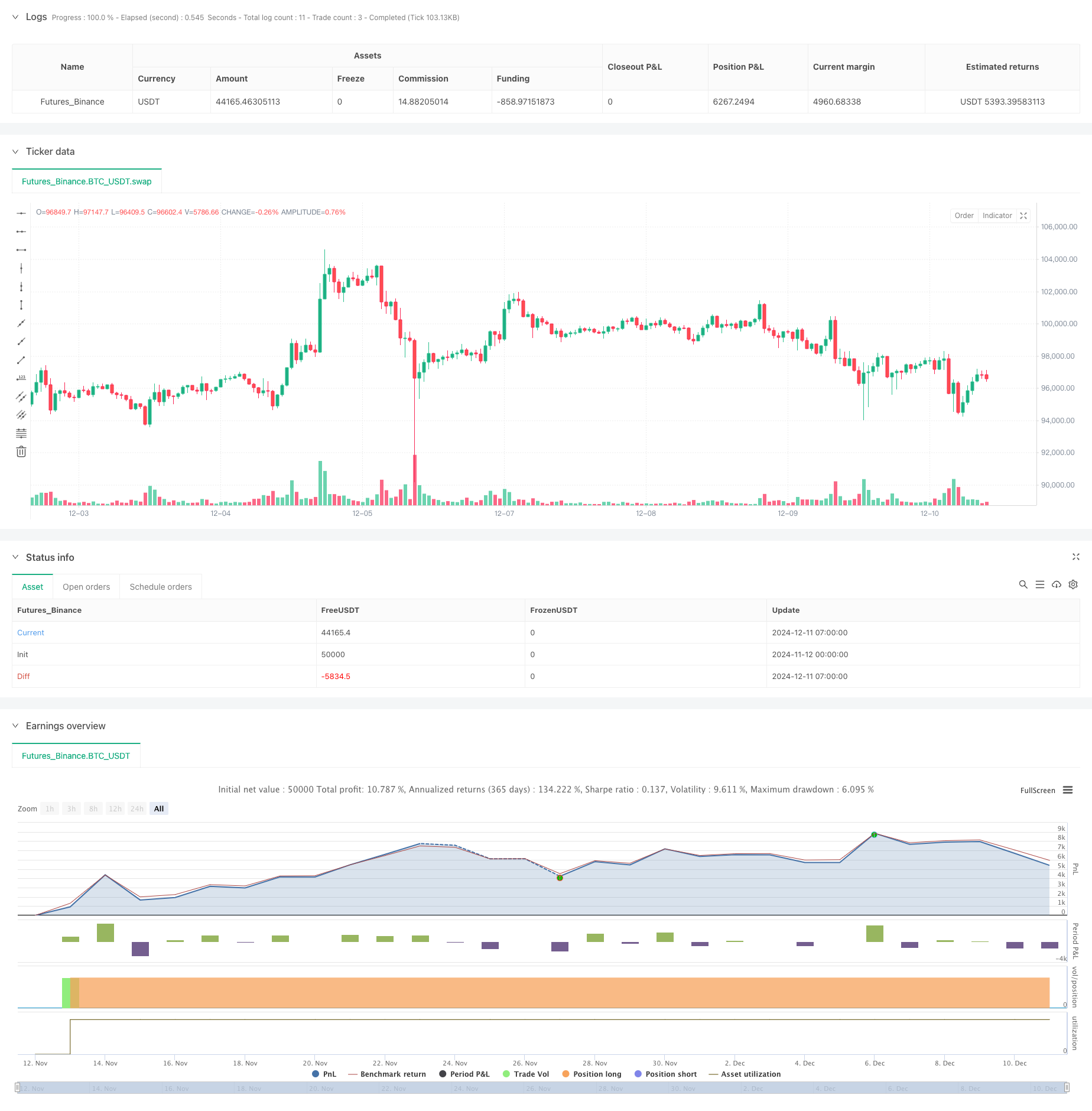
Overview
This strategy is a quantitative trading system based on LuxAlgo® signals and overlays. It primarily initiates long positions by capturing custom alert conditions and manages positions through multiple exit signals. The system employs a modular design, supporting various combinations of exit conditions, including smart trailing stops, trend reversal confirmations, and traditional percentage-based stop losses. Additionally, the system supports position scaling, providing greater flexibility in money management.
Strategy Principles
The core logic includes the following key components:
- Entry Signal System: Triggers long entry signals through customized LuxAlgo® alert conditions.
- Position Scaling: Optional scaling functionality to increase positions on existing holdings.
- Multi-layer Exit Mechanism:
- Smart Trailing Stop: Monitors price relationship with smart trailing line
- Trend Confirmation Exit: Includes basic and enhanced bearish confirmation signals
- Built-in Exit Signals: Utilizes multiple exit conditions inherent to the indicator
- Traditional Stop Loss: Supports percentage-based fixed stop loss settings
- Time Window Management: Provides flexible backtesting date range settings.
Strategy Advantages
- Systematic Risk Management: Effectively controls downside risk through multi-layer exit mechanisms.
- Flexible Position Management: Supports various scaling strategies, adaptable to market conditions.
- High Customizability: Users can freely combine different exit conditions to create personalized trading systems.
- Modular Design: Relatively independent functional modules facilitate maintenance and optimization.
- Complete Backtesting Support: Provides detailed backtesting parameter settings and historical data validation.
Strategy Risks
- Signal Dependency Risk: Strategy heavily relies on the quality of LuxAlgo® indicator signals.
- Market Environment Adaptability Risk: Strategy performance may vary significantly across different market conditions.
- Parameter Sensitivity Risk: Multiple exit condition combinations may lead to premature exits or missed opportunities.
- Liquidity Risk: Market liquidity issues may affect entry and exit execution effectiveness.
- Technical Implementation Risk: Needs to ensure stable operation of indicators and strategy to avoid technical failures.
Strategy Optimization Directions
- Signal System Optimization:
- Introduce more technical indicators for signal confirmation
- Develop adaptive signal threshold adjustment mechanisms
- Risk Control Enhancement:
- Add volatility-adaptive stop loss mechanisms
- Develop dynamic position management systems
- Performance Optimization:
- Optimize calculation efficiency to reduce resource consumption
- Improve signal processing logic to reduce latency
- Functionality Extension:
- Add more market environment analysis tools
- Develop more flexible parameter optimization frameworks
Summary
This strategy provides a comprehensive solution for quantitative trading by combining LuxAlgo®'s high-quality signals with a multi-layer risk management system. Its modular design and flexible configuration options provide good adaptability and scalability. While there are some inherent risks, the strategy's overall performance has significant room for improvement through continuous optimization and refinement. Users are advised to pay attention to changes in market conditions, adjust parameter settings accordingly, and maintain continuous risk monitoring in practical applications.
Source Pine Script
/*backtest
start: 2024-11-12 00:00:00
end: 2024-12-11 08:00:00
period: 1h
basePeriod: 1h
exchanges: [{"eid":"Futures_Binance","currency":"BTC_USDT"}]
*/

// This Pine Script™ code is subject to the terms of the Mozilla Public License 2.0 at https://mozilla.org/MPL/2.0/
// © Chart0bserver
// This strategy is NOT from the LuxAlgo® developers.  We created this to compliment their hard work.  No association with LuxAlgo® is intended nor implied.

// Please visit https://chart.observer to test your Tradingview Strategies in our paper-trading sandbox environment. Webhook your alerts to our API.
// Past performance does not ensure future results.  This strategy provided with absolutely no warranty and is for educational purposes only

// The goal of this strategy is to enter a long position using the Custom Alert condition feature of LuxAlgo® Signals & Overlays™ indicator
// To trigger an exit from the long position, use one or more of the common exit signals which the Signals & Overlays™ indicator provides.
// You will need to connect those signals to this strategy in the dialog box.
// We're calling this a "piggyback" strategy because the LuxAlgo® Signals & Overlays indicator must be present, and remain on the chart.
// The Signals and Overlays™ indicator is invite-only, and requires a paid subscription from LuxAlgo® - https://luxalgo.com/?rfsn=8404759.b37a73

//@version=6
strategy("Simple Backtester for LuxAlgo® Signals & Overlays™", "Simple Backtester for LuxAlgo® S&O ", true, pyramiding=3, default_qty_type = 'percent_of_equity', calc_on_every_tick = true, process_orders_on_close=false, calc_on_order_fills=true, default_qty_value = 33, initial_capital = 10000, currency = currency.USD, commission_type = format.percent, commission_value = 0.10 )

// Initialize a flag to track order placement
var bool order_placed = false

// Reset the flag at the start of each new bar
if (not na(bar_index) and bar_index != bar_index[1])
    order_placed := false

// === Inputs which the user needs to change in the configuration dialog to point to the corresponding LuxAlgo alerts === //
// === The Signals & Overlays indicator must be present on the chart in order for this to work === //
la_EntryAlert = input.source(close, "LuxAlgo® Custom Alert signal", "Replace 'close' with your LuxAlgo® entry signal. For example, try using their Custom Alert.", display=display.none, group="Enter Long Position")
useAddOnTrades = input.bool(false, "Add to your long position on LuxAlgo® signals", display=display.none, group="Add-On Trade Signal for Longs")
la_AddOnAlert = input.source(close, "Add to open longs with this signal", "Replace 'close' with your desired Add-On Trade Signal", display=display.none, group="Add-On Trade Signal for Longs")
la_SmartTrail = input.source(close, "LuxAlgo® Smart Trail", "Replace close with LuxAlgo® Smart Trail", display=display.none, group="LuxAlgo® Signals & Overlays™ Alerts")
la_BearishConfirm = input.source(close, "LuxAlgo® Any Bearish Confirmation", "Replace close with LuxAlgo® Any Bearish Confirmation", display=display.none, group="LuxAlgo® Signals & Overlays™ Alerts")
la_BearishConfirmPlus = input.source(close, "LuxAlgo® Bearish Confirmation+", "Replace close with LuxAlgo® Bearish Confirmation+", display=display.none, group="LuxAlgo® Signals & Overlays™ Alerts")
la_BuiltInExits = input.source(close, "LuxAlgo® Bullish Exit", "Replace close with LuxAlgo® Bullish Exit", display=display.none, group="LuxAlgo® Signals & Overlays™ Alerts")
la_TrendCatcherDn = input.source(close, "LuxAlgo® Trend Catcher Down", "Replace close with LuxAlgo® Trend Catcher Down", display=display.none, group="LuxAlgo® Signals & Overlays™ Alerts")

// === Check boxes alowing the user to select exit criteria from th long position === //
exitOnSmartTrail = input.bool(true, "Exit long trade on Smart Trail Switch Bearish", group="Exit Long Conditions")
exitOnBearishConf = input.bool(false, "Exit on Any Bearish Confirmation", group="Exit Long Conditions")
exitOnBearishConfPlus = input.bool(true, "Exit on Bearish Confirmation+", group="Exit Long Conditions")
exitOnBuiltInExits = input.bool(false, "Exit on Bullish Exits", group="Exit Long Conditions")
exitOnTrendCatcher = input.bool(false, "Exit on Trend Catcher Down", group="Exit Long Conditions")

// === Optional Stop Loss ===//
useStopLoss = input.bool(false, "Use a Stop Loss", group="Optional Stop Loss")
stopLossPercent = input.float(0.25, "Stop Loss %", minval=0.25, step=0.25, group="Optional Stop Loss")

// Use Lux Algo's signals as part of your strategy logic
buyCondition = la_EntryAlert > 0

if useAddOnTrades and la_AddOnAlert > 0 and strategy.opentrades > 0 and not buyCondition
    buyCondition := true

sellCondition = false
sellComment = ""

if exitOnSmartTrail and ta.crossunder(close, la_SmartTrail)
    sellCondition := true
    sellComment := "Smart Trail"

if exitOnBearishConf and la_BearishConfirm == 1
    sellCondition := true
    sellComment := "Bearish"

if exitOnBearishConfPlus and la_BearishConfirmPlus == 1
    sellCondition := true
    sellComment := "Bearish+"

if exitOnBuiltInExits and la_BuiltInExits == 1
    sellCondition := true
    sellComment := "Bullish Exit"

if exitOnTrendCatcher and la_TrendCatcherDn == 1
    sellCondition := true
    sellComment := "Trnd Over"

// Stop Loss Calculation
stopLossMultiplyer = 1 - (stopLossPercent / 100)
float stopLossPrice = na
if strategy.position_size > 0
    stopLossPrice := strategy.position_avg_price * stopLossMultiplyer

// -----------------------------------------------------------------------------------------------------------//
// Back-testing Date Range code  ----------------------------------------------------------------------------//
// ---------------------------------------------------------------------------------------------------------//
fromMonth = input.int(defval=1, title='From Month', minval=1, maxval=12, group='Back-Testing Date Range')
fromDay = input.int(defval=1, title='From Day', minval=1, maxval=31, group='Back-Testing Date Range')
fromYear = input.int(defval=2024, title='From Year', minval=1970, group='Back-Testing Date Range')
thruMonth = 1
thruDay = 1
thruYear = 2112

// === START/FINISH FUNCTION ===
start = timestamp(fromYear, fromMonth, fromDay, 00, 00)  // backtest start window
finish = timestamp(thruYear, thruMonth, thruDay, 23, 59)  // backtest finish window
window() =>  // create function "within window of time
    time >= start and time <= finish ? true : false
// End Date range code -----//

if buyCondition and window() and not order_placed
    strategy.entry("Long", strategy.long)
    order_placed := true

if sellCondition and window() and not order_placed
    strategy.close("Long", comment=sellComment)
    order_placed := true

if useStopLoss and window()
strategy.exit("Stop", "Long", stop=stopLossPrice)Published by ChaoZhang on the FMZ strategy square · last modified 2024-12-13. Collected in the Quant Trading Vault. Unvalidated research: re-test with your own data and costs before trusting it.
Build this with AgenKit
A spec is not a trading system. Paste this into your coding agent and AgenKit runs a specialist team — architecture, test-first build, risk gates, review — with paper trading on by default.
/agenkit build a production-grade trading bot with a backtest engine, risk controls and paper trading by default from strategies/Quantitative-Trading-Signal-Tracking-and-Multi-Exit-Strategy-Optimization-System.md- npx agenkit install engineering-kit in your project
- Paste the command into your agent and approve each phase
- Get tests, backtest, risk controls and a paper-trading switch
Understand it first
Before you run this, read the lesson behind the idea and how to backtest it honestly. Specs like this one are the survivors of an unknown number of trials; deflate their results accordingly.
Related specs
- 1 2 3 Pattern Quantitative Trading Strategy with EMAs MACD and 4th Candle ExtensionPine Script · Mean reversion · 1h
- 3 10 Oscillator Profile Flagging StrategyPine Script · Mean reversion · 1d
- A Trend Reversal Strategy Based on Moving Averages Price Patterns and VolumePine Script · Mean reversion · 1d
- ATR and EMA based Dynamic Take Profit and Stop Loss Adaptive StrategyPine Script · Mean reversion · 1h
- Adaptive Mean Reversion Trading Strategy Based on Chande Momentum OscillatorPine Script · Mean reversion · 1d
- Adaptive Moving Average Tracking StrategyPine Script · Mean reversion · 1d