Strategy vault / Mean reversion
Reversal Trading Strategy Based on Generalized Support Resistance
This strategy adopts reversal trading based on bullish/bearish factors, with preset profit-taking levels. The core of the factors is the extended pattern "Generalized Support/Resistance" based on trading volume…
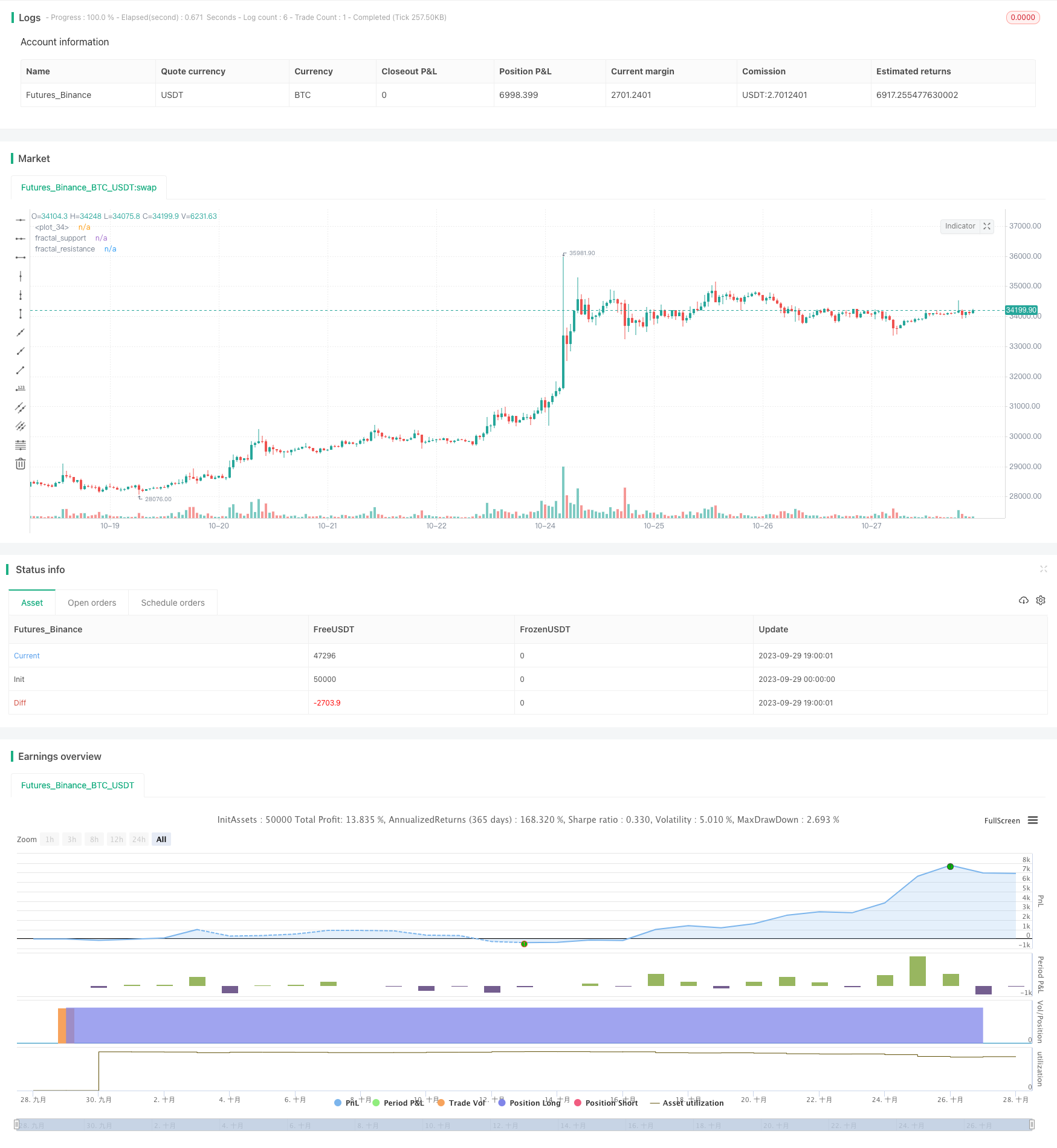
Overview
This strategy adopts reversal trading based on bullish/bearish factors, with preset profit-taking levels. The core of the factors is the extended pattern "Generalized Support/Resistance" based on trading volume, suitable for stocks with high volume and volatility. The advantages lie in capturing larger reversal opportunities in medium-short terms and profiting quickly, while it bears the risk of being trapped.
Strategy Logic
Identifying bullish/bearish factors based on "Generalized Support/Resistance" with volume
Using candlestick patterns to identify classic S/R levels, filtered by significant volume
Generalized S/R has better coverage than classic patterns
Breaking generalized support signals long factor, breaking generalized resistance signals short factor
Reversal trading
Take reverse position when factor signal triggers
If already in position, reduce or add reverse position
Setting profit target levels
Set stop loss based on ATR
Set multiple profit levels like 1R, 2R, 3R
Partial profit taking when hitting different targets
Advantages
Capture decent mid-term reversals
S/R breakouts represent strong reversal signals with some reliability, able to catch mid-term reversals
Quick profit-taking, small drawdowns
By setting stop loss and multiple profit targets, can achieve quick gains and limit drawdowns
Suitable for stocks with significant institutional money and volatility
The strategy relies on volume, requiring sizable institutional participation; also needs volatility to make profits
Risks
Getting trapped in range-bound market
Frequent stop loss exit and re-entry in opposite direction can result in whipsaws
Failure of support/resistance
Generalized S/R is not absolutely reliable, some failures exist
One-sided holding risk
The pure reversal logic may miss large trending opportunities
Risk management:
Loosen factor conditions, not reverse on every breakout
Add other filters e.g. price/volume divergence
Optimize stop loss strategy to reduce traps
Enhancement Directions
Optimize S/R parameters
Find more reliable factors by tweaking generalized S/R settings
Optimize profit-taking
Add more profit levels, or use non-fixed targets
Optimize stop loss
Adjust ATR parameters or use istics stop loss to reduce unnecessary stops
Incorporate trend and other factors
Add trend filters like moving average to avoid big trend conflicts; also add other assisting factors
Summary
The core of the strategy is to capture decent mid-term swings via reversal trading. The logic is simple and direct, and can be practical with parameter tuning. But the aggressive nature of reversals leads to some drawdown and trapping risk. Further enhancements in stop loss, profit-taking and trend alignment will help reduce unnecessary losses.
Parameters
| Name | Default | What it controls |
|---|---|---|
| v_input_string_1 | 0 | Confidence Interval: 95% | 90% | 99% |
| v_input_1 | 2 | (?Stop loss)ATR Multiplier for trailing stop loss |
| v_input_2 | 14 | Length of ATR for trailing stop loss |
| v_input_int_1 | 5 | (?Order size and Profit taking)Allocation (%) of portfolio into this security |
| v_input_3 | true | Take profit and different levels |
| v_input_float_1 | true | First level profit |
| v_input_float_2 | 2 | Second level profit |
| v_input_float_3 | 3 | Third level profit |
| v_input_4 | 5 | (?Entry)Length of ATR (fast) for diversion test |
| v_input_5 | 50 | Length of ATR (slow) for diversion test |
Source Pine Script
/*backtest
start: 2023-09-29 00:00:00
end: 2023-10-29 00:00:00
period: 1h
basePeriod: 15m
exchanges: [{"eid":"Futures_Binance","currency":"BTC_USDT"}]
*/

// This source code is subject to the terms of the Mozilla Public License 2.0 at https://mozilla.org/MPL/2.0/
// © DojiEmoji

//@version=5
strategy("Fractal Strat [KL] ", overlay=true, pyramiding=1, initial_capital=1000000000)
var string ENUM_LONG = "Long"
var string GROUP_ENTRY = "Entry"
var string GROUP_TSL = "Stop loss"
var string GROUP_TREND = "Trend prediction"
var string GROUP_ORDER = "Order size and Profit taking"

// backtest_timeframe_start = input.time(defval=timestamp("01 Apr 2000 13:30 +0000"), title="Backtest Start Time")
within_timeframe = true

// TSL: calculate the stop loss price. {
_multiple       = input(2.0, title="ATR Multiplier for trailing stop loss", group=GROUP_TSL)
ATR_TSL         = ta.atr(input(14, title="Length of ATR for trailing stop loss", group=GROUP_TSL, tooltip="Initial risk amount = atr(this length) x multiplier")) * _multiple
TSL_source      = low
TSL_line_color  = color.green
TSL_transp      = 100
var stop_loss_price = float(0)

var float initial_entry_p    = float(0)
var float risk_amt           = float(0)
var float initial_order_size = float(0)

if strategy.position_size == 0 or not within_timeframe
    TSL_line_color := color.black
    stop_loss_price := TSL_source - ATR_TSL
else if strategy.position_size > 0
    stop_loss_price := math.max(stop_loss_price, TSL_source - ATR_TSL)
    TSL_transp := 0

plot(stop_loss_price, color=color.new(TSL_line_color, TSL_transp))
// } end of "TSL" block


// Order size and profit taking {
pcnt_alloc = input.int(5, title="Allocation (%) of portfolio into this security", tooltip="Size of positions is based on this % of undrawn capital. This is fixed throughout the backtest period.", minval=0, maxval=100, group=GROUP_ORDER) / 100

// Taking profits at user defined target levels relative to risked amount (i.e 1R, 2R, 3R)
var bool  tp_mode = input(true, title="Take profit and different levels", group=GROUP_ORDER)
var float FIRST_LVL_PROFIT = input.float(1, title="First level profit", tooltip="Relative to risk. Example: entry at $10 and inital stop loss at $9. Taking first level profit at 1R means taking profits at $11", group=GROUP_ORDER)
var float SECOND_LVL_PROFIT = input.float(2, title="Second level profit", tooltip="Relative to risk. Example: entry at $10 and inital stop loss at $9. Taking second level profit at 2R means taking profits at $12", group=GROUP_ORDER)
var float THIRD_LVL_PROFIT = input.float(3, title="Third level profit", tooltip="Relative to risk. Example: entry at $10 and inital stop loss at $9. Taking third level profit at 3R means taking profits at $13", group=GROUP_ORDER)

// }

// Fractals {
// Modified from synapticEx's implementation: https://www.tradingview.com/script/cDCNneRP-Fractal-Support-Resistance-Fixed-Volume-2/

rel_vol_len = 6 // Relative volume is used; the middle candle has to have volume above the average (say sma over prior 6 bars)
rel_vol = ta.sma(volume, rel_vol_len)
_up = high[3]>high[4] and high[4]>high[5] and high[2]<high[3] and high[1]<high[2] and volume[3]>rel_vol[3]
_down = low[3]<low[4] and low[4]<low[5] and low[2]>low[3] and low[1]>low[2] and volume[3]>rel_vol[3]

fractal_resistance = high[3], fractal_support = low[3]   // initialize

fractal_resistance :=  _up ? high[3] : fractal_resistance[1]
fractal_support := _down ? low[3] : fractal_support[1]

plot(fractal_resistance, "fractal_resistance", color=color.new(color.red,50), linewidth=2, style=plot.style_cross, offset =-3, join=false)
plot(fractal_support, "fractal_support", color=color.new(color.lime,50), linewidth=2, style=plot.style_cross, offset=-3, join=false)
// }

// ATR diversion test {
// Hypothesis testing (2-tailed):
//
// Null hypothesis (H0) and Alternative hypothesis (Ha):
//     H0 : atr_fast equals atr_slow
//     Ha : atr_fast not equals to atr_slow; implies atr_fast is either too low or too high
len_fast    = input(5,title="Length of ATR (fast) for diversion test", group=GROUP_ENTRY)
atr_fast    = ta.atr(len_fast)
atr_slow    = ta.atr(input(50,title="Length of ATR (slow) for diversion test", group=GROUP_ENTRY, tooltip="This needs to be larger than Fast"))

// Calculate test statistic (test_stat)
std_error   = ta.stdev(ta.tr, len_fast) / math.pow(len_fast, 0.5)
test_stat = (atr_fast - atr_slow) / std_error

// Compare test_stat against critical value defined by user in settings
//critical_value = input.float(1.645,title="Critical value", tooltip="Strategy uses 2-tailed test to compare atr_fast vs atr_slow. Null hypothesis (H0) is that both should equal. Based on the computed test statistic value, if absolute value of it is +/- this critical value, then H0 will be rejected.", group=GROUP_ENTRY)
conf_interval = input.string(title="Confidence Interval", defval="95%", options=["90%","95%","99%"], tooltip="Critical values of 1.645, 1.96, 2.58, for CI=90%/95%/99%, respectively; Under 2-tailed test to compare atr_fast vs atr_slow. Null hypothesis (H0) is that both should equal. Based on the computed test statistic value, if absolute value of it is +/- critical value, then H0 will be rejected.")
critical_value = conf_interval == "90%" ? 1.645 : conf_interval == "95%" ? 1.96 : 2.58
reject_H0_lefttail = test_stat < -critical_value
reject_H0_righttail = test_stat > critical_value

// } end of "ATR diversion test" block

// Entry Signals
entry_signal_long = close >= fractal_support and reject_H0_lefttail

// MAIN {
// Update the stop limit if strategy holds a position.
if strategy.position_size > 0
    strategy.exit(ENUM_LONG, comment="SL", stop=stop_loss_price)

// Entry
if within_timeframe and entry_signal_long and strategy.position_size == 0
    initial_entry_p := close
    risk_amt := ATR_TSL
    initial_order_size := math.floor(pcnt_alloc * strategy.equity / close)
    strategy.entry(ENUM_LONG, strategy.long, qty=initial_order_size)

var int TP_taken_count = 0
if tp_mode and close > strategy.position_avg_price
    if close >= initial_entry_p + THIRD_LVL_PROFIT * risk_amt and TP_taken_count == 2
        strategy.close(ENUM_LONG, comment="TP Lvl3", qty=math.floor(initial_order_size / 3))
        TP_taken_count := TP_taken_count + 1
    else if close >= initial_entry_p + SECOND_LVL_PROFIT * risk_amt and TP_taken_count == 1
        strategy.close(ENUM_LONG, comment="TP Lvl2", qty=math.floor(initial_order_size / 3))
        TP_taken_count := TP_taken_count + 1
    else if close >= initial_entry_p + FIRST_LVL_PROFIT * risk_amt and TP_taken_count == 0
        strategy.close(ENUM_LONG, comment="TP Lvl1", qty=math.floor(initial_order_size / 3))
        TP_taken_count := TP_taken_count + 1

// Alerts
_atr = ta.atr(14)
alert_helper(msg) =>
    prefix = "[" + syminfo.root + "] "
    suffix = "(P=" + str.tostring(close, "#.##") + "; atr=" + str.tostring(_atr, "#.##") + ")"
    alert(str.tostring(prefix) + str.tostring(msg) + str.tostring(suffix), alert.freq_once_per_bar)

if strategy.position_size > 0 and ta.change(strategy.position_size)
    if strategy.position_size > strategy.position_size[1]
        alert_helper("BUY")
    else if strategy.position_size < strategy.position_size[1]
        alert_helper("SELL")

// Clean up - set the variables back to default values once no longer in use
if ta.change(strategy.position_size) and strategy.position_size == 0
    TP_taken_count := 0
    initial_entry_p := float(0)
    risk_amt := float(0)
    initial_order_size := float(0)
    stop_loss_price := float(0)
// } end of MAIN block
Published by ChaoZhang on the FMZ strategy square · last modified 2023-10-30. Collected in the Quant Trading Vault. Unvalidated research: re-test with your own data and costs before trusting it.
Build this with AgenKit
A spec is not a trading system. Paste this into your coding agent and AgenKit runs a specialist team — architecture, test-first build, risk gates, review — with paper trading on by default.
/agenkit build a production-grade trading bot with a backtest engine, risk controls and paper trading by default from strategies/Reversal-Trading-Strategy-Based-on-Generalized-Support-Resistance.md- npx agenkit install engineering-kit in your project
- Paste the command into your agent and approve each phase
- Get tests, backtest, risk controls and a paper-trading switch
Understand it first
Before you run this, read the lesson behind the idea and how to backtest it honestly. Specs like this one are the survivors of an unknown number of trials; deflate their results accordingly.
Related specs
- Advanced Momentum EMA Trend Following with RSI Overbought Oversold Trading StrategyPine Script · Mean reversion · 1d
- Support and Resistance Enhanced Momentum Reversal StrategyPine Script · Mean reversion · 2m
- Adaptive Trading Strategy Combining Dynamic Trend Reversal and Stochastic IndicatorPine Script · Mean reversion · 1d
- Advanced Strategy with Volume and Price Pullback Multiple Take ProfitPine Script · Mean reversion · 1h
- Dynamic Adaptive Multi Timeframe Trend Following and Range Reversal Hybrid StrategyPine Script · Mean reversion · 2d
- Multi Indicator Reversal Point Capture Trading StrategyPine Script · Mean reversion · 1d