RSI Breakout Strategy
The RSI Breakout Strategy is a quantitative trading strategy that identifies breakout points using the RSI indicator, combined with breaks of the day's high or low prices, to make buy or sell decisions. This strategy…
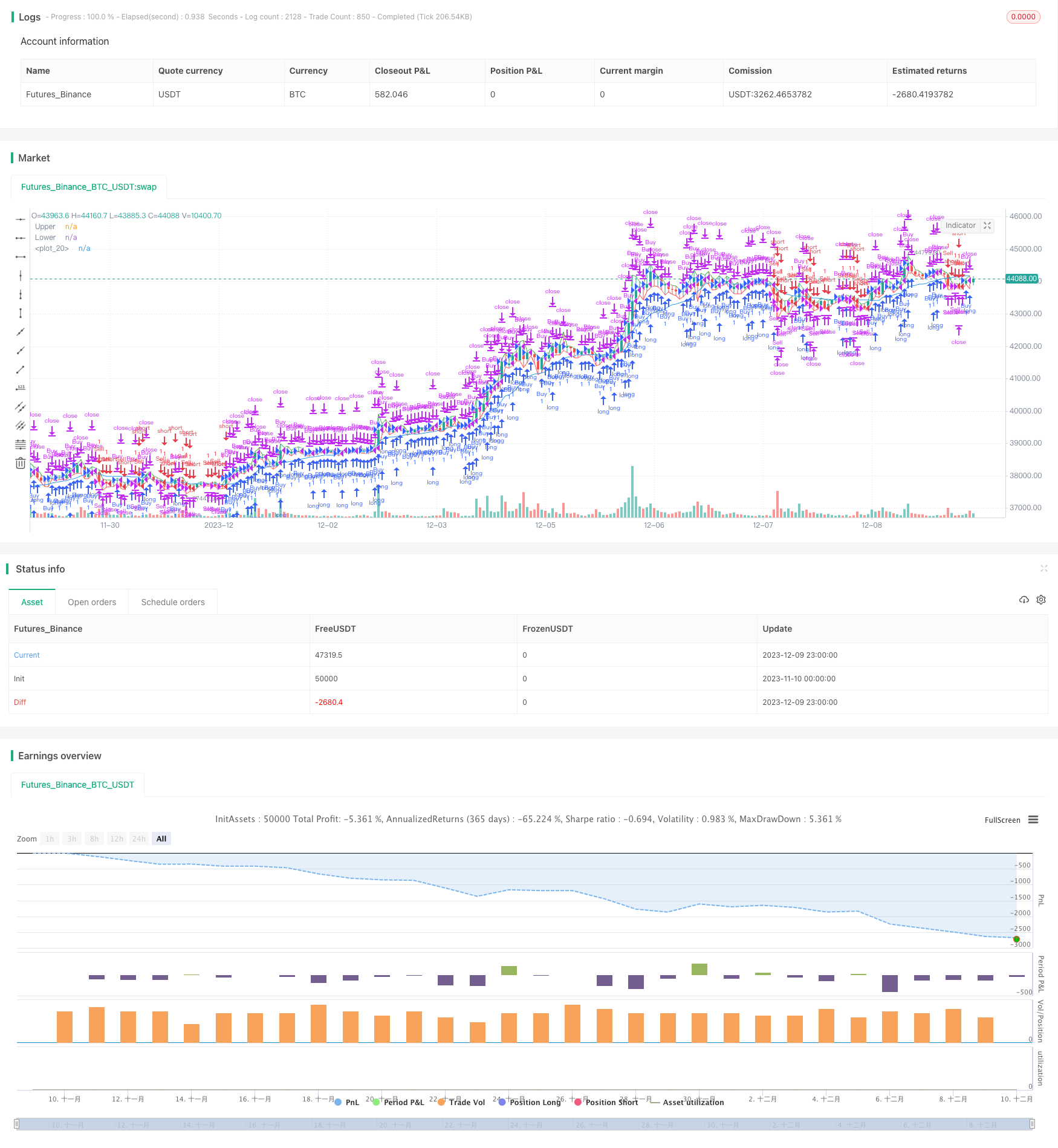
Overview
The RSI Breakout Strategy is a quantitative trading strategy that identifies breakout points using the RSI indicator, combined with breaks of the day's high or low prices, to make buy or sell decisions. This strategy is suitable for Indian index futures such as Nifty, Bank Nifty, etc.
Strategy Logic
The core logic of the RSI Breakout Strategy is:
Limit trading time between 10:15 am and 3:10 pm to avoid violent fluctuations at market open and close.
Real-time monitor breaks of the day's high and low prices. If the day's high is broken, a buy signal is generated. If the day's low is broken, a sell signal is generated.
When the day's high/low is broken, check the value of the RSI indicator simultaneously. The RSI indicator can measure the overbought/oversold levels of the market. When RSI is above 50, it indicates a bull market. When RSI is below 50, it indicates a bear market. So the strategy requires RSI to align with the price breakout direction to avoid false breakouts.
When buy/sell signals are triggered, set the 20-period VWMA as the stop loss line.
Mandatory stop loss exit after 3:10 pm every day if positions are still open.
Advantages
The biggest advantage of the RSI Breakout Strategy is that it combines price breakout and dual confirmation from the RSI indicator to effectively identify short-term market trends. In addition, using the day's high/low prices as reference prices and RSI to determine true/false breakouts can greatly improve signal accuracy. Finally, the rigorous stop loss mechanism helps keep losses under control.
Risks
There are some risks in the RSI Breakout Strategy:
The day's high/low may update slightly multiple times, which can easily cause overtrading. This can be avoided by relaxing the breakout range to avoid chasing tops/bottoms.
Indian equity indices carry high policy risks that require close attention to economic policies and central bank moves. Major negative news should prompt stop loss exit.
The relatively short reference cycles make the strategy prone to market noise. This can be mitigated by extending calculation cycles or adding other filters to improve signal quality.
Optimization Directions
The RSI Breakout Strategy can be optimized in several aspects:
Add position sizing mechanisms, such as pyramiding with trend and adding positions after trailing stop loss.
Incorporate other indicators to filter signals, using KDJ, WR, OBV etc. to gauge market conditions and avoid trading traps.
Optimize strategy parameters like breakout range, RSI threshold values, stop loss placement etc. to achieve better performance.
Formulate clear entry and exit mechanisms, such as adding after pullback from initial breakout, taking partial profits etc.
Conclusion
The RSI Breakout Strategy utilizes high/low breakouts and RSI indications to identify short-term price trends to some extent. It is a typical breakout strategy, simple to operate with strict risk control, suitable for medium-term trading. Further optimizations can improve strategy performance for learning and adaptation.
Source Pine Script
/*backtest
start: 2023-11-10 00:00:00
end: 2023-12-10 00:00:00
period: 1h
basePeriod: 15m
exchanges: [{"eid":"Futures_Binance","currency":"BTC_USDT"}]
*/

// This source code is subject to the terms of the Mozilla Public License 2.0 at https://mozilla.org/MPL/2.0/
// © Saravanan_Ragavan


// This Strategy is finding high or low breaks of the day and enter into the trader based on RSI value and time value

//@version=4
strategy(title="HiLoExtn", shorttitle="HiLoExtn", overlay=true)


T1 = time(timeframe.period, "0915-0916")
Y = bar_index
Z1 = valuewhen(T1, bar_index, 0)
L = Y-Z1 + 1

tim = time(timeframe.period, "1015-1510")
exitt= time(timeframe.period, "1511-1530")

//VWMA 20
plot(vwma(close,20), color=color.blue)


length = L
lower = lowest(length)
upper = highest(length)
u = plot(upper, "Upper", color=color.green)
l = plot(lower, "Lower", color=color.red)


//**** RSI
len = 14
src = close
up = rma(max(change(src), 0), len)
down = rma(-min(change(src), 0), len)
rsi = down == 0 ? 100 : up == 0 ? 0 : 100 - (100 / (1 + up / down))


// Buy above Buy Line
if ( (upper==high) and rsi>50 and   tim and close>open )
    strategy.entry("Buy", strategy.long, comment="Buy")

// Exit Long Below Vwap
strategy.close("Buy", when = close < vwma(close,20) or exitt)

// Sell above Buy Line
if ((lower==low) and rsi<50 and   tim  and close<open)
    strategy.entry("Sell", strategy.short, comment="Sell")

// Exit Short above Vwap
strategy.close("Sell", when = close > vwma(close,20) or exitt)
Published by ChaoZhang on the FMZ strategy square · last modified 2023-12-11. Collected in the Quant Trading Vault. Unvalidated research: re-test with your own data and costs before trusting it.
Build this with AgenKit
A spec is not a trading system. Paste this into your coding agent and AgenKit runs a specialist team — architecture, test-first build, risk gates, review — with paper trading on by default.
/agenkit build a production-grade trading bot with a backtest engine, risk controls and paper trading by default from strategies/RSI-Breakout-Strategy.md- npx agenkit install engineering-kit in your project
- Paste the command into your agent and approve each phase
- Get tests, backtest, risk controls and a paper-trading switch
Understand it first
Before you run this, read the lesson behind the idea and how to backtest it honestly. Specs like this one are the survivors of an unknown number of trials; deflate their results accordingly.
Related specs
- Multi Filter Trend Breakthrough Smart Moving Average Trading StrategyPine Script · Breakout · 1h
- Multi factor Intelligent Trading StrategyPine Script · Breakout · 1d
- RSI VWAP Short term Quant StrategyPine Script · Breakout · 1h
- RSI Breakout VWAP StrategyPine Script · Breakout · 1d
- VWAP and RSI Combination StrategyPine Script · Breakout · 1m
- Bollinger Bands RSI OBV StrategyPine Script · Breakout · 1h