Strategy vault / Trend following
RSI MA Crossover Swing Trading Strategy with Trailing Stop System
This strategy is a swing trading approach based on the crossover between RSI (Relative Strength Index) and its moving average (MA), designed for 4-hour charts. It generates trading signals through RSI-MA crossovers…
Overview
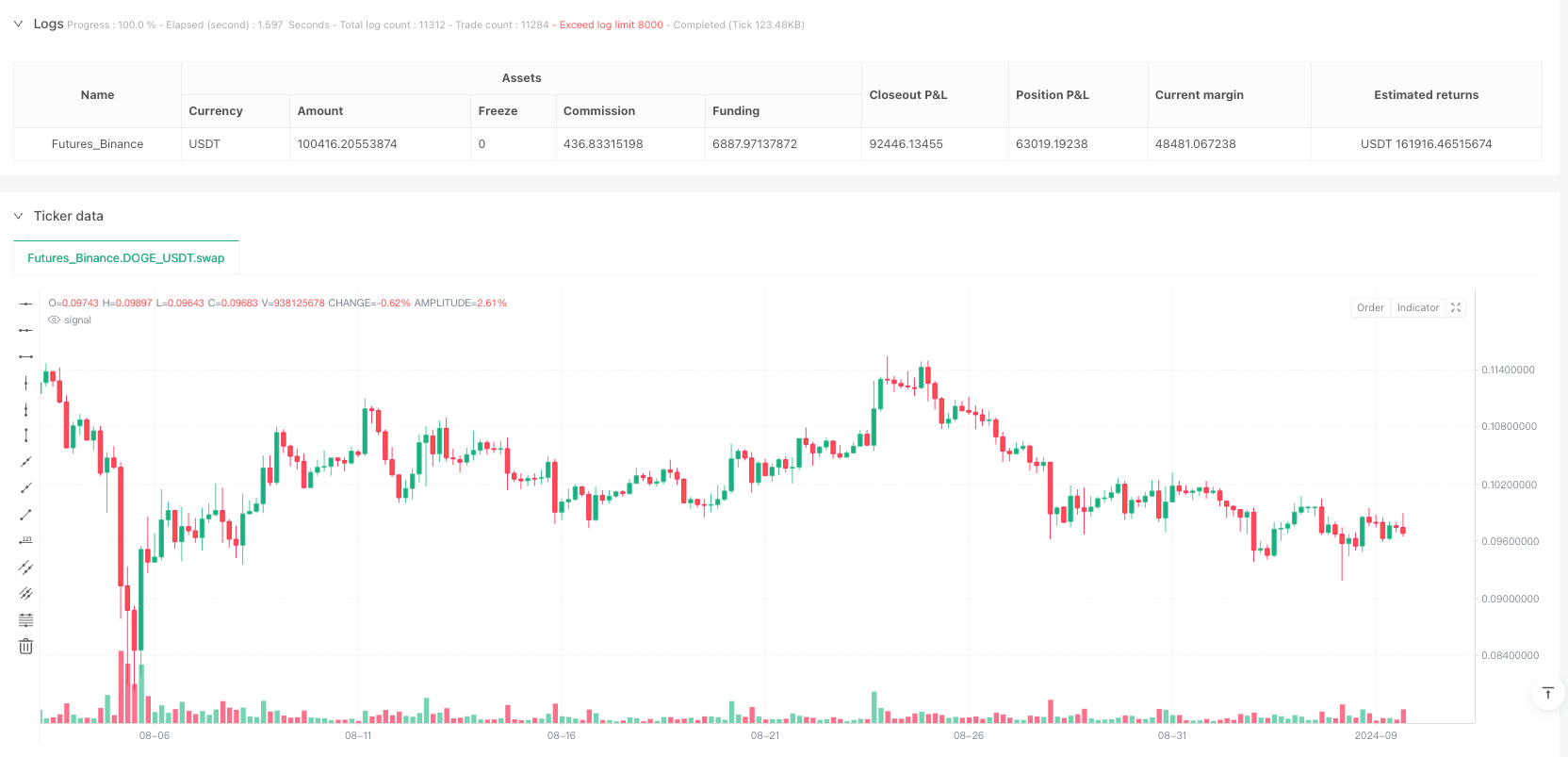
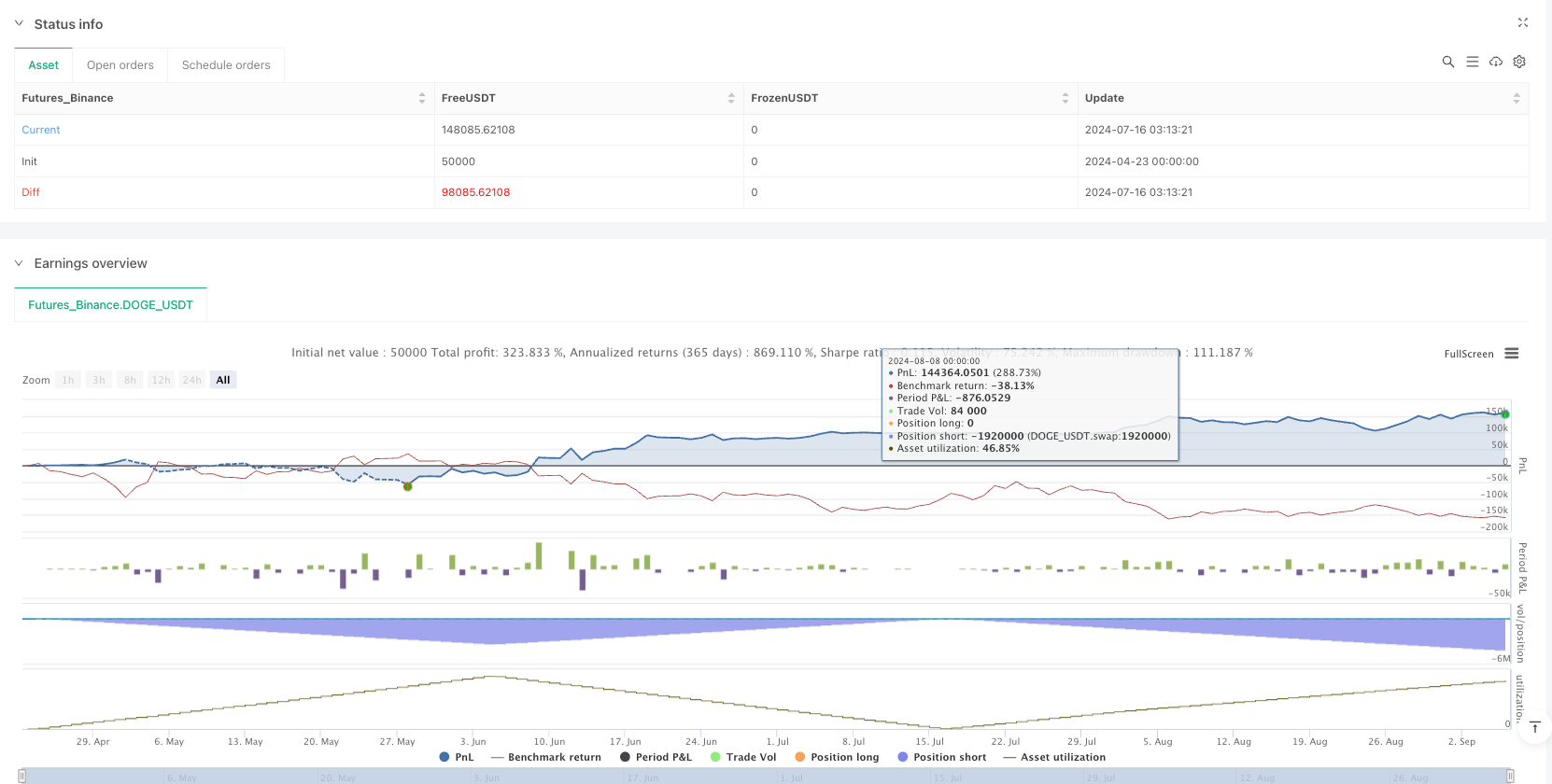
This strategy is a swing trading approach based on the crossover between RSI (Relative Strength Index) and its moving average (MA), designed for 4-hour charts. It generates trading signals through RSI-MA crossovers and incorporates multiple risk management tools, including fixed stop-loss/take-profit, trailing stop-loss, and reversal exit mechanisms. The strategy also imposes a consecutive loss limit, pausing trading after two consecutive losses until a daily reset.
Strategy Logic
- Timeframe Enforcement: The strategy operates exclusively on 4-hour charts to ensure signal alignment with the designed period.
- Indicator Calculation: Uses RSI (default length 14) and its MA (SMA or EMA, default length 14) for signals.
- Golden cross (RSI above MA) triggers long entries.
- Death cross (RSI below MA) triggers short entries.
- Position Sizing: Calculates position size based on allocated capital per trade and current price.
- Exit Mechanisms:
- Fixed SL/TP: Percentage-based stop-loss (default 1.5%) and take-profit (default 2.5%).
- Trailing Stop-Loss: Exits when price retracts by a specified points (default 10) from the peak.
- Reversal Exit: Closes positions on opposing signals.
- Risk Control:
- Pauses trading after two consecutive losses, with a daily reset at 9:15 AM.
Advantages
- Multi-Layered Signal Validation: Combines RSI and MA for reduced false signals.
- Dynamic Risk Management: Trailing stop-locks profits, fixed SL limits losses.
- Strict Capital Allocation: Position sizing prevents over-leverage.
- Disciplinary Control: Loss count mechanism avoids emotional trading.
- Visual Markers: Clear chart annotations for quick signal identification.
Risks
- Parameter Sensitivity: RSI and MA lengths significantly impact signal quality.
- Trend Market Performance: RSI may lag in strong trends due to prolonged overbought/oversold conditions.
- Timeframe Limitation: Requires revalidation for other periods.
- Consecutive Loss Risk: May miss opportunities during pause periods.
Solutions:
- Optimize parameters via backtesting.
- Add trend filters (e.g., ADX).
- Implement dynamic loss count thresholds.
Optimization Directions
- Multi-Indicator Confirmation: Integrate MACD or Bollinger Bands.
- Dynamic Parameters: Adjust RSI length and SL ratios based on market volatility.
- Timeframe Expansion: Test performance on higher/lower timeframes (e.g., daily/1-hour).
- Machine Learning: Train models to optimize entry/exit conditions.
- Advanced Capital Management: Dynamically adjust capital allocation based on equity.
Conclusion
The strategy leverages RSI-MA crossovers for swing trading, balancing profitability and risk through multi-tiered management tools. Its strengths lie in clear logic and discipline, though further optimizations (e.g., multi-indicator integration) could enhance adaptability. Future improvements should focus on dynamic adjustments and broader market validation.
Source Pine Script
/*backtest
start: 2024-04-23 00:00:00
end: 2024-09-06 00:00:00
period: 4h
basePeriod: 4h
exchanges: [{"eid":"Futures_Binance","currency":"DOGE_USDT"}]
*/

//@version=5
strategy("? RX Swing ", overlay=true, default_qty_type=strategy.percent_of_equity, default_qty_value=1)


// === INPUTS ===
rsiLength     = input.int(14, title="RSI Length")
maLength      = input.int(14, title="RSI MA Length")
maType        = input.string("SMA", options=["SMA", "EMA"], title="MA Type for RSI")
sl_pct        = input.float(1.5, title="Stop Loss %", minval=0.0)
tp_pct        = input.float(2.5, title="Take Profit %", minval=0.0)
capitalPerTrade = input.float(15000, title="Capital Per Trade (INR)", minval=1)
lotSize       = input.int(50, title="Lot Size (Nifty Options Lot)", minval=1)
trail_points  = input.float(10, title="Trailing SL Points", minval=0.1)

// === CALCULATIONS ===
rsi    = ta.rsi(close, rsiLength)
rsiMA  = maType == "SMA" ? ta.sma(rsi, maLength) : ta.ema(rsi, maLength)

longSignal  = ta.crossover(rsi, rsiMA)
shortSignal = ta.crossunder(rsi, rsiMA)

// === TRADING WINDOW ===
canTrade = true
exitTime = false

// === STATE VARIABLES ===
var float entryPrice = na
var bool inTrade = false
var string tradeDir = ""
var int lossCount = 0
var float trailHigh = na
var float trailLow = na

// === EXIT TRIGGER ===
exitNow = false
exitReason = ""

// === POSITION SIZE BASED ON CAPITAL ===
positionSize = (capitalPerTrade / close) * lotSize

// === ENTRY LOGIC (AFTER CLOSE OF CANDLE) ===
if (canTrade and lossCount < 2)
    if (longSignal and not inTrade and barstate.isconfirmed)  // Ensure the signal happens after candle close
        strategy.entry("Buy Call", strategy.long, qty=positionSize)
        entryPrice := close
        trailHigh := close
        inTrade := true
        tradeDir := "CALL"

    else if (shortSignal and not inTrade and barstate.isconfirmed)  // Ensure the signal happens after candle close
        strategy.entry("Buy Put", strategy.short, qty=positionSize)
        entryPrice := close
        trailLow := close
        inTrade := true
        tradeDir := "PUT"

// === TRAILING STOP-LOSS LOGIC ===
if (inTrade)
    if (tradeDir == "CALL")
        trailHigh := math.max(trailHigh, close)
        if (close <= trailHigh - trail_points)
            strategy.close("Buy Call", comment="CALL Trailing SL Hit")
            exitNow := true
            exitReason := "Trail SL"
            inTrade := false
            lossCount := lossCount + 1

    if (tradeDir == "PUT")
        trailLow := math.min(trailLow, close)
        if (close >= trailLow + trail_points)
            strategy.close("Buy Put", comment="PUT Trailing SL Hit")
            exitNow := true
            exitReason := "Trail SL"
            inTrade := false
            lossCount := lossCount + 1

// === REVERSAL EXIT LOGIC ===
if (inTrade)
    if (tradeDir == "CALL" and shortSignal)
        strategy.close("Buy Call", comment="CALL Exit on Reversal")
        exitNow := true
        exitReason := "Reversal"
        inTrade := false
        if (strategy.position_size < 0)
            lossCount := lossCount + 1

    if (tradeDir == "PUT" and longSignal)
        strategy.close("Buy Put", comment="PUT Exit on Reversal")
        exitNow := true
        exitReason := "Reversal"
        inTrade := false
        if (strategy.position_size > 0)
            lossCount := lossCount + 1

// === TP/SL EXIT LOGIC ===
if (inTrade)
    tpLevel = entryPrice * (1 + tp_pct / 100)
    slLevel = entryPrice * (1 - sl_pct / 100)

    if (strategy.position_size > 0)
        if (close >= tpLevel)
            strategy.close("Buy Call", comment="CALL TP Hit")
            exitNow := true
            exitReason := "TP"
            inTrade := false
        else if (close <= slLevel)
            strategy.close("Buy Call", comment="CALL SL Hit")
            exitNow := true
            exitReason := "SL"
            inTrade := false
            lossCount := lossCount + 1

    if (strategy.position_size < 0)
        tpLevel = entryPrice * (1 - tp_pct / 100)
        slLevel = entryPrice * (1 + sl_pct / 100)

        if (close <= tpLevel)
            strategy.close("Buy Put", comment="PUT TP Hit")
            exitNow := true
            exitReason := "TP"
            inTrade := false
        else if (close >= slLevel)
            strategy.close("Buy Put", comment="PUT SL Hit")
            exitNow := true
            exitReason := "SL"
            inTrade := false
            lossCount := lossCount + 1

// === RESET LOSS COUNT ON NEW DAY ===
if (hour == 9 and minute == 15)
    lossCount := 0

// === MARKUPS ===
plotshape(longSignal and canTrade and lossCount < 2 and barstate.isconfirmed, title="? CALL Entry", location=location.belowbar, style=shape.triangleup, color=color.green, size=size.small, text="CALL")
plotshape(shortSignal and canTrade and lossCount < 2 and barstate.isconfirmed, title="? PUT Entry", location=location.abovebar, style=shape.triangledown, color=color.red, size=size.small, text="PUT")
plotshape(exitNow and exitReason == "TP", location=location.belowbar, style=shape.xcross, color=color.green, size=size.tiny, title="✅ TP Exit", text="TP")
plotshape(exitNow and exitReason == "SL", location=location.abovebar, style=shape.xcross, color=color.red, size=size.tiny, title="❌ SL Exit", text="SL")
plotshape(exitNow and exitReason == "Reversal", location=location.abovebar, style=shape.circle, color=color.fuchsia, size=size.tiny, title="? Reversal Exit", text="REV")
plotshape(exitNow and exitReason == "Trail SL", location=location.abovebar, style=shape.square, color=color.yellow, size=size.tiny, title="? Trailing SL Exit", text="Trail")Published by ianzeng123 on the FMZ strategy square · last modified 2025-04-24. Collected in the Quant Trading Vault. Unvalidated research: re-test with your own data and costs before trusting it.
Build this with AgenKit
A spec is not a trading system. Paste this into your coding agent and AgenKit runs a specialist team — architecture, test-first build, risk gates, review — with paper trading on by default.
/agenkit build a production-grade trading bot with a backtest engine, risk controls and paper trading by default from strategies/RSI-MA-Crossover-Swing-Trading-Strategy-with-Trailing-Stop-System.md- npx agenkit install engineering-kit in your project
- Paste the command into your agent and approve each phase
- Get tests, backtest, risk controls and a paper-trading switch
Understand it first
Before you run this, read the lesson behind the idea and how to backtest it honestly. Specs like this one are the survivors of an unknown number of trials; deflate their results accordingly.
Related specs
- Quantitative Trend Tracking StrategyPine Script · Trend following · 5h
- Indicator Verification Automated Trading StrategyPine Script · Trend following · 10m
- Bollinger Bands and RSI Trend Following StrategyPine Script · Trend following · 1h
- EMA SMA Multi Indicator Comprehensive Trend Following StrategyPine Script · Trend following · 1h
- EMA and RSI Trend Trading StrategyPine Script · Trend following · 1d
- Multi Indicator Trend Following Strategy with Dynamic Risk ManagementPine Script · Trend following · 2h