Strategy vault / Machine learning
RSI Range Trading Strategy
The RSI range trading strategy makes profit by trading against the trend when RSI reaches overbought or oversold levels. It is based on the assumption that prices do not trend in one direction forever but oscillate…
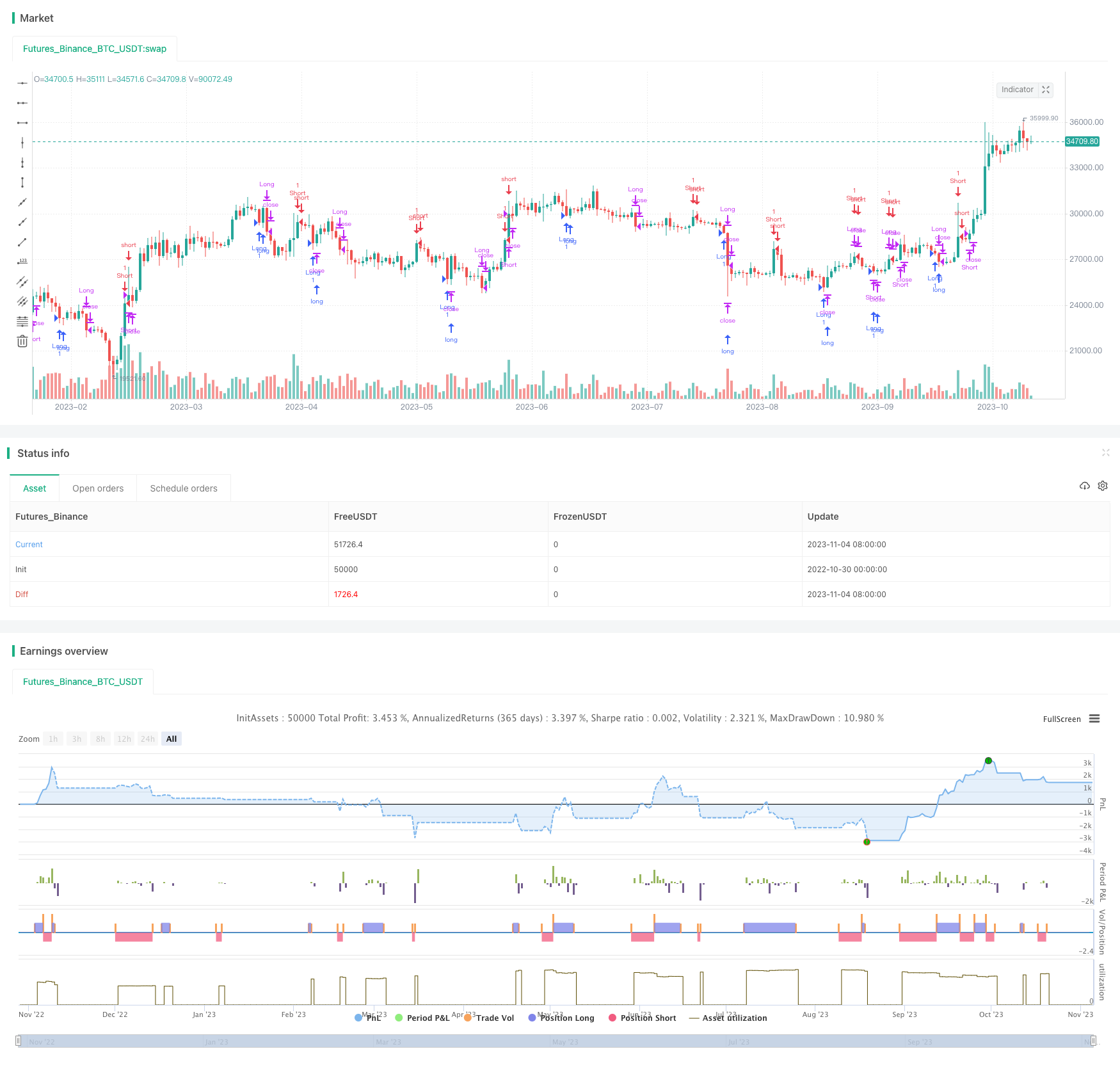
Overview
The RSI range trading strategy makes profit by trading against the trend when RSI reaches overbought or oversold levels. It is based on the assumption that prices do not trend in one direction forever but oscillate back and forth within a range. This strategy aims to take advantage of the pullbacks when RSI hits extremes.
Strategy Logic
The strategy calculates the RSI indicator to determine if the price has reached overbought or oversold levels. Specifically, the RSI period is set to 2 bars. The overbought line is 91 and oversold line is 11. A short signal is generated when RSI crosses above the overbought level. A long signal is generated when RSI crosses below the oversold level. The position size is set at 5% of the maximum risk per trade.
To control risks, a stop loss mechanism is implemented. If the price moves 0.5% against the long position after opening long, the position will be closed. Similarly for the short position. This avoids excessive loss when price trends strongly in one direction.
In summary, the core logic is to monitor RSI for overbought/oversold, trade against the trend based on configured RSI levels, and manage risks via stop loss.
Advantage Analysis
RSI is a proven indicator for identifying overbought/oversold levels.
Trading against extremes fits the assumption of price oscillation instead of one-way trend.
Stop loss controls loss for individual trades.
Simple and clear backtesting framework, easy to understand and modify.
Flexible RSI parameters and stop loss level adaptable to changing market.
Risk Analysis
RSI is a trend following indicator, continuous losses may occur during persistent trend instead of range-bound price.
Improper RSI parameters may generate more signals but with lower win rate.
Stop loss may get triggered by small moves or cause large losses if not set properly.
The strategy works better in range-bound market, may underperform in strong trending scenarios.
Excessive position size can magnify losses.
Optimization Directions
Combine RSI with other indicators like MACD to improve signal accuracy.
Research statistical RSI behaviors with different parameters to find optimal settings.
Test dynamic position sizing mechanisms in backtests.
Use ATR to set adaptive stop loss levels.
Apply machine learning to discover optimal parameter combinations.
Explore combining other mean-reversion strategies with RSI to build robust systems.
Summary
The RSI range trading strategy makes simple reversal trades based on RSI overbought/oversold levels and manages risk via stop loss. It works for range-bound oscillating markets but has limitations in strong trending scenarios. Fine-tuning parameters, improving stop loss rules, combining with other indicators and strategies can enhance its stability and adaptability. Overall this strategy provides some valuable insights but needs prudent application and optimization in live trading.
Parameters
| Name | Default | What it controls |
|---|---|---|
| v_input_1 | 2 | rsi Length |
| v_input_2 | 11 | What rsi level triggers a long |
| v_input_3 | 91 | What rsi level triggers a short |
| v_input_4 | 0.05 | Maximum risk/ trade |
| v_input_5 | 0.005 | Max Movment in the opposite direction / trade |
Source Pine Script
/*backtest
start: 2022-10-30 00:00:00
end: 2023-11-05 00:00:00
period: 1d
basePeriod: 1h
exchanges: [{"eid":"Futures_Binance","currency":"BTC_USDT"}]
*/

//@version=5
strategy("Simple RSI Strategy", overlay=true)

var rsiLength = input(2, title = "rsi Length")
var float rsiBuyLevel = input(11, title = "What rsi level triggers a long")
var float rsiShortLevel = input(91, title = "What rsi level triggers a short")
var float maxRisk =  input(.05, title="Maximum risk/ trade")
var chartEntryStop = input(.005, title="Max Movment in the opposite direction / trade")
var float longEntryPrice = na
var float shortEntryPrice = na
rsiValue = ta.rsi(close, rsiLength)

var float maxRiskValue = (strategy.equity * maxRisk) / chartEntryStop
var float maxRsi = 0

//Conditions


// Strategy Execution
if( close <= longEntryPrice-(longEntryPrice*chartEntryStop ))
    strategy.close("Long")

if( close >= shortEntryPrice+(shortEntryPrice*chartEntryStop ))
    strategy.close("Short")

if (rsiValue <= rsiBuyLevel and maxRsi == rsiShortLevel)
    maxRsi := rsiBuyLevel
    strategy.close("Short")
    strategy.entry("Long", strategy.long)
    longEntryPrice := close


else if (rsiValue >= rsiShortLevel and maxRsi == rsiBuyLevel)
    maxRsi := rsiShortLevel
    strategy.close("Long")
    strategy.entry("Short", strategy.short)
    shortEntryPrice := close

else if (rsiValue >= rsiShortLevel )
    maxRsi := rsiShortLevel
    strategy.close("Long")

else if (rsiValue <= rsiBuyLevel )
    maxRsi := rsiBuyLevel
    strategy.close("Short")
Published by ChaoZhang on the FMZ strategy square · last modified 2023-11-06. Collected in the Quant Trading Vault. Unvalidated research: re-test with your own data and costs before trusting it.
Build this with AgenKit
A spec is not a trading system. Paste this into your coding agent and AgenKit runs a specialist team — architecture, test-first build, risk gates, review — with paper trading on by default.
/agenkit build a production-grade trading bot with a backtest engine, risk controls and paper trading by default from strategies/RSI-Range-Trading-Strategy.md- npx agenkit install engineering-kit in your project
- Paste the command into your agent and approve each phase
- Get tests, backtest, risk controls and a paper-trading switch
Understand it first
Before you run this, read the lesson behind the idea and how to backtest it honestly. Specs like this one are the survivors of an unknown number of trials; deflate their results accordingly.
Related specs
- Multi Indicator Dynamic Adaptive Quantitative Trading StrategyPine Script · Machine learning · 1h
- Vortex and RSI Stock Long only Trading StrategyPine Script · Machine learning · 1h
- Market Structure Swing Trading StrategyPine Script · Machine learning · 1d
- ADX EFI 50 Moving Average Channel Pullback StrategyPine Script · Machine learning · 1h
- Multi indicator Combination StrategyPine Script · Machine learning · 1d
- Triple Exponential Moving Average Profit Taking and Stop Loss StrategyPine Script · Machine learning · 3h