Strategy vault / Mean reversion
Shadow Trading Strategy
The shadow trading strategy identifies K-line with long lower or upper shadows to determine potential market reversal opportunities. It goes long when a long lower shadow is identified and goes short when a long…
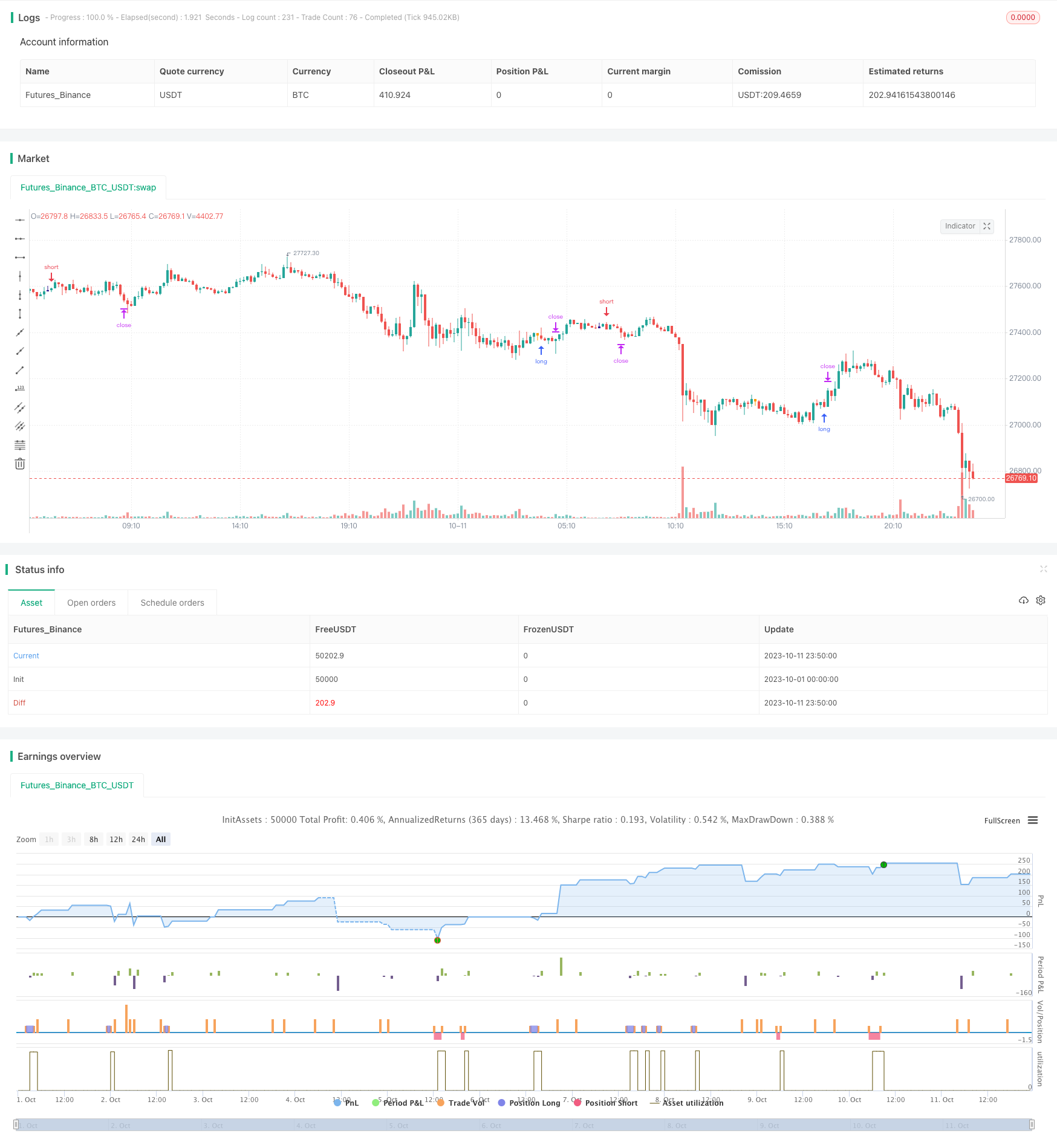
Overview
The shadow trading strategy identifies K-line with long lower or upper shadows to determine potential market reversal opportunities. It goes long when a long lower shadow is identified and goes short when a long upper shadow is identified. The strategy mainly utilizes the general principle of shadow reversal for trading.
Strategy Logic
The core logic of the shadow trading strategy is to identify long upper and lower shadows in K-lines. The strategy calculates the size of the K-line body corpo and the size of the shadows pinnaL and pinnaS. When the size of the shadow is larger than the body size by a certain multiplier, it considers there may be reversal opportunities. Specifically, the strategy includes the following steps:
- Calculate K-line body size
corpo, which is the absolute value of the difference between open and close price. - Calculate upper shadow
pinnaL, which is the absolute value of the difference between highest price and close price. - Calculate lower shadow
pinnaS, which is the absolute value of the difference between lowest price and close price. - Check if upper shadow is larger than body size by a multiplier, through
pinnaL > (corpo*size), wheresizeis an adjustable parameter. - Check if lower shadow is larger than body size by a multiplier, through
pinnaS > (corpo*size). - If above conditions are met, go short (long upper shadow) or long (long lower shadow) at the close of the K-line with shadow.
In addition, the strategy also checks if the K-line range dim is greater than the minimum value min to filter out trivial K-lines with negligible range. Stop loss and take profit are used for exit.
Advantage Analysis
- Utilizes the general principle of shadow reversal, which is a relatively reliable trading signal
- Simple and clear strategy logic, intuitive parameter settings, easy to grasp
- Flexible risk control by adjusting parameters to change entry frequency
- Can be further optimized by combining trend, support/resistance etc.
Risks and Solutions
- Probability of failure in shadow reversal exists, can lower risk by adjusting parameters
- Needs combination with trend judgment to avoid counter trend trades
- Parameters need optimization for different products, may vary across products
- Can combine other indicators to filter entries, lower win rate for higher profitability
Optimization Directions
- Optimize parameters by product to improve stability
- Add trend judgment with moving averages etc. to avoid counter trend
- Add checks on breaking recent high/low points to improve efficacy
- Optimize stop loss and take profit to maximize profit while minimizing loss
- Optimize position sizing, can vary across different products
Conclusion
The shadow trading strategy is a simple and practical short-term trading strategy. It generates trading signals using the general principle of shadow reversals. The strategy logic is simple and easy to implement, and can be adjusted and optimized according to product differences. At the same time, shadow trading also carries certain risks. It needs to be combined with trend and other factors for filtration to reduce false trades. When used properly, shadow trading can become an effective component in a quant trading system.
Parameters
| Name | Default | What it controls |
|---|---|---|
| v_input_1 | true | size |
| v_input_2 | 0.0018 | Tail Tollerance |
| v_input_3 | 0.001 | min |
| v_input_4 | false | offset |
| v_input_5 | true | monthBegin |
| v_input_6 | 2013 | yearBegin |
| v_input_7 | 20 | Target |
| v_input_8 | 70 | Stop |
| v_input_9 | false | Trailing |
Source Pine Script
/*backtest
start: 2023-10-01 00:00:00
end: 2023-10-11 23:59:59
period: 10m
basePeriod: 1m
exchanges: [{"eid":"Futures_Binance","currency":"BTC_USDT"}]
*/

//@version=2
strategy("Shadow Trading", overlay=true)

size = input(1,type=float)
pinnaL = abs(high - close)
pinnaS = abs(low-close)
scarto = input(title="Tail Tollerance", type=float, defval=0.0018)
corpo = abs(close - open)
dim = abs(high-low)
min = input(0.001)
shortE = (open + dim)

longE = (open - dim)
barcolor(dim > min and (close > open) and (pinnaL > (corpo*size)) and (open-low<scarto) ? navy : na)

longcond = (dim > min) and (close > open) and (pinnaL > (corpo*size)) and (open-low<scarto)
minimo=low+scarto
massimo=high+scarto
barcolor( dim > min and(close < open) and (pinnaS > (corpo*size)) and (high-open<scarto) ? orange: na)
shortcond = (dim > min) and(close < open) and (pinnaS > (corpo*size)) and (high-open<scarto)
//plot(shortE)
//plot(longE)
//plot(open)
ss= shortcond ? close : na
ll=longcond ? close : na
offset= input(0.00000)

DayClose = 2
closup = barssince(change(strategy.opentrades)>0)  >= DayClose

longCondition = (close > open) and (pinnaL > (corpo*size)) and (open-low<scarto)

crossFlag = longcond ? 1 : 0
monthBegin = input(1,maxval = 12)
yearBegin = input(2013, maxval= 2015, minval=2000)

if(month(time)>monthBegin and year(time) >yearBegin)
    if (longcond)
        strategy.entry("short", strategy.short, stop = low - offset)
//strategy.close("short", when = closup)
shortCondition = (close < open) and (pinnaS > (corpo*size)) and (high-open<scarto)
if(month(time)>monthBegin and year(time) >yearBegin)
    if (shortcond)
        strategy.entry("long", strategy.long, stop = high + offset)
//strategy.close("long", when = closup)

Target =  input(20)
Stop = input(70) //- 2
Trailing = input(0)
CQ = 100

TPP = (Target > 0) ? Target*10: na
SLP = (Stop > 0) ? Stop*10 : na
TSP = (Trailing > 0) ? Trailing : na

strategy.exit("Close Long", "long", qty_percent=CQ, profit=TPP, loss=SLP, trail_points=TSP)
strategy.exit("Close Short", "short", qty_percent=CQ, profit=TPP, loss=SLP, trail_points=TSP)Published by ChaoZhang on the FMZ strategy square · last modified 2023-11-03. Collected in the Quant Trading Vault. Unvalidated research: re-test with your own data and costs before trusting it.
Build this with AgenKit
A spec is not a trading system. Paste this into your coding agent and AgenKit runs a specialist team — architecture, test-first build, risk gates, review — with paper trading on by default.
/agenkit build a production-grade trading bot with a backtest engine, risk controls and paper trading by default from strategies/Shadow-Trading-Strategy.md- npx agenkit install engineering-kit in your project
- Paste the command into your agent and approve each phase
- Get tests, backtest, risk controls and a paper-trading switch
Understand it first
Before you run this, read the lesson behind the idea and how to backtest it honestly. Specs like this one are the survivors of an unknown number of trials; deflate their results accordingly.
Related specs
- A Trend Reversal Strategy Based on Moving Averages Price Patterns and VolumePine Script · Mean reversion · 1d
- Adaptive Trading Strategy Combining Dynamic Trend Reversal and Stochastic IndicatorPine Script · Mean reversion · 1d
- Advanced Fibonacci Retracement Trend Following and Reversal Trading StrategyPine Script · Mean reversion · 3h
- Advanced Momentum EMA Trend Following with RSI Overbought Oversold Trading StrategyPine Script · Mean reversion · 1d
- Advanced Quantitative Trading Strategy Combining RSI Divergence and Moving AveragesPine Script · Mean reversion · 1h
- Dual factor Cycle Trading StrategyPine Script · Mean reversion · 1h