Strategy vault / Tools & templates
Share Bar by Bar Analysis of Long and Short Strength Indicators
In order to give back to the FMZ platform and community, share strategies & codes & ideas & templates Introduction: Packaged function indicators, can be called directly Analyze candlesticks one by one Measure the…
In order to give back to the FMZ platform and community, share strategies & codes & ideas & templates
Introduction: Packaged function indicators, can be called directly Analyze candlesticks one by one Measure the strength of bulls and bears in the market by comparing the closing position of the candlestick itself with the relationship between the two most recent candlesticks.
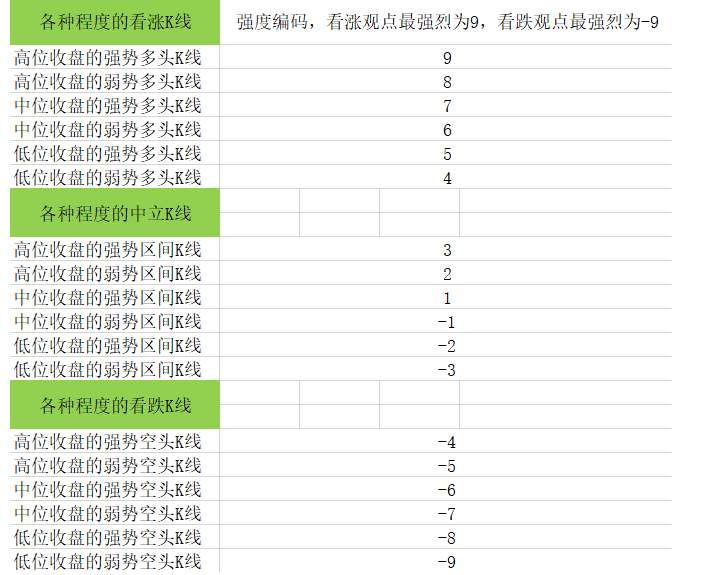
In most cases, when we observe price movements, we only pay attention to the closing price or the shape of the underlying candlestick. How to read the candlestick in a better way and understand the strength of the long and short lines is the direction of more in-depth research. This study proposes a solution that compares the type of the candlestick itself with the position of the underlying candlestick and the upper and lower candlesticks to code the long and short strength. As shown in the figure, this study defines candlesticks as 18 types. There are two main classification methods, one is the closing position (to help determine the view of a single candlestick), and the other is the closing comparison (to help determine the view of the connected candlestick). The closing position can help determine the view of a single candlestick. Based on the position of a candlestick's closing price in the range from its highest price to its lowest price, we define it as a high closing candlestick, a mid closing candlestick and a low closing candlestick. The candlestick closing at each position is divided into a strong candlestick (closing price > opening price) and a weak candlestick (closing price < opening price). Therefore, there are a total of 6 categories of single candlestick, namely: strong candlestick closing at high level; weak candlestick closing at high level; strong candlestick closing at mid-range; weak candlestick closing at mid-range; strong candlestick closing at low level; weak candlestick closing at low level.
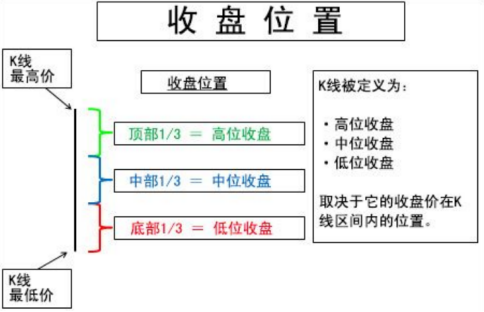
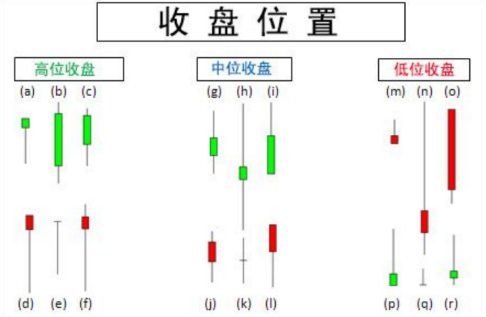
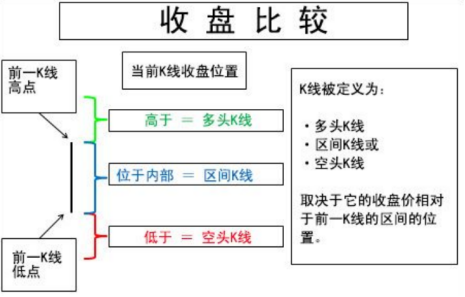
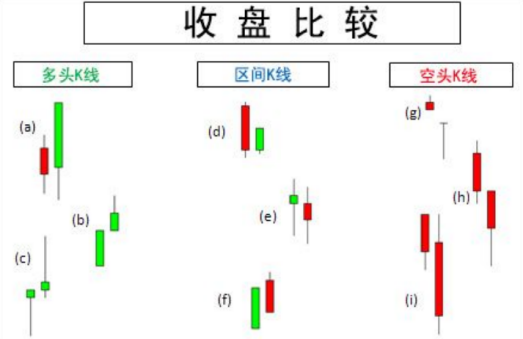 To sum up, by combining 6 candlestick closing relationships with 3 candlestick closing comparisons, a total of 18 candlestick strength relationships are generated. The strongest candlestick for bulls is coded as 9, the weakest candlestick is coded as -9, and the rest are progressively coded according to the strength relationship. The results are as shown in the figure
Welcome to cooperate and communicate, learn and progress together~ v:haiyanyydss
Source JavaScript
$.getClosezhubang = function(rds){
    var arrclose = [];
    var arropen = [];
    var arrhigh = [];
    var arrlow = [];
    var arrzhubang = [];

    for(var i in rds){
        arrclose[i] = rds[i].Close;
        arropen[i] = rds[i].Open;
        arrhigh[i] = rds[i].High;
        arrlow[i] = rds[i].Low;

     if(i>1){

         if(arrclose[i] >= arrhigh[i-1]){

             if(arrclose[i] >= (arrhigh[i]-(arrhigh[i]-arrlow[i])/3) && arrclose[i] >= arropen[i]){
                 arrzhubang[i] = arrclose[i]*1.09;
             }else if(arrclose[i] >= (arrhigh[i]-(arrhigh[i]-arrlow[i])/3) && arrclose[i] < arropen[i]){
                 arrzhubang[i] = arrclose[i]*1.08;
             }else if(arrclose[i] > (arrlow[i]+(arrhigh[i]-arrlow[i])/3) && arrclose[i] < (arrhigh[i]-(arrhigh[i]-arrlow[i])/3) && arrclose[i] >= arropen[i]){
                 arrzhubang[i] = arrclose[i]*1.07;
             }else if(arrclose[i] > (arrlow[i]+(arrhigh[i]-arrlow[i])/3) && arrclose[i] < (arrhigh[i]-(arrhigh[i]-arrlow[i])/3) && arrclose[i] < arropen[i]){
                 arrzhubang[i] = arrclose[i]*1.06;
             }else if(arrclose[i] <= (arrlow[i]+(arrhigh[i]-arrlow[i])/3) && arrclose[i] >= arropen[i]){
                 arrzhubang[i] = arrclose[i]*1.05;
             }else if(arrclose[i] <= (arrlow[i]+(arrhigh[i]-arrlow[i])/3) && arrclose[i] < arropen[i]){
                 arrzhubang[i] = arrclose[i]*1.04;
             }

         }
         else if(arrclose[i] < arrhigh[i-1] && arrclose[i] > arrlow[i-1]){

             if(arrclose[i] >= (arrhigh[i]-(arrhigh[i]-arrlow[i])/3) && arrclose[i] >= arropen[i]){
                 arrzhubang[i] = arrclose[i]*1.03;
             }else if(arrclose[i] >= (arrhigh[i]-(arrhigh[i]-arrlow[i])/3) && arrclose[i] < arropen[i]){
                 arrzhubang[i] = arrclose[i]*1.02;
             }else if(arrclose[i] > (arrlow[i]+(arrhigh[i]-arrlow[i])/3) && arrclose[i] < (arrhigh[i]-(arrhigh[i]-arrlow[i])/3) && arrclose[i] >= arropen[i]){
                 arrzhubang[i] = arrclose[i]*1.01;
             }else if(arrclose[i] > (arrlow[i]+(arrhigh[i]-arrlow[i])/3) && arrclose[i] < (arrhigh[i]-(arrhigh[i]-arrlow[i])/3) && arrclose[i] < arropen[i]){
                 arrzhubang[i] = arrclose[i]*0.99;
             }else if(arrclose[i] <= (arrlow[i]+(arrhigh[i]-arrlow[i])/3) && arrclose[i] >= arropen[i]){
                 arrzhubang[i] = arrclose[i]*0.98;
             }else if(arrclose[i] <= (arrlow[i]+(arrhigh[i]-arrlow[i])/3) && arrclose[i] < arropen[i]){
                 arrzhubang[i] = arrclose[i]*0.97;
             }

         }
         else if(arrclose[i] <= arrlow[i-1]){

             if(arrclose[i] >= (arrhigh[i]-(arrhigh[i]-arrlow[i])/3) && arrclose[i] >= arropen[i]){
                 arrzhubang[i] = arrclose[i]*0.96;
             }else if(arrclose[i] >= (arrhigh[i]-(arrhigh[i]-arrlow[i])/3) && arrclose[i] < arropen[i]){
                 arrzhubang[i] = arrclose[i]*0.95;
             }else if(arrclose[i] > (arrlow[i]+(arrhigh[i]-arrlow[i])/3) && arrclose[i] < (arrhigh[i]-(arrhigh[i]-arrlow[i])/3) && arrclose[i] >= arropen[i]){
                 arrzhubang[i] = arrclose[i]*0.94;
             }else if(arrclose[i] > (arrlow[i]+(arrhigh[i]-arrlow[i])/3) && arrclose[i] < (arrhigh[i]-(arrhigh[i]-arrlow[i])/3) && arrclose[i] < arropen[i]){
                 arrzhubang[i] = arrclose[i]*0.93;
             }else if(arrclose[i] <= (arrlow[i]+(arrhigh[i]-arrlow[i])/3) && arrclose[i] >= arropen[i]){
                 arrzhubang[i] = arrclose[i]*0.92;
             }else if(arrclose[i] <= (arrlow[i]+(arrhigh[i]-arrlow[i])/3) && arrclose[i] < arropen[i]){
                 arrzhubang[i] = arrclose[i]*0.91;
             }

         }

     }else{
         arrzhubang[i] = arrclose[i];
     }

    }
    return arrzhubang;
}Published by 作手君TradeMan on the FMZ strategy square · last modified 2023-02-09. Collected in the Quant Trading Vault. Unvalidated research: re-test with your own data and costs before trusting it.
Build this with AgenKit
A spec is not a trading system. Paste this into your coding agent and AgenKit runs a specialist team — architecture, test-first build, risk gates, review — with paper trading on by default.
/agenkit build a tested, production-ready module from strategies/Share-Bar-by-Bar-Analysis-of-Long-and-Short-Strength-Indicators.md- npx agenkit install engineering-kit in your project
- Paste the command into your agent and approve each phase
- Get tests, backtest, risk controls and a paper-trading switch
Understand it first
Before you run this, read the lesson behind the idea and how to backtest it honestly. Specs like this one are the survivors of an unknown number of trials; deflate their results accordingly.
Related specs
- Binance Account Cross Transfer Small ToolJavaScript · Tools & templates
- Get cryptocurrency current and max supplyJavaScript · Tools & templates
- Interaction TemplateJavaScript · Tools & templates
- KuCoin Fund Transfer PluginJavaScript · Tools & templates
- Moving Average Bot 30 linesJavaScript · Tools & templates · 1d
- OKEx V5 Candlestick Data Paginated Query ExampleJavaScript · Tools & templates