Strategy vault / Mean reversion
Super Trend Daily Reversal Strategy
The Super Trend Daily Reversal Strategy is a quantitative trading strategy that uses the Super Trend indicator to determine market trends, combines price breakthrough and average true range to calculate stop loss…
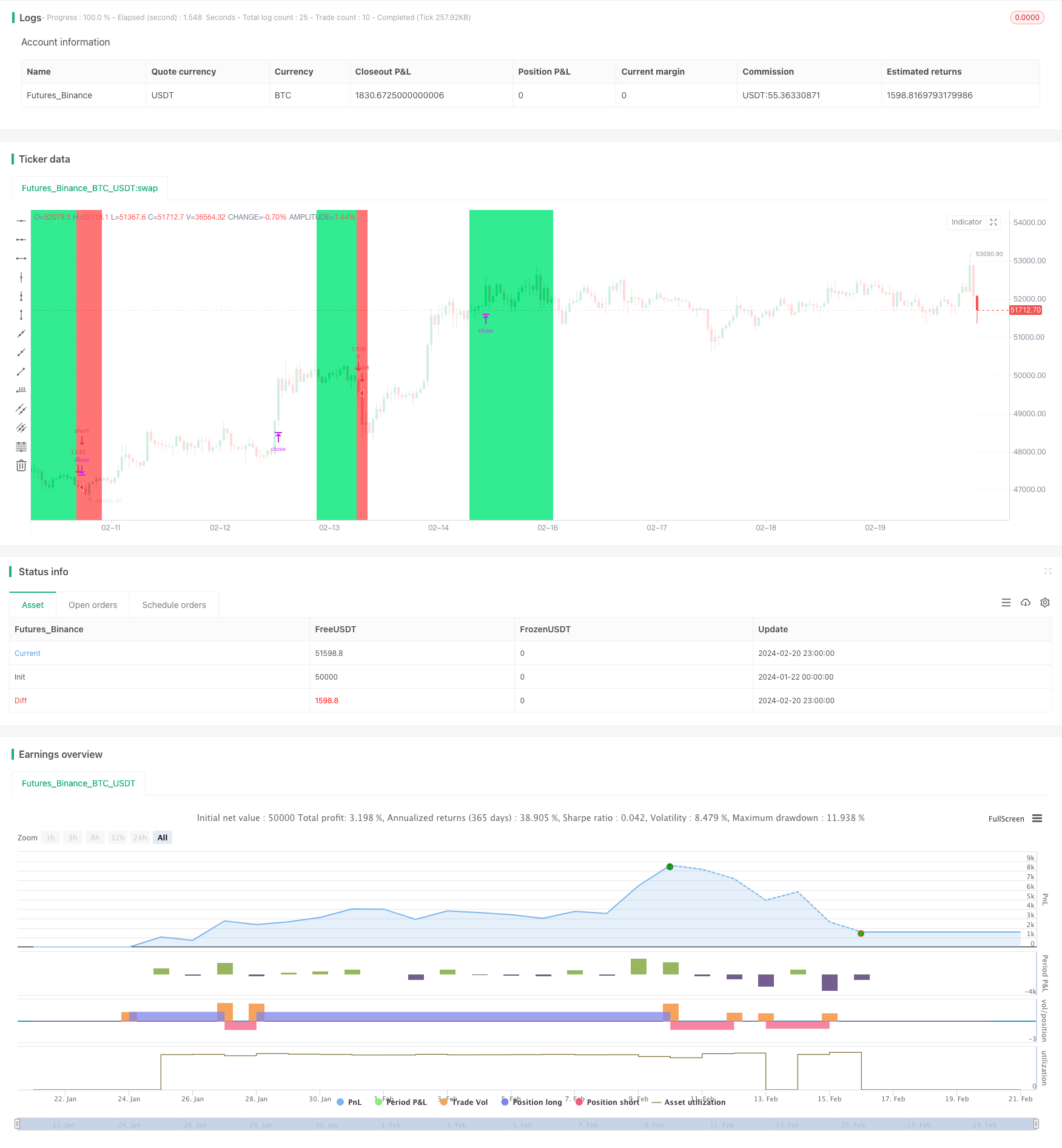
Overview
The Super Trend Daily Reversal Strategy is a quantitative trading strategy that uses the Super Trend indicator to determine market trends, combines price breakthrough and average true range to calculate stop loss, and uses the price change rate indicator to filter Super Trend signals. This strategy is suitable for daily and higher time frames and can be used in markets like cryptocurrencies and stocks.
Strategy Logic
The core indicator of this strategy is the Super Trend indicator. The Super Trend indicator is based on Average True Range (ATR) and can more clearly determine the direction of market trends. A breakdown of the Super Trend upper rail is a short signal, and a breakdown of the lower rail is a long signal.
The strategy uses the Price Change Rate indicator (ROC) to filter the Super Trend indicator to avoid invalid signals. Only participate in Super Trend signals when price volatility is large, otherwise do not participate.
For stop loss, the strategy provides two stop loss methods: fixed stop loss percentage and ATR based adaptive stop loss. Fixed stop loss is simple and direct. ATR stop loss can adjust the stop loss range according to market volatility.
The entry conditions are a reversal of the Super Trend indicator and the price change rate indicator passes the filter. The exit conditions are that Super Trend reverses again or breaks through the stop loss line. The strategy adheres to the trend tracking principle and only allows one position in each direction.
Advantage Analysis
The biggest advantage of this strategy is that the Super Trend indicator has higher clarity and stability in judging trend direction compared to ordinary moving averages, with less noise. In addition, the price change rate indicator effectively filters out some false signals.
The ATR adaptive stop loss mechanism also allows the strategy to adapt to a wider market environment. The stop loss will automatically widen during increased volatility to maximize profits.
From the test results, this strategy performs exceptionally well in a bull market. The win rate is very high in long-term trends of significant magnitude, with long consecutive profitable cycles.
Risk Analysis
The main risk faced by this strategy is misjudgment of trend reversal, which may miss reversal signals or generate unnecessary reversal signals. This often happens when prices oscillate and consolidate around key support/resistance areas.
In addition, a stop loss that is set too wide can also lead to greater losses. ATR stop loss adjusts according to market volatility, so stops may be pulled wider during market events.
To address these risks, the ATR calculation period can be shortened appropriately or the ATR stop loss multiplier adjusted. Additional indicators can also be added to determine key support/resistance areas to avoid misleading signals from those areas.
Optimization Directions
The strategy can be optimized in the following aspects:
Adjust the parameters of the Super Trend indicator to optimize the ATR period and ATR multiples to make the Super Trend line smoother.
Adjust the parameters of the price change rate indicator to optimize the period and change rate threshold to reduce false signals.
Try different stop loss mechanisms such as trailing stops, or optimize the stop loss amplitude of fixed stops.
Add additional judgment indicators to determine key support/resistance and avoid misjudgment of trend reversals.
Test parameter settings and effects on different products to find the optimal parameter combination.
Conduct backtest optimization to find the best parameter settings.
Conclusion
Overall, the Super Trend Daily Reversal Strategy is a relatively stable and reliable trend following strategy. It combines the Super Trend indicator and the price change rate indicator for filtering, which can effectively identify the direction of medium and long term trends. The ATR adaptive stop loss mechanism also enables it to adapt to most market environments. Through further optimization of parameter settings and added judgment indicators, the stability and profitability of this strategy can be improved.
Parameters
| Name | Default | What it controls |
|---|---|---|
| v_input_1 | false | ════════ Test Period ═══════ |
| v_input_2 | 2017 | Backtest Start Year |
| v_input_3 | true | Backtest Start Month |
| v_input_4 | true | Backtest Start Day |
| v_input_5 | 2019 | Backtest Stop Year |
| v_input_6 | 12 | Backtest Stop Month |
| v_input_7 | 31 | Backtest Stop Day |
| v_input_8 | false | ══════ Super Trend ══════ |
| v_input_9 | 3 | ATR Period |
| v_input_10 | 1.3 | ATR Multiplier |
| v_input_11 | false | ══════ Rate of Change ══════ |
| v_input_12 | 30 | ROC Length |
| v_input_13 | 6 | ROC % Change |
| v_input_14 | false | ════════ Stop Loss ═══════ |
| v_input_15 | 0 | Stop Loss Type: Fixed | ATR Derived |
| v_input_16 | 6 | Fixed Stop Loss % |
| v_input_17 | 20 | ATR Stop Period |
| v_input_18 | 1.5 | ATR Stop Multiplier |
Source Pine Script
/*backtest
start: 2024-01-22 00:00:00
end: 2024-02-21 00:00:00
period: 1h
basePeriod: 15m
exchanges: [{"eid":"Futures_Binance","currency":"BTC_USDT"}]
*/

//@version=4
strategy("Super Trend Daily BF ?", overlay=true, precision=2, initial_capital=10000, default_qty_type=strategy.percent_of_equity, default_qty_value=100, commission_type=strategy.commission.percent, commission_value=0.075)

/////////////// Time Frame ///////////////
_1 = input(false,  "════════ Test Period ═══════")
testStartYear = input(2017, "Backtest Start Year")
testStartMonth = input(1, "Backtest Start Month")
testStartDay = input(1, "Backtest Start Day")
testPeriodStart = timestamp(testStartYear,testStartMonth,testStartDay, 0, 0)

testStopYear = input(2019, "Backtest Stop Year")
testStopMonth = input(12, "Backtest Stop Month")
testStopDay = input(31, "Backtest Stop Day")
testPeriodStop = timestamp(testStopYear,testStopMonth,testStopDay, 0, 0)

testPeriod() => true

///////////// Super Trend /////////////
_2 = input(false,  "══════ Super Trend ══════")
length = input(title="ATR Period", type=input.integer, defval=3)
mult = input(title="ATR Multiplier", type=input.float, step=0.1, defval=1.3)

atr = mult * atr(length)

longStop = hl2 - atr
longStopPrev = nz(longStop[1], longStop)
longStop :=  close[1] > longStopPrev ? max(longStop, longStopPrev) : longStop

shortStop = hl2 + atr
shortStopPrev = nz(shortStop[1], shortStop)
shortStop := close[1] < shortStopPrev ? min(shortStop, shortStopPrev) : shortStop

dir = 1
dir := nz(dir[1], dir)
dir := dir == -1 and close > shortStopPrev ? 1 : dir == 1 and close < longStopPrev ? -1 : dir

///////////// Rate Of Change /////////////
_3 = input(false,  "══════ Rate of Change ══════")
source = close
roclength = input(30, "ROC Length",  minval=1)
pcntChange = input(6, "ROC % Change", minval=1)
roc = 100 * (source - source[roclength]) / source[roclength]
emaroc = ema(roc, roclength / 2)
isMoving() => emaroc > (pcntChange / 2) or emaroc < (0 - (pcntChange / 2))

///////////////  Strategy  ///////////////
long = dir == 1 and dir[1] == -1 and isMoving()
short = dir == -1 and dir[1] == 1 and isMoving()

last_long = 0.0
last_short = 0.0
last_long := long ? time : nz(last_long[1])
last_short := short ? time : nz(last_short[1])

long_signal = crossover(last_long, last_short)
short_signal = crossover(last_short, last_long)

last_open_long_signal = 0.0
last_open_short_signal = 0.0
last_open_long_signal := long_signal ? open : nz(last_open_long_signal[1])
last_open_short_signal := short_signal ? open : nz(last_open_short_signal[1])

last_long_signal = 0.0
last_short_signal = 0.0
last_long_signal := long_signal ? time : nz(last_long_signal[1])
last_short_signal := short_signal ? time : nz(last_short_signal[1])

in_long_signal = last_long_signal > last_short_signal
in_short_signal = last_short_signal > last_long_signal

last_high = 0.0
last_low = 0.0
last_high := not in_long_signal ? na : in_long_signal and (na(last_high[1]) or high > nz(last_high[1])) ? high : nz(last_high[1])
last_low := not in_short_signal ? na : in_short_signal and (na(last_low[1]) or low < nz(last_low[1])) ? low : nz(last_low[1])

since_longEntry = barssince(last_open_long_signal != last_open_long_signal[1])
since_shortEntry = barssince(last_open_short_signal != last_open_short_signal[1])

/////////////// Dynamic ATR Stop Losses ///////////////
_4 = input(false,  "════════ Stop Loss ═══════")
SL_type = input("Fixed", options=["Fixed", "ATR Derived"], title="Stop Loss Type")
sl_inp = input(6.0, title='Fixed Stop Loss %') / 100
atrLkb = input(20, minval=1, title='ATR Stop Period')
atrMult = input(1.5, step=0.25, title='ATR Stop Multiplier')
atr1 = atr(atrLkb)

longStop1 = 0.0
longStop1 :=  short_signal ? na : long_signal ? close - (atr1 * atrMult) : longStop1[1]
shortStop1 = 0.0
shortStop1 := long_signal ? na : short_signal ? close + (atr1 * atrMult) : shortStop1[1]

slLong = in_long_signal ? strategy.position_avg_price * (1 - sl_inp) : na
slShort = strategy.position_avg_price * (1 + sl_inp)
long_sl = in_long_signal ? slLong : na
short_sl = in_short_signal ? slShort : na

/////////////// Execution ///////////////
if testPeriod()
    strategy.entry("L", strategy.long, when=long)
    strategy.entry("S", strategy.short, when=short)
    strategy.exit("L SL", "L", stop = SL_type == "Fixed" ? long_sl : longStop1, when=since_longEntry > 0)
    strategy.exit("S SL", "S", stop = SL_type == "Fixed" ? short_sl : shortStop1, when=since_shortEntry > 0)

/////////////// Plotting ///////////////
bgcolor(long_signal ? color.lime : short_signal ? color.red : na, transp=30)
bgcolor(isMoving() ? dir == 1 ? color.lime : color.red : color.white , transp=80)Published by ChaoZhang on the FMZ strategy square · last modified 2024-02-22. Collected in the Quant Trading Vault. Unvalidated research: re-test with your own data and costs before trusting it.
Build this with AgenKit
A spec is not a trading system. Paste this into your coding agent and AgenKit runs a specialist team — architecture, test-first build, risk gates, review — with paper trading on by default.
/agenkit build a production-grade trading bot with a backtest engine, risk controls and paper trading by default from strategies/Super-Trend-Daily-Reversal-Strategy.md- npx agenkit install engineering-kit in your project
- Paste the command into your agent and approve each phase
- Get tests, backtest, risk controls and a paper-trading switch
Understand it first
Before you run this, read the lesson behind the idea and how to backtest it honestly. Specs like this one are the survivors of an unknown number of trials; deflate their results accordingly.
Related specs
- Advanced Momentum EMA Trend Following with RSI Overbought Oversold Trading StrategyPine Script · Mean reversion · 1d
- Oma and Apollo Dual Rail Trading StrategyPine Script · Mean reversion · 5m
- Reversal Fluctuation CAT StrategyPine Script · Mean reversion · 2h
- Bollinger Bands Trend Reversal StrategyPine Script · Mean reversion · 10m
- Dual Channel Tracking Reversal StrategyPine Script · Mean reversion · 1h
- MACD RSI and EMA StrategyPine Script · Mean reversion · 1d