Strategy vault / Trend following
Trend Following SMA Strategy
The Trend Following SMA strategy uses a combination of simple moving average (SMA) and fast SMA to determine market trend direction and generate trading signals. It goes long when price crosses above SMA and FSMA and…
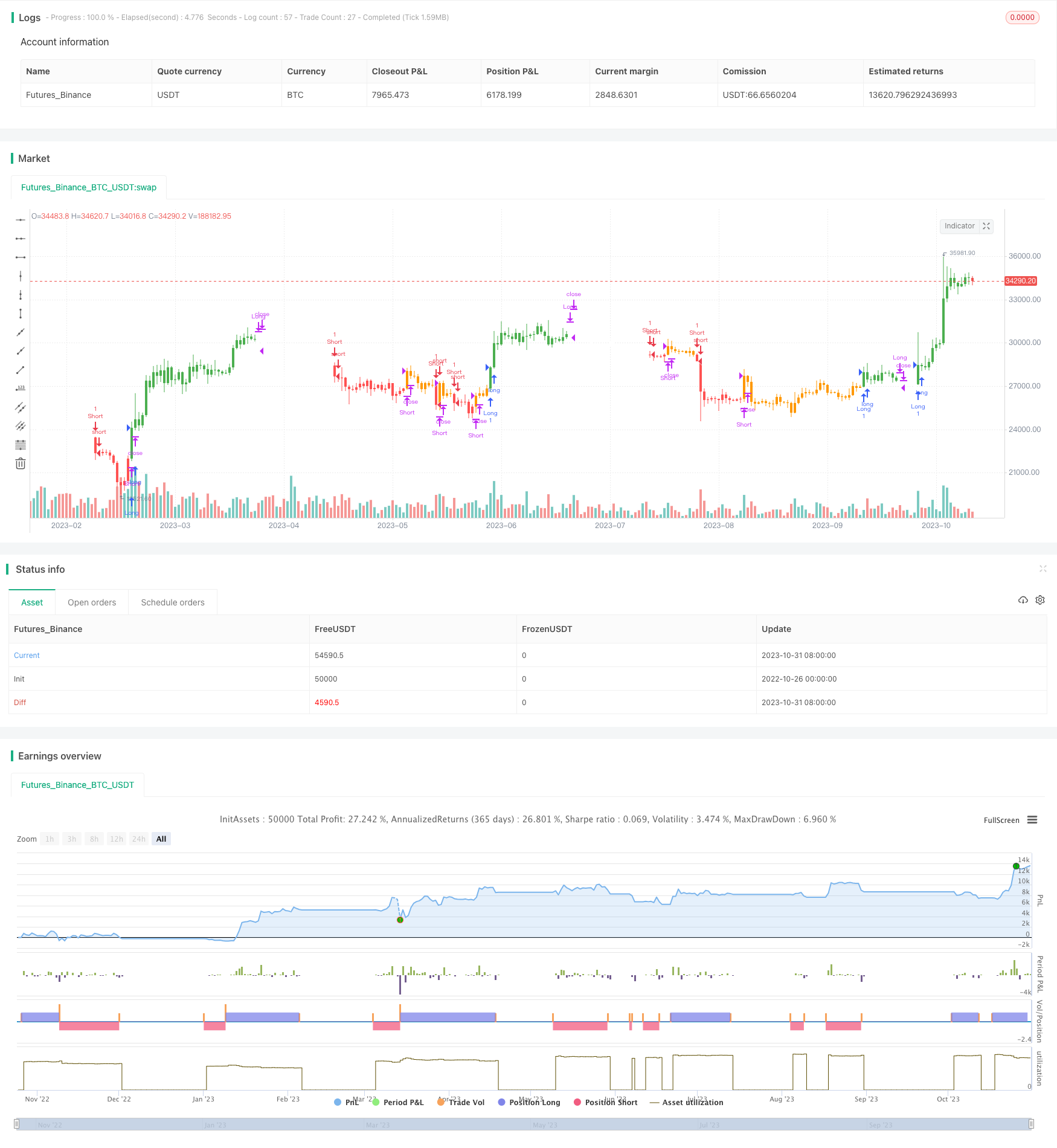
Overview
The Trend Following SMA strategy uses a combination of simple moving average (SMA) and fast SMA to determine market trend direction and generate trading signals. It goes long when price crosses above SMA and FSMA and exits long when price crosses below. It goes short when price crosses below SMA and FSMA and exits short when price crosses above. The strategy provides dynamic no-curve-fitting trading signals to capture trend changes.
Strategy Logic
The strategy uses sma function to calculate 50-period SMA and fast SMA fsma. fsma is calculated based on SMA plus 6 times standard deviation of price over n periods.
Two boolean variables long and short are used to record long and short positions. long is set to 1 when price crosses above sma and fsma for long entry, and -1 when price crosses below for exit. short follows the similar logic for short position.
The trend variable is used for trend determination. It is set to 1 when price is above fsma and sma for uptrend, and -1 when price is below fsma and sma for downtrend.
Trading signals of long and short are generated based on realtime trend direction. When trend changes from down to up, if price is above fsma, go long. When trend changes from up to down, if price is below sma, go short.
The strategy combines both trend following and breakout methods to capture opportunities when trend changes.
Advantages
Using double confirmation of two MAs filters fake breakouts.
Combining trend following and breakout catches turning points.
No curve fitting or optimization for dynamic trading signals.
Simple and clear logic, easy to understand and modify.
Customizable parameters for length, multiplier for different markets.
Risks
Double MA crosses may cause excessive whipsaw trades and reversals.
MA lag may miss early trend reversal.
No stop loss mechanism to control single trade loss.
Improper parameter tuning leads to overtrading or lagging.
For Risk 1 and 2, lengthen MA periods, add drawdown stop loss.
For Risk 3, add percentage or order stop loss.
For Risk 4, adjust parameters dynamically for different markets.
Enhancement
Add trend filter using MACD, DMI to confirm trend.
Use KD, RSI to trade mean-reversion overbought/oversold.
Add overall stop loss such as trailing stop, percentage stop.
Add position sizing module for dynamic adjustment.
Optimize parameters to adapt across timeframes.
Introduce machine learning for auto parameter tuning.
Build composite strategy with additional filters.
Utilize deep learning to detect complex trend patterns.
Conclusion
The SMA trend following strategy is a simple trend trading system. It uses fast and slow MAs to assist trend direction and capture trend reversal. However, risks like whipsaw and lag exist. Future enhancements include adding filters, stops, dynamic parameters etc. Overall it serves as a good starter trend following strategy, but optimizations are needed for real-world applications to maximize its performance.
Parameters
| Name | Default | What it controls |
|---|---|---|
| v_input_1 | 50 | Length |
| v_input_2_close | 0 | Source: close | high | low | open | hl2 | hlc3 | hlcc4 | ohlc4 |
| v_input_3 | 6 | Mult |
| v_input_4 | true | Use barcolor? |
| v_input_5 | false | Show plots? |
| v_input_6 | false | Use triangles? |
Source Pine Script
/*backtest
start: 2022-10-26 00:00:00
end: 2023-11-01 00:00:00
period: 1d
basePeriod: 1h
exchanges: [{"eid":"Futures_Binance","currency":"BTC_USDT"}]
*/

//@version=4
strategy("SMA STRATEGY", shorttitle="SMA TREND", overlay=true, calc_on_order_fills=true)
length = input(title="Length", type=input.integer, defval=50)
src_=input(close, title="Source", type=input.source)
mult=input(6.0, title="Mult")
barc=input(true, title="Use barcolor?")
plots=input(false, title="Show plots?")
tri=input(false, title="Use triangles?")


r(src, n)=>
    s = 0.0
    for i = 0 to n-1
        s := s + ((n-(i*2+1))/2)*src[i]
    x=s/(n*(n+1))
    x

l=sma(low, length)
h=sma(high, length)
lr= l+mult*r(low, length)
hr= h+mult*r(high, length)

trend=0
trend:=src_ > lr and src_ > hr ? 1 : src_ < lr and src_ < hr ? -1 : trend[1]

strategy.close("Long", when=trend==-1)
strategy.close("Short", when=trend==1)
strategy.entry("Long", strategy.long, when=trend==1 and src_>h)
strategy.entry("Short", strategy.short, when=trend==-1 and src_<l)

long=0
short=0
long:= trend==1 and src_>h ? 1 : trend==-1 ? -1 : long[1]
short:= trend==-1 and src_<l ? 1 : trend==1 ? -1 : short[1]

barcolor(barc? (long>0? color.green : short>0? color.red : trend>0? color.orange: trend<0 ? color.white : color.blue) : na)
plotshape(tri? close : na, style= shape.diamond, color= long>0? color.green : short>0? color.red : trend>0? color.orange: trend<0 ? color.white : color.blue, location=location.top)

//shortenter=
a1=plot(plots? l : na, color=color.blue, linewidth=1)
//longenter=
a2=plot(plots? h : na, color=color.blue, linewidth=1)
fill(a1, a2, color=color.blue)
//stopshort=
b1=plot(plots? hr : na, color=color.navy, linewidth=1)
//stoplong=
b2=plot(plots? lr : na, color=color.navy, linewidth=1)
fill(b1, b2, color=color.navy)
Published by ChaoZhang on the FMZ strategy square · last modified 2023-11-02. Collected in the Quant Trading Vault. Unvalidated research: re-test with your own data and costs before trusting it.
Build this with AgenKit
A spec is not a trading system. Paste this into your coding agent and AgenKit runs a specialist team — architecture, test-first build, risk gates, review — with paper trading on by default.
/agenkit build a production-grade trading bot with a backtest engine, risk controls and paper trading by default from strategies/Trend-Following-SMA-Strategy.md- npx agenkit install engineering-kit in your project
- Paste the command into your agent and approve each phase
- Get tests, backtest, risk controls and a paper-trading switch
Understand it first
Before you run this, read the lesson behind the idea and how to backtest it honestly. Specs like this one are the survivors of an unknown number of trials; deflate their results accordingly.
Related specs
- EMA SMA Multi Indicator Comprehensive Trend Following StrategyPine Script · Trend following · 1h
- Multi Dimensional Short Term Trend Predictor Technical Analysis and Volatility Adaptive Trading StrategyPine Script · Trend following · 1h
- Advanced Quantitative Trading Strategy Multi Dimensional Super Trend ATR Dynamic Tracking SystemPine Script · Trend following · 1h
- Adaptive Dual Strategy System for Trend Following and Range TradingPine Script · Trend following · 1h
- Multi Timeframe Volume and Trend Confluence Trading StrategyPine Script · Trend following · 1d
- Multi timeframe Trend Tracking Strategy Based on Impulse MACD and Dual Moving Average CrossoverPine Script · Trend following · 1d