Strategy vault / Machine learning
A Dual Moving Average Confirmation Advantage Line Strategy
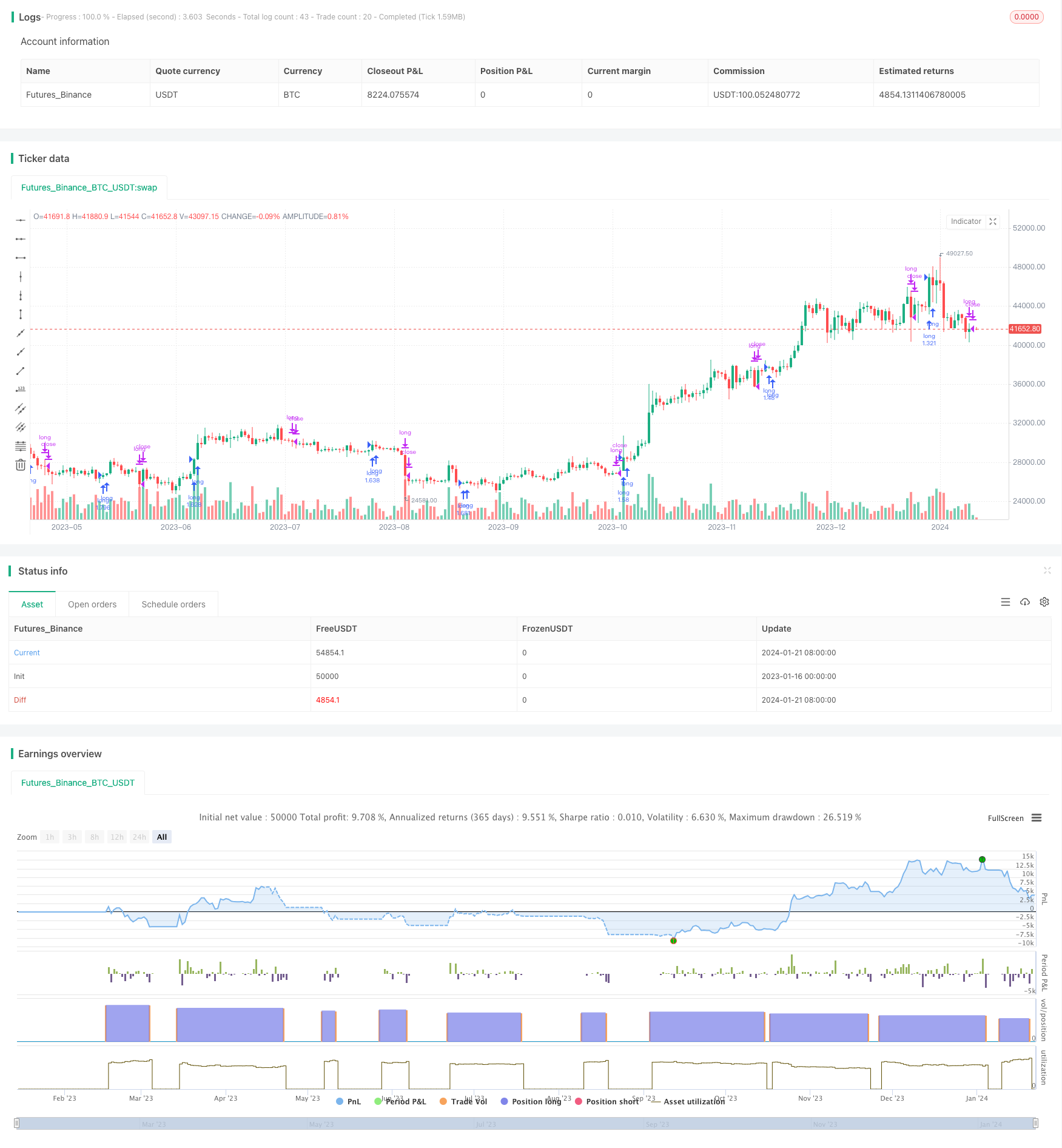
This strategy is a long-only trend-following strategy that generates trading signals through the dual confirmation of the Aroon indicator and the Linear Regression Moving Average (LSMA) line. It is suitable for…
Overview
This strategy is a long-only trend-following strategy that generates trading signals through the dual confirmation of the Aroon indicator and the Linear Regression Moving Average (LSMA) line. It is suitable for medium and long-term trend trading.
Strategy Principles
This strategy uses the crossover of the upper and lower bands of the Aroon indicator to determine the trend direction. A buy signal is generated when the upper band crosses above the lower band from below. A sell signal is generated when the upper band crosses below the lower band from above. To avoid false breakouts, the strategy also introduces the LSMA line as an auxiliary judge. A buy signal is triggered only when the closing price is above the LSMA.
Specifically, the rules for generating trading signals are:
Long entry signal: The upper band crosses above the lower band (Aroon indicator determines the upward trend) and the closing price of the day is above the LSMA line (the closing price is in an upward trend).
Long exit signal: The upper band crosses below the lower band (Aroon indicator determines the downward trend) and the closing price of the day is below the LSMA line (the closing price is in a downward trend).
Advantages
- Using Aroon indicator to determine the trend avoids noise interference
- Adding LSMA line to filter false breakouts
- Only long, in line with the long-term upside of the broader market
- Simple parameters, easy to implement
Risks
- Only doing long, hard to profit in sideways market
- Fixed parameters may lead to overfitting
- Hard to cut losses timely when trend reverses
To mitigate risks, stop loss can be added, or other indicators can be used to determine trend reversal and cut losses in time.
Optimization Directions
- Consider adding shorting opportunities to profit from falling market
- Test indicators with different cycle parameters
- Add machine learning module to automatically optimize parameters
Summary
In summary, this is a relatively simple and practical dual confirmation trend following strategy. Using Aroon to determine the trend and LSMA to filter noise is straightforward. With proper parameter tuning, it can achieve decent results. It is suitable for mid-to-long-term holding to avoid noise. By adding modules like stop loss, the strategy can be further optimized to amplify its strengths and reduce risks.
Parameters
| Name | Default | What it controls |
|---|---|---|
| v_input_1 | true | From Day |
| v_input_2 | true | From Month |
| v_input_3 | 2010 | From Year |
| v_input_4 | 31 | To Day |
| v_input_5 | 12 | To Month |
| v_input_6 | 2021 | To Year |
| v_input_7 | 15 | Aroon Legnth |
| v_input_8 | 20 | Length LSMA |
| v_input_9_close | 0 | Source: close | high | low | open | hl2 | hlc3 | hlcc4 | ohlc4 |
Source Pine Script
/*backtest
start: 2023-01-16 00:00:00
end: 2024-01-22 00:00:00
period: 1d
basePeriod: 1h
exchanges: [{"eid":"Futures_Binance","currency":"BTC_USDT"}]
*/

// This source code is subject to the terms of the Mozilla Public License 2.0 at https://mozilla.org/MPL/2.0/
// © exlux99

//@version=4

strategy(title = "Aroon Strategy long only", overlay = true,  pyramiding=1,initial_capital = 100, default_qty_type= strategy.percent_of_equity, default_qty_value = 100, calc_on_order_fills=false, slippage=0,commission_type=strategy.commission.percent,commission_value=0.1)

//Time
fromDay = input(defval = 1, title = "From Day", minval = 1, maxval = 31)
fromMonth = input(defval = 1, title = "From Month", minval = 1, maxval = 12)
fromYear = input(defval = 2010, title = "From Year", minval = 1970)
 //monday and session
// To Date Inputs
toDay = input(defval = 31, title = "To Day", minval = 1, maxval = 31)
toMonth = input(defval = 12, title = "To Month", minval = 1, maxval = 12)
toYear = input(defval = 2021, title = "To Year", minval = 1970)

startDate = timestamp(fromYear, fromMonth, fromDay, 00, 00)
finishDate = timestamp(toYear, toMonth, toDay, 00, 00)
time_cond = true

//INPUTS

length = input(15, minval=1, title="Aroon Legnth")
upper = 100 * (highestbars(high, length+1) + length)/length
lower = 100 * (lowestbars(low, length+1) + length)/length

lengthx = input(title="Length LSMA", type=input.integer, defval=20)
offset = 0//input(title="Offset", type=input.integer, defval=0)
src = input(close, title="Source")
lsma = linreg(src, lengthx, offset)


long = crossover(upper,lower) and close > lsma
longexit = crossunder(upper,lower) and close < lsma

if(time_cond)
    strategy.entry("long",1,when=long)
    strategy.close("long",when=longexit)
Published by ChaoZhang on the FMZ strategy square · last modified 2024-01-23. Collected in the Quant Trading Vault. Unvalidated research: re-test with your own data and costs before trusting it.
Build this with AgenKit
A spec is not a trading system. Paste this into your coding agent and AgenKit runs a specialist team — architecture, test-first build, risk gates, review — with paper trading on by default.
/agenkit build a production-grade trading bot with a backtest engine, risk controls and paper trading by default from strategies/A-Dual-Moving-Average-Confirmation-Advantage-Line-Strategy.md- npx agenkit install engineering-kit in your project
- Paste the command into your agent and approve each phase
- Get tests, backtest, risk controls and a paper-trading switch
Understand it first
Before you run this, read the lesson behind the idea and how to backtest it honestly. Specs like this one are the survivors of an unknown number of trials; deflate their results accordingly.
Related specs
- AI Driven Dynamic Volatility Adaptive Trend Breakout Trading StrategyPine Script · Machine learning · 2d
- AI Powered Volatility Price System Divergence Trading StrategyPine Script · Machine learning · 1h
- Configurable BBRSIAroon Strategy BacktestPine Script · Machine learning · 5m
- Double Decker RSI Trading StrategyPine Script · Machine learning · 1h
- Dual Moving Average Matching Strategy Based on Bollinger BandsPine Script · Machine learning · 1h
- Dynamic Weighted Moving Average Trading StrategyPine Script · Machine learning · 1d