Strategy vault / Trend following
Index Trading Strategy Based on Bollinger Bands
The strategy is named "Quant Trading Strategy Based on Bollinger Bands". It is an index and stock trading strategy based on improved Bollinger Bands channel. By adjusting Bollinger Bands parameters, it realizes…
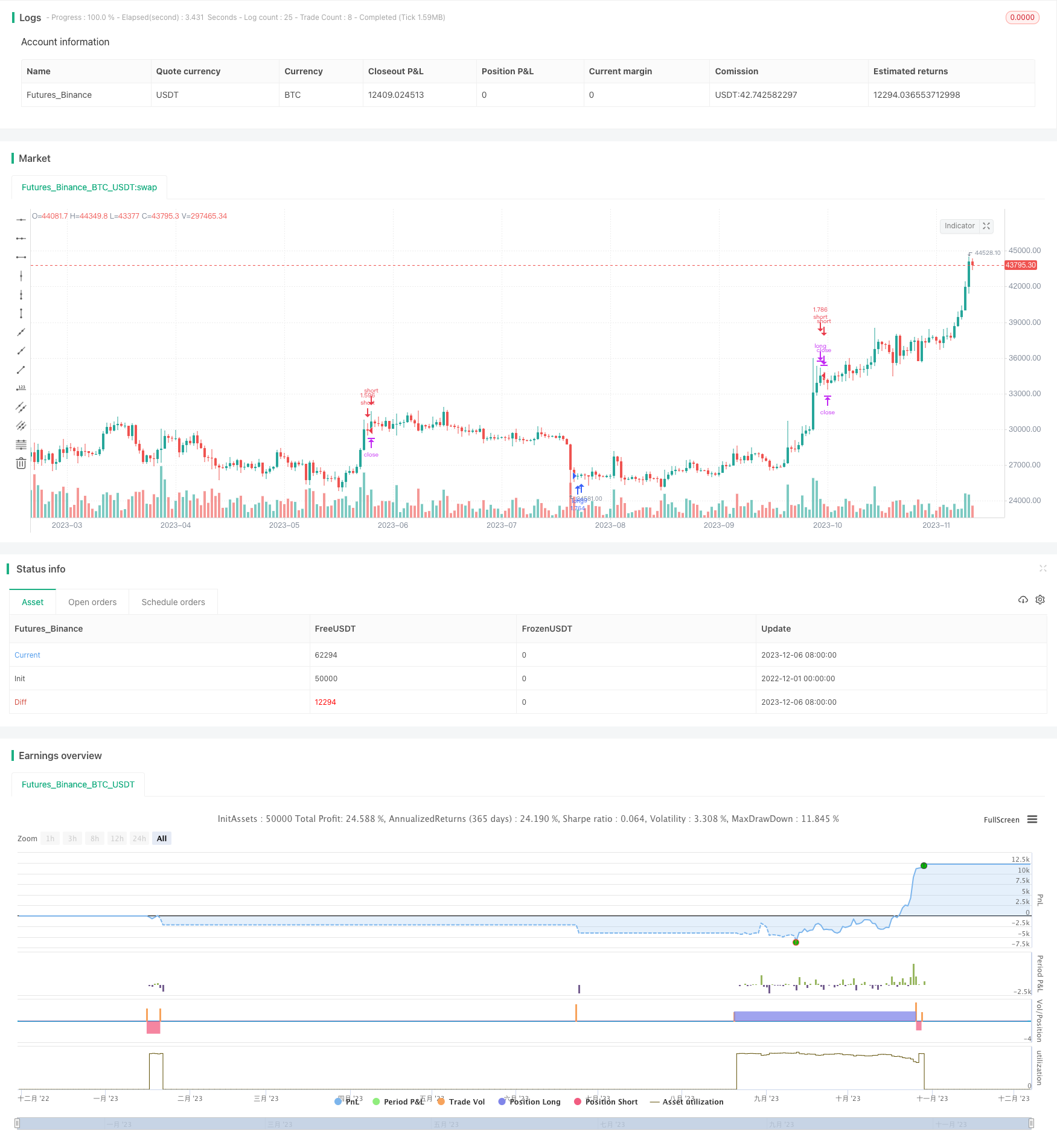
Overview
The strategy is named "Quant Trading Strategy Based on Bollinger Bands". It is an index and stock trading strategy based on improved Bollinger Bands channel. By adjusting Bollinger Bands parameters, it realizes optimization for both long and short positions to profit in both uptrend and downtrend markets.
Trading Logic
The core logic of this strategy is based on Bollinger Bands channel, which consists of middle line, upper band and lower band. The middle line is the moving average of closing price for n days. The upper and lower bands are deviations above and below the middle line. When price approaches the upper band, it indicates the market may be overheated and there can be short opportunities. When price approaches the lower band, it indicates the market may be undervalued and there can be long opportunities.
This strategy uses two Bollinger Bands. Bollinger Band 1 is suitable for long trades and Bollinger Band 2 is suitable for short trades. The parameters of Bollinger Band 1 are optimized with length of 25 and deviation of 2.9 times. The parameters of Bollinger Band 2 are optimized with length of 36 and deviation of 3.2 times. When closing price crosses above the lower band of Bollinger Band 1, it will generate long signal. When closing price crosses below the upper band of Bollinger Band 2, it will generate short signal.
Advantage Analysis
Compared with traditional Bollinger Bands strategies, this strategy has the following advantages:
It realizes dual-directional trading for both long and short sides, which can seize trading opportunities in different market stages.
The parameters are optimized. The two sets of Bollinger Bands parameters are elaborately tested to effectively generate trading signals.
The risk is controllable. The moving stop loss method can effectively control the risk of one side.
Risk Analysis
There are also some potential risks for this strategy:
Invalidity risk of Bollinger Bands. Bollinger Bands may become invalid during extreme market fluctuation.
Risk of stop loss being hit. Moving stop loss could be hit to expand losses. We can properly widen the stop loss or timely stop out to avoid this risk.
High trading frequency risk. Overly sensitive parameters could lead to frequent trading and increased trading costs.
Optimization Directions
There is still room for further optimization of this strategy:
Combine other indicators to filter signals and avoid wrong trades when Bollinger Bands fails. Such as K-line patterns, trading volume etc.
Dynamically adjust parameters to fit the market characteristics of different periods. For example, use adaptive Bollinger Bands.
Optimize the stop loss methods by using trailing stop loss or exponential moving stop loss to effectively control risks.
Combine machine learning algorithms to automatically optimize the parameters.
Summary
In summary, this strategy overall optimizes dual-directional trading for both long and short sides based on double Bollinger Bands channel and parameters optimization. Compared with traditional Bollinger Bands strategies, it has the advantages of dual-directional trading and risk control. It is suitable to seize opportunities in different market stages and has certain practical value. But risks like failure of Bollinger Bands and stop loss being hit still exist. Further optimization and verification are needed before productization.
Parameters
| Name | Default | What it controls |
|---|---|---|
| v_input_1 | 25 | Length BB long |
| v_input_2 | 2.9 | MULT BB long |
| v_input_3 | 36 | Length BB short |
| v_input_4 | 3.2 | MULT BB short |
| v_input_5 | true | longEntry |
| v_input_6 | true | shortEntry |
| v_input_7 | 100 | risk |
| v_input_8 | true | leverage |
| v_input_9 | 0.065 | Take profit % for long |
| v_input_10 | 0.04 | Stop loss % for long |
| v_input_11 | 0.025 | Take profit % for short |
| v_input_12 | 0.04 | Stop loss % for short |
Source Pine Script
/*backtest
start: 2022-12-01 00:00:00
end: 2023-12-07 00:00:00
period: 1d
basePeriod: 1h
exchanges: [{"eid":"Futures_Binance","currency":"BTC_USDT"}]
*/

// This source code is subject to the terms of the Mozilla Public License 2.0 at https://mozilla.org/MPL/2.0/
// © exlux99

//@version=4
strategy("BB NDX strategy", overlay = true, default_qty_type = strategy.percent_of_equity, default_qty_value = 100, calc_on_every_tick = true, commission_type = strategy.commission.percent, commission_value = 0.01)

source = close
length = input(25, minval=1, title="Length BB long")
mult = input(2.9, minval=0.001, maxval=50, step=0.1, title="MULT BB long")

length2 = input(36, minval=1, title="Length BB short")
mult2 = input(3.2, minval=0.001, maxval=50, step=0.1, title="MULT BB short")


basis = sma(source, length)
dev = mult * stdev(source, length)
dev2 = mult2 * stdev(source, length2)

upper = basis + dev2
lower = basis - dev

buyEntry = crossover(source, lower)
sellEntry = crossunder(source, upper)

longEntry=input(true)
shortEntry=input(true)

g(v, p) => round(v * (pow(10, p))) / pow(10, p)
risk     = input(100)
leverage = input(1.0, step = 0.5)
c = g((strategy.equity * leverage / open) * (risk / 100), 4)


tplong=input(0.065, step=0.005, title="Take profit % for long")
sllong=input(0.04, step=0.005, title="Stop loss % for long")
tpshort=input(0.025, step=0.005, title="Take profit % for short")
slshort=input(0.04, step=0.005, title="Stop loss % for short")

if(longEntry)
    strategy.entry("long",1,c,when=buyEntry)
    strategy.exit("short_tp/sl", "long", profit=close * tplong / syminfo.mintick, loss=close * sllong / syminfo.mintick, comment='LONG EXIT',  alert_message = 'closeshort')
    strategy.close("long",when=sellEntry)
if(shortEntry)
    strategy.entry("short",0,c,when=sellEntry)
    strategy.exit("short_tp/sl", "short", profit=close * tpshort / syminfo.mintick, loss=close * slshort / syminfo.mintick, comment='SHORT EXIT',  alert_message = 'closeshort')
    strategy.close("short",when=buyEntry)
Published by ChaoZhang on the FMZ strategy square · last modified 2023-12-08. Collected in the Quant Trading Vault. Unvalidated research: re-test with your own data and costs before trusting it.
Build this with AgenKit
A spec is not a trading system. Paste this into your coding agent and AgenKit runs a specialist team — architecture, test-first build, risk gates, review — with paper trading on by default.
/agenkit build a production-grade trading bot with a backtest engine, risk controls and paper trading by default from strategies/Index-Trading-Strategy-Based-on-Bollinger-Bands.md- npx agenkit install engineering-kit in your project
- Paste the command into your agent and approve each phase
- Get tests, backtest, risk controls and a paper-trading switch
Understand it first
Before you run this, read the lesson behind the idea and how to backtest it honestly. Specs like this one are the survivors of an unknown number of trials; deflate their results accordingly.
Related specs
- ATR and Moving Average Crossover Hybrid StrategyPine Script · Trend following · 1h
- BB Percentage Index Trend Fading StrategyPine Script · Trend following · 1h
- Bollinger Band Moving Average Crossover StrategyPine Script · Trend following · 1h
- Bollinger Band Trend ChaserPine Script · Trend following · 1d
- Bollinger Bands Double Standard Deviation Filtering 5 Minute Quantitative Trading StrategyPine Script · Trend following · 2h
- Bollinger Bands Precise Crossover Quantitative StrategyPine Script · Trend following · 1h