Momentum Breakthrough Silver Line Strategy
This strategy is a breakout strategy based on the price momentum indicator MACD and moving average, suitable for 1-hour timeframe on silver (XAG/USD, XAG/EUR). The key is to combine price trends and momentum…
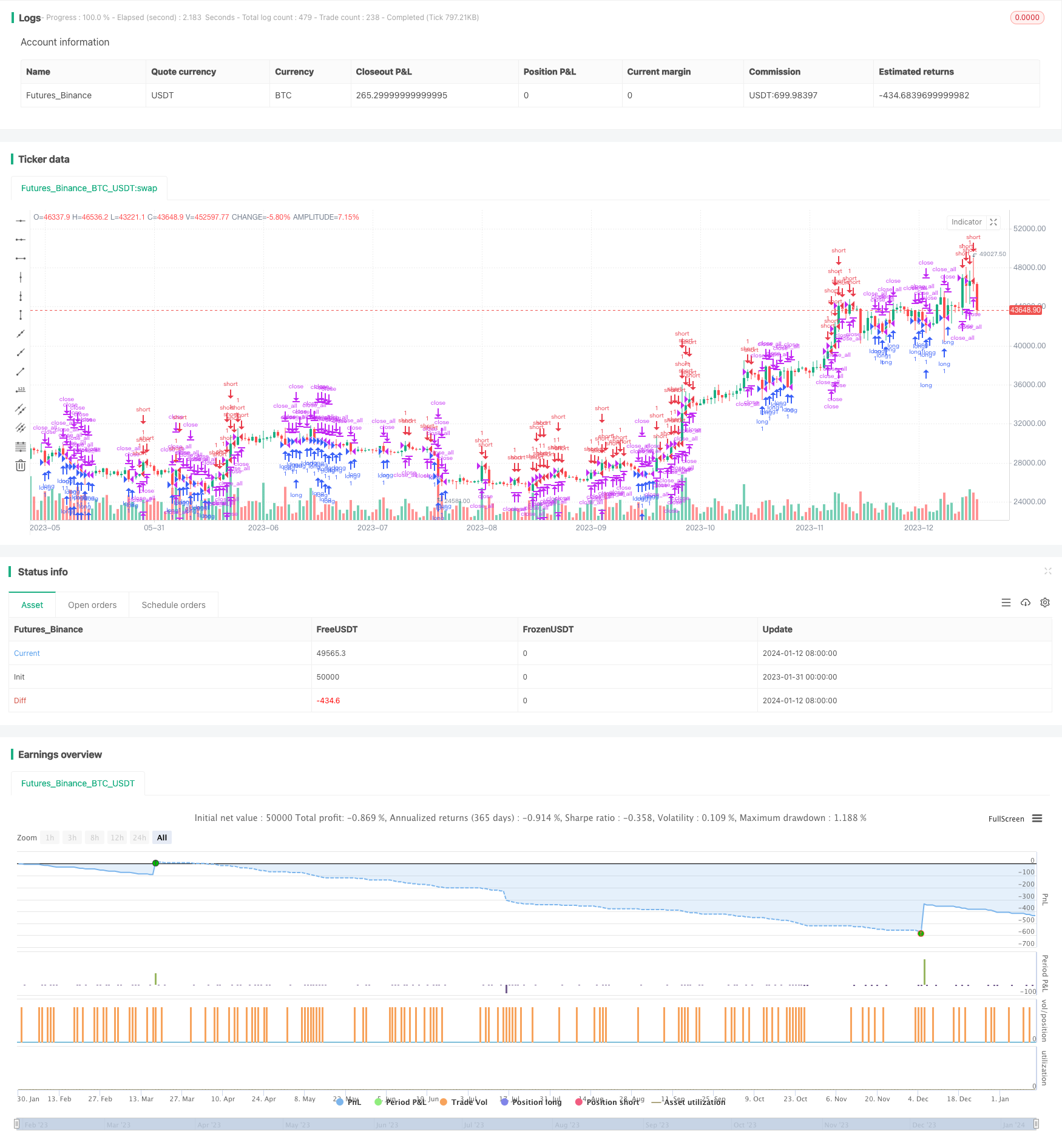
Overview
This strategy is a breakout strategy based on the price momentum indicator MACD and moving average, suitable for 1-hour timeframe on silver (XAG/USD, XAG/EUR). The key is to combine price trends and momentum indicators to determine the timing of trend reversals.
Strategy Logic
When the MACD histogram changes from negative to positive and continuously breaks through the signal line, it indicates that the short-term uptrend is stronger. At the same time, if the closing price breaks through the rising trend of the moving average, it generates a long signal. Similarly, when the MACD histogram changes from positive to negative and falls below the signal line, and the closing price falls below the downward trend of the moving average, it generates a short signal.
Specifically, the conditions for determining the long entry signal of this strategy are:
- The MACD histogram is positive
- The current histogram bar is higher than the previous one
- The closing price is higher than the moving average
- The closing price is higher than the highest price of the recent 3 K-lines
The conditions for determining the short entry signal are just the opposite.
Once the position is opened, it is closed unconditionally when the next K-line closes. This strategy does not set profit taking or stop loss points, aiming to capture the starting point of trend outbreaks.
Advantage Analysis
This strategy combines price and momentum indicators to determine the timing of trend reversals more accurately with a higher winning rate. The way of unconditional closing in the next K line can effectively avoid the loss again after the reversal fails.
No setting of profit taking and stop loss meets the needs of investors pursuing high returns.
Risk Analysis
Lack of stop loss can easily lead to loss fixation and higher risk of loss. If the reversal signal fails, loss may mount due to the inability to stop loss in time.
The way of unconditional closing in the next K line makes it difficult to continuously capture trend profits.
Optimization Suggestions
It's possible to consider adding appropriate stop-loss strategies on the basis of high-win breakthrough buys to reduce risk of loss.
It's also possible to combine advanced techniques to re-enter positions after closing, attempting to continuously capture trend profits.
Summary
In general, this strategy belongs to an aggressive high-risk strategy. Due to no stop loss setting, investors need to bear greater risk of loss. But if the reversal is successful, the opportunity to open positions with full lots in the first place can also result in high returns. It is suitable for aggressive investors with relatively strong psychological endurance.
Parameters
| Name | Default | What it controls |
|---|---|---|
| v_input_1 | true | From Day |
| v_input_2 | true | From Month |
| v_input_3 | 2020 | From Year |
| v_input_4 | 31 | To Day |
| v_input_5 | 12 | To Month |
| v_input_6 | 2020 | To Year |
| v_input_7 | 10 | Length |
| v_input_8_close | 0 | Source: close | high | low | open | hl2 | hlc3 | hlcc4 | ohlc4 |
| v_input_9 | 12 | Fast Length |
| v_input_10 | 26 | Slow Length |
| v_input_11 | 9 | Signal Smoothing |
| v_input_12 | false | Simple MA(Oscillator) |
| v_input_13 | false | Simple MA(Signal Line) |
| v_input_14 | true | option1 |
| v_input_15 | true | option2 |
Source Pine Script
/*backtest
start: 2023-01-31 00:00:00
end: 2024-01-13 05:20:00
period: 1d
basePeriod: 1h
exchanges: [{"eid":"Futures_Binance","currency":"BTC_USDT"}]
*/

// This source code is subject to the terms of the Mozilla Public License 2.0 at https://mozilla.org/MPL/2.0/
// © SoftKill21

//@version=4
strategy("XAG strategy 1h",overlay=true)
fromDay = input(defval = 1, title = "From Day", minval = 1, maxval = 31)
fromMonth = input(defval = 1, title = "From Month", minval = 1, maxval = 12)
fromYear = input(defval = 2020, title = "From Year", minval = 1970)
var gica = 0
var marcel = gica+2
 //monday and session
// To Date Inputs
toDay = input(defval = 31, title = "To Day", minval = 1, maxval = 31)
toMonth = input(defval = 12, title = "To Month", minval = 1, maxval = 12)
toYear = input(defval = 2020, title = "To Year", minval = 1970)

startDate = timestamp(fromYear, fromMonth, fromDay, 00, 00)
finishDate = timestamp(toYear, toMonth, toDay, 00, 00)
time_cond = true
len = input(10, minval=1, title="Length")
src = input(close, title="Source")
out = sma(src, len)

//distanta = input(1.004)

fast_length = input(title="Fast Length", type=input.integer, defval=12)
slow_length = input(title="Slow Length", type=input.integer, defval=26)
signal_length = input(title="Signal Smoothing", type=input.integer, minval = 1, maxval = 50, defval = 9)
sma_source = input(title="Simple MA(Oscillator)", type=input.bool, defval=false)
sma_signal = input(title="Simple MA(Signal Line)", type=input.bool, defval=false)
// Plot colors
col_grow_above = #26A69A
col_grow_below = #FFCDD2
col_fall_above = #B2DFDB
col_fall_below = #EF5350
col_macd = #0094ff
col_signal = #ff6a00
// Calculating
fast_ma = sma_source ? sma(src, fast_length) : ema(src, fast_length)
slow_ma = sma_source ? sma(src, slow_length) : ema(src, slow_length)
macd = fast_ma - slow_ma
signal = sma_signal ? sma(macd, signal_length) : ema(macd, signal_length)
hist = macd - signal

option1=input(true)
option2=input(true)

long2 =  close > open  and time_cond and close > out and hist > 0 and hist > hist[1]
short2 =  close < open  and time_cond and close < out and hist < 0 and hist < hist[1]

long1 = (close > open ) and time_cond and close > out and hist > 0 and  hist > hist[1] and high > high[1] and high[1] > high[2] and close > high[1] and close > high[2] and close > high[3]
short1 = (close < open)  and time_cond and close < out and hist < 0 and  hist < hist[1] and low < low[1] and low[1] < low[2]  and close < low[1] and close < low[2] and close < low[3]

if(option1)
    strategy.entry("long",1,when= short1)
    strategy.entry("short",0,when=long1)
    strategy.close_all()

if(option2)

    strategy.entry("long",1,when= short2)
    strategy.entry("short",0,when=long2)
    strategy.close_all()

// if(strategy.openprofit < 0)
//     strategy.close_all()
// if(strategy.openprofit>0)
//     strategy.close("long",when = close < open )
//     strategy.close("short",when = close > open)
//     strategy.close("long",when= close < open)
//     strategy.close("short",when= close> open)


// tp = input(0.0003)
// sl = input(0.005)
// strategy.exit("closelong", "long" , profit = close * tp / syminfo.mintick, loss = close * sl / syminfo.mintick, alert_message = "closelong")
// strategy.exit("closeshort", "short" , profit = close * tp / syminfo.mintick, loss = close * sl / syminfo.mintick, alert_message = "closeshort")
Published by ChaoZhang on the FMZ strategy square · last modified 2024-02-01. Collected in the Quant Trading Vault. Unvalidated research: re-test with your own data and costs before trusting it.
Build this with AgenKit
A spec is not a trading system. Paste this into your coding agent and AgenKit runs a specialist team — architecture, test-first build, risk gates, review — with paper trading on by default.
/agenkit build a production-grade trading bot with a backtest engine, risk controls and paper trading by default from strategies/Momentum-Breakthrough-Silver-Line-Strategy.md- npx agenkit install engineering-kit in your project
- Paste the command into your agent and approve each phase
- Get tests, backtest, risk controls and a paper-trading switch
Understand it first
Before you run this, read the lesson behind the idea and how to backtest it honestly. Specs like this one are the survivors of an unknown number of trials; deflate their results accordingly.
Related specs
- Bull Market Tracking SystemPine Script · Breakout · 1h
- Dual Breakout Volatility Channel StrategyPine Script · Breakout · 1h
- EMA MACD Quantitative Strategy With Dual Track Running and Leading the Market IndexPine Script · Breakout · 1d
- Kana Candle Breakout Strategy Based on Moving Average and Support ResistancePine Script · Breakout · 1h
- Momentum Breakout Moving Average StrategyPine Script · Breakout · 1d
- Momentum Breakout Trading Strategy 440964Pine Script · Breakout · 5m