Strategy vault / Pairs & stat-arb
Pair trading strategy
Pair trading is a trading strategy that involves simultaneously buying one asset and short selling another asset that are considered to be closely correlated. The goal of pair trading is to profit from the expected…
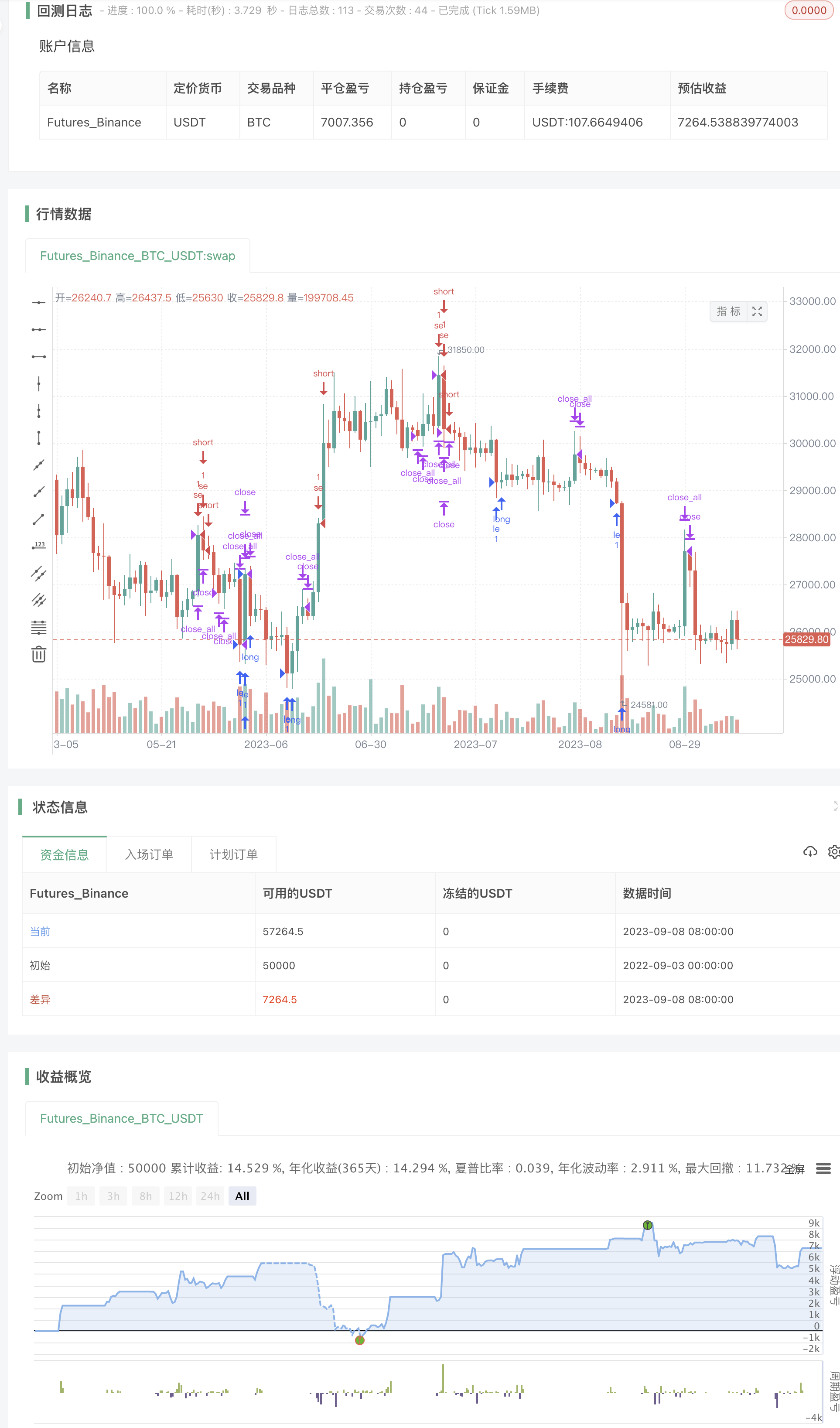
Pair trading is a trading strategy that involves simultaneously buying one asset and short selling another asset that are considered to be closely correlated. The goal of pair trading is to profit from the expected convergence of the two assets' prices.
How Pair Trading Works
Pair trading strategies typically use a variety of technical indicators to identify pairs of assets that are likely to converge. One common approach is to use a moving average (MA) to measure the relative price relationship between the two assets. If the price of one asset is trading above the MA of the other asset, it is considered to be overvalued. Conversely, if the price of one asset is trading below the MA of the other asset, it is considered to be undervalued.
In the Pine strategy provided above, the Pair Trade L/S strategy uses a simple MA-based approach to pair trading. The strategy first calculates a simple moving average (SMA) of the closing prices of the two assets. The entry signal is generated when the price of one asset crosses below the SMA of the other asset. The exit signal is generated when the price of one asset crosses above the SMA of the other asset.
Pair Trading Strategies
There are a variety of different pair trading strategies that can be used. Some common strategies include:
- Simple moving average (SMA)-based strategies: These strategies use a simple moving average to measure the relative price relationship between the two assets.
- Bollinger band-based strategies: These strategies use Bollinger bands to identify overbought and oversold conditions in the two assets.
- Relative strength index (RSI)-based strategies: These strategies use the RSI to measure the relative strength of the two assets. Pair Trading Performance
Pair trading has been shown to be a profitable trading strategy in backtesting studies. However, it is important to note that past performance is not a guarantee of future results. Pair trading is a complex strategy that requires careful risk management.
Pair Trading Risks
One of the main risks associated with pair trading is the risk of the two assets not converging. If the two assets do not converge, the trader will incur a loss. Another risk associated with pair trading is the risk of the two assets becoming uncorrelated. If the two assets become uncorrelated, the trader will lose the ability to profit from their relative price relationship.
Conclusion
Pair trading is a powerful trading strategy that can be used to profit from the expected convergence of two assets' prices. However, it is important to carefully consider the risks associated with pair trading before using this strategy.
Additional Considerations for Pair Trading
In addition to the risks mentioned above, there are a few other factors that traders should consider when using pair trading strategies:
Asset selection: When choosing assets to pair trade, it is important to select assets that are closely correlated. This will help to increase the likelihood of the assets converging. Entry and exit signals: The entry and exit signals used in a pair trading strategy should be carefully designed to maximize profits and minimize losses. Risk management: Pair trading can be a risky strategy, so it is important to use appropriate risk management techniques to limit losses.
Parameters
| Name | Default | What it controls |
|---|---|---|
| v_input_1 | 20 | SMA Length |
| v_input_2 | 2 | Entry ZScore |
| v_input_3 | 2016 | Backtest Start Year |
Source Pine Script
/*backtest
start: 2022-09-03 00:00:00
end: 2023-09-09 00:00:00
period: 1d
basePeriod: 1h
exchanges: [{"eid":"Futures_Binance","currency":"BTC_USDT"}]
*/

// This source code is subject to the terms of the Mozilla Public License 2.0 at https://mozilla.org/MPL/2.0/
// © femisapien

//@version=4
strategy("Pair Trade L/S", overlay=true)

source = close
smalength = input(title = "SMA Length", defval = 20, minval=1)
entryzscore = input(title = "Entry ZScore", defval = 2.0, minval=0, maxval = 50)
startYear = input(title="Backtest Start Year", type=input.integer, defval=2016, minval=1980, maxval=2100)

ma = sma(source, smalength)
dev = entryzscore * stdev(source, smalength)

upper = ma + dev
lower = ma - dev

longEntrySignal = cross(source, lower)
shortEntrySignal = cross(source, upper)
exitSignal = cross(source, ma)

afterStartDate = (time >= timestamp(syminfo.timezone, startYear,1,1, 0, 0))

if (longEntrySignal and afterStartDate)
    strategy.entry("le", strategy.long, comment = "Enter Long")

if (shortEntrySignal and afterStartDate)
    strategy.entry("se", strategy.short, comment="Enter Short")

if (exitSignal and afterStartDate)
    strategy.close_all(true)
Published by ChaoZhang on the FMZ strategy square · last modified 2023-09-10. Collected in the Quant Trading Vault. Unvalidated research: re-test with your own data and costs before trusting it.
Build this with AgenKit
A spec is not a trading system. Paste this into your coding agent and AgenKit runs a specialist team — architecture, test-first build, risk gates, review — with paper trading on by default.
/agenkit build a production-grade trading bot with a backtest engine, risk controls and paper trading by default from strategies/Pair-trading-strategy.md- npx agenkit install engineering-kit in your project
- Paste the command into your agent and approve each phase
- Get tests, backtest, risk controls and a paper-trading switch
Understand it first
Before you run this, read the lesson behind the idea and how to backtest it honestly. Specs like this one are the survivors of an unknown number of trials; deflate their results accordingly.
Related specs
- MCL YG Bollinger Band Breakout Pair Trading StrategyPine Script · Pairs & stat-arb · 1d
- Multi MA Pair Trading StrategyPine Script · Pairs & stat-arb
- 20Bitcoin and Gold 5 Minute Scalping Strategy 20Pine Script · Scalping · 1h
- ADX Momentum Trend StrategyPine Script · Momentum · 10m
- Advanced 15 Minute Chart Trading Signal StrategyPine Script · Mean reversion · 3h
- Advanced Quantitative Trading Strategy Combining RSI Divergence and Moving AveragesPine Script · Mean reversion · 1h