Strategy vault / Trend following
Stochastic Oscillator and Moving Average Crossover Strategy with Stop Loss and Stochastic Filter
This strategy combines the Stochastic Oscillator with a Moving Average, generating trading signals by observing the overbought and oversold conditions of the stochastic indicator and the trend of the moving average…
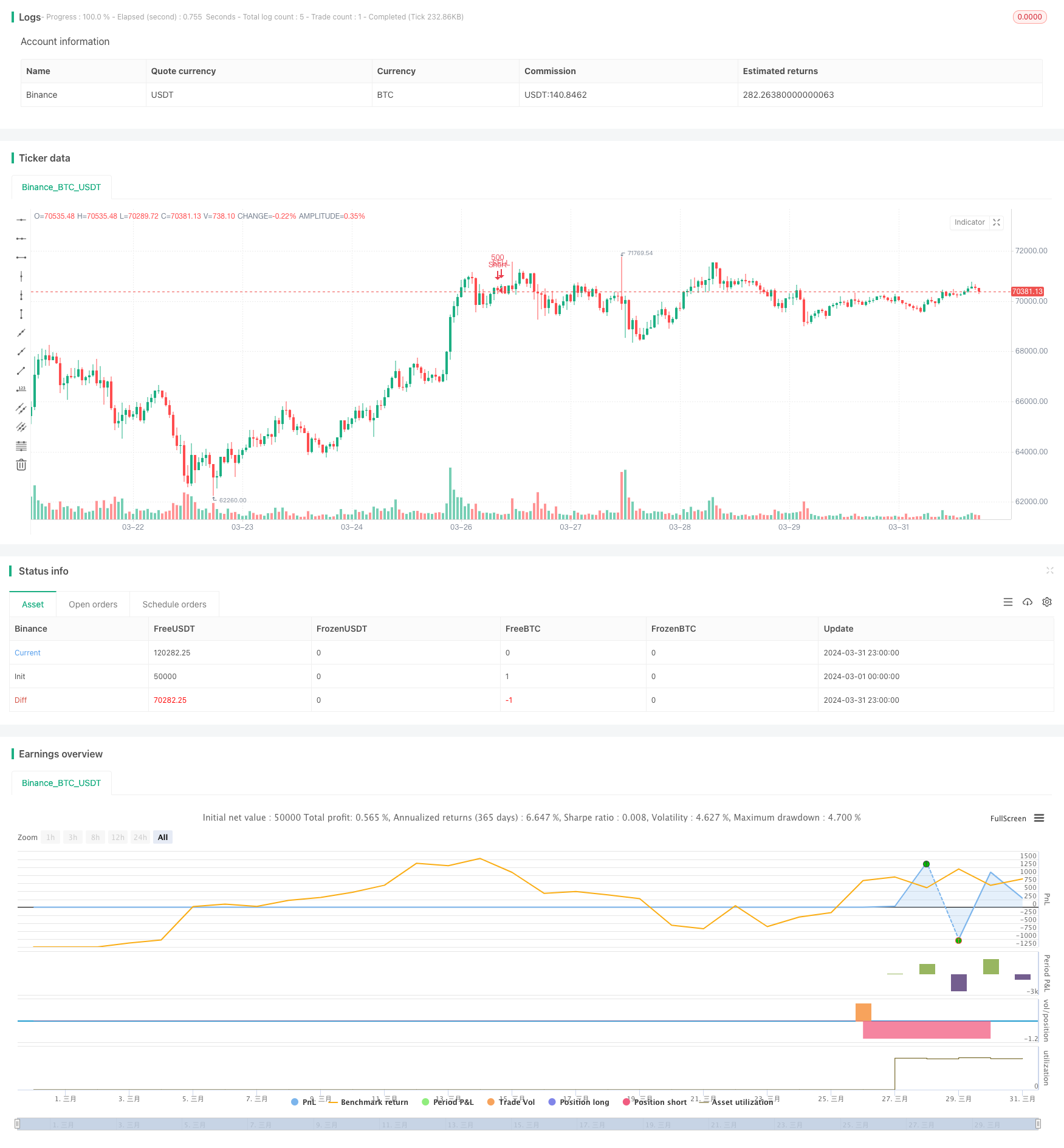
Overview
This strategy combines the Stochastic Oscillator with a Moving Average, generating trading signals by observing the overbought and oversold conditions of the stochastic indicator and the trend of the moving average. It produces a short signal when the stochastic indicator is in the overbought zone and the moving average is downward, and a long signal when in the oversold zone and the moving average is upward. Additionally, the strategy introduces a stochastic indicator filter, which can also generate corresponding trading signals when the stochastic K line crosses the D line after staying below 50 for a certain number of K lines. The strategy also sets a Stop Loss to control risk.
Strategy Principle
Calculate the Stochastic Oscillator to obtain the K line and D line. Parameters are adjustable, including the stochastic period, K smoothing, D smoothing, overbought zone, and oversold zone.
Calculate the Moving Average, using the closing price by default, with an adjustable period.
Calculate the Stochastic Indicator Filter. When the K line stays below 50 for a certain number of K lines, it generates a filter signal.
Conditions for generating a long signal: Stochastic indicator crosses upward in the oversold zone OR Stochastic indicator filter signal AND Moving average is upward.
Conditions for generating a short signal: Stochastic indicator crosses downward in the overbought zone OR Stochastic indicator filter signal AND Moving average is downward.
Long position closing condition: Stochastic K line crosses above the Moving Average AND the Average turns downward.
Short position closing condition: Stochastic K line crosses below the Moving Average AND the Average turns upward.
Position management uses a fixed percentage of funds, 10% by default. It also sets a Stop Loss, 2% by default.
Advantage Analysis
By combining overbought/oversold and trend characteristics, it can chase up and kill down in a trend.
The Stochastic Indicator Filter avoids frequent trading in oscillating markets.
The Stop Loss setting helps control drawdowns.
The code structure is clear, parameters are adjustable, and it is suitable for further optimization.
Risk Analysis
The Stochastic Oscillator has a certain lag, which may miss the best buying and selling points.
The accuracy of capturing orders at trend turning points is poor, and the frequency of stop-loss may be high.
Fixed-ratio fund management has a large drawdown in the case of consecutive losses.
Optimization Direction
Introduce more filtering conditions, such as price behavior, other auxiliary indicators, etc., to improve signal accuracy.
Divide signals into strong and weak, and increase positions when strong signals appear.
Optimize the judgment of trend turning points to capture more market movements.
Optimize position management, consider adjusting positions based on floating profit and loss ratios, etc.
Try different parameter combinations to find the optimal parameters.
Summary
Based on the Stochastic Oscillator, this strategy combines Moving Averages to judge trends, while also utilizing the filtering function of the Stochastic Indicator itself, generating relatively reliable trading signals. The overall idea of the strategy is clear and suitable for use in trending markets. However, due to the lag of the Stochastic Oscillator, its performance at market turning points may be poor, and its overall adaptability and robustness need further examination. In the future, the strategy can be improved from aspects such as filtering conditions, position management, and parameter optimization.
Parameters
| Name | Default | What it controls |
|---|---|---|
| v_input_int_1 | 14 | Longitud Estocástico |
| v_input_int_2 | 3 | Suavizado K |
| v_input_int_3 | 3 | Suavizado D |
| v_input_int_4 | 20 | Sobreventa |
| v_input_int_5 | 80 | Sobrecompra |
| v_input_int_6 | 9 | Longitud MA |
| v_input_1_close | 0 | Fuente MA: close | high | low | open | hl2 | hlc3 | hlcc4 | ohlc4 |
| v_input_int_7 | 2 | Stop Loss (%) |
| v_input_int_8 | 12 | Ruedas de Filtro Estocástico |
Source Pine Script
/*backtest
start: 2024-03-01 00:00:00
end: 2024-03-31 23:59:59
period: 1h
basePeriod: 15m
exchanges: [{"eid":"Binance","currency":"BTC_USDT"}]
*/

// This Pine Script™ code is subject to the terms of the Mozilla Public License 2.0 at https://mozilla.org/MPL/2.0/
// © Pablo_2uc

//@version=5
strategy("Estrategia Estocástico + MA con Stop Loss y Filtro Estocástico", overlay=true)

// Parámetros del Estocástico
length = input.int(14, title="Longitud Estocástico")
smoothK = input.int(3, title="Suavizado K")
smoothD = input.int(3, title="Suavizado D")
oversold = input.int(20, title="Sobreventa")
overbought = input.int(80, title="Sobrecompra")

// Parámetros de la Media Móvil
maLength = input.int(9, title="Longitud MA")
maSource = input(close, title="Fuente MA")

// Capital inicial
capital = 5000

// Tamaño de posición (10% del capital)
positionSize = capital * 0.10

// Stop Loss (2% del precio de entrada)
stopLossPercent = input.int(2, title="Stop Loss (%)") / 100

// Número de ruedas para el filtro estocástico
filterPeriods = input.int(12, title="Ruedas de Filtro Estocástico")

// Cálculo del Estocástico
k = ta.sma(ta.stoch(close, high, low, length), smoothK)
d = ta.sma(k, smoothD)

// Cálculo de la Media Móvil
ma = ta.sma(maSource, maLength)

// Filtro estocástico
stochasticFilter = ta.sma(k > 50 ? 1 : 0, filterPeriods)

// Condiciones de entrada en largo y corto
longCondition = (ta.crossunder(k, oversold) or ta.crossover(stochasticFilter, 1)) and ma > ma[1]
shortCondition = (ta.crossover(k, overbought) or ta.crossover(stochasticFilter, 1)) and ma < ma[1]

// Condiciones de salida
exitLongCondition = ta.crossover(k, ma) and ma < ma[1]
exitShortCondition = ta.crossunder(k, ma) and ma > ma[1]

// Estrategia
if (longCondition)
    strategy.entry("Long", strategy.long, qty=positionSize)
    strategy.exit("Exit Long", "Long", stop=close * (1 - stopLossPercent))
if (shortCondition)
    strategy.entry("Short", strategy.short, qty=positionSize)
    strategy.exit("Exit Short", "Short", stop=close * (1 + stopLossPercent))

// Cierre de posiciones
if (exitLongCondition)
    strategy.close("Long")
if (exitShortCondition)
strategy.close("Short")Published by ChaoZhang on the FMZ strategy square · last modified 2024-04-26. Collected in the Quant Trading Vault. Unvalidated research: re-test with your own data and costs before trusting it.
Build this with AgenKit
A spec is not a trading system. Paste this into your coding agent and AgenKit runs a specialist team — architecture, test-first build, risk gates, review — with paper trading on by default.
/agenkit build a production-grade trading bot with a backtest engine, risk controls and paper trading by default from strategies/Stochastic-Oscillator-and-Moving-Average-Crossover-Strategy-with-Stop-Loss-and-Stochastic-Filter.md- npx agenkit install engineering-kit in your project
- Paste the command into your agent and approve each phase
- Get tests, backtest, risk controls and a paper-trading switch
Understand it first
Before you run this, read the lesson behind the idea and how to backtest it honestly. Specs like this one are the survivors of an unknown number of trials; deflate their results accordingly.
Related specs
- Adaptive Trading Strategy Based on Stochastic RSI Dual Line CrossoverPine Script · Trend following · 4h
- Dual Moving Average Crossover Strategy with Stop Loss and Take ProfitPine Script · Trend following · 4h
- EMA AROON ASHPine Script · Trend following · 3m
- EMA SMA Multi Indicator Comprehensive Trend Following StrategyPine Script · Trend following · 1h
- EMA200 and Stochastic RSI StrategyPine Script · Trend following · 1h
- Gaussian Channel Trend Following with Stochastic RSI Trading StrategyPine Script · Trend following · 1d