Strategy vault / Trend following
Trend Following Trading Strategy Based on Multiple Indicators
The trend following trading strategy based on multiple indicators is a quantitative trading strategy that combines the MACD, Stochastic and SMA moving average. This strategy aims to identify the trend direction in…
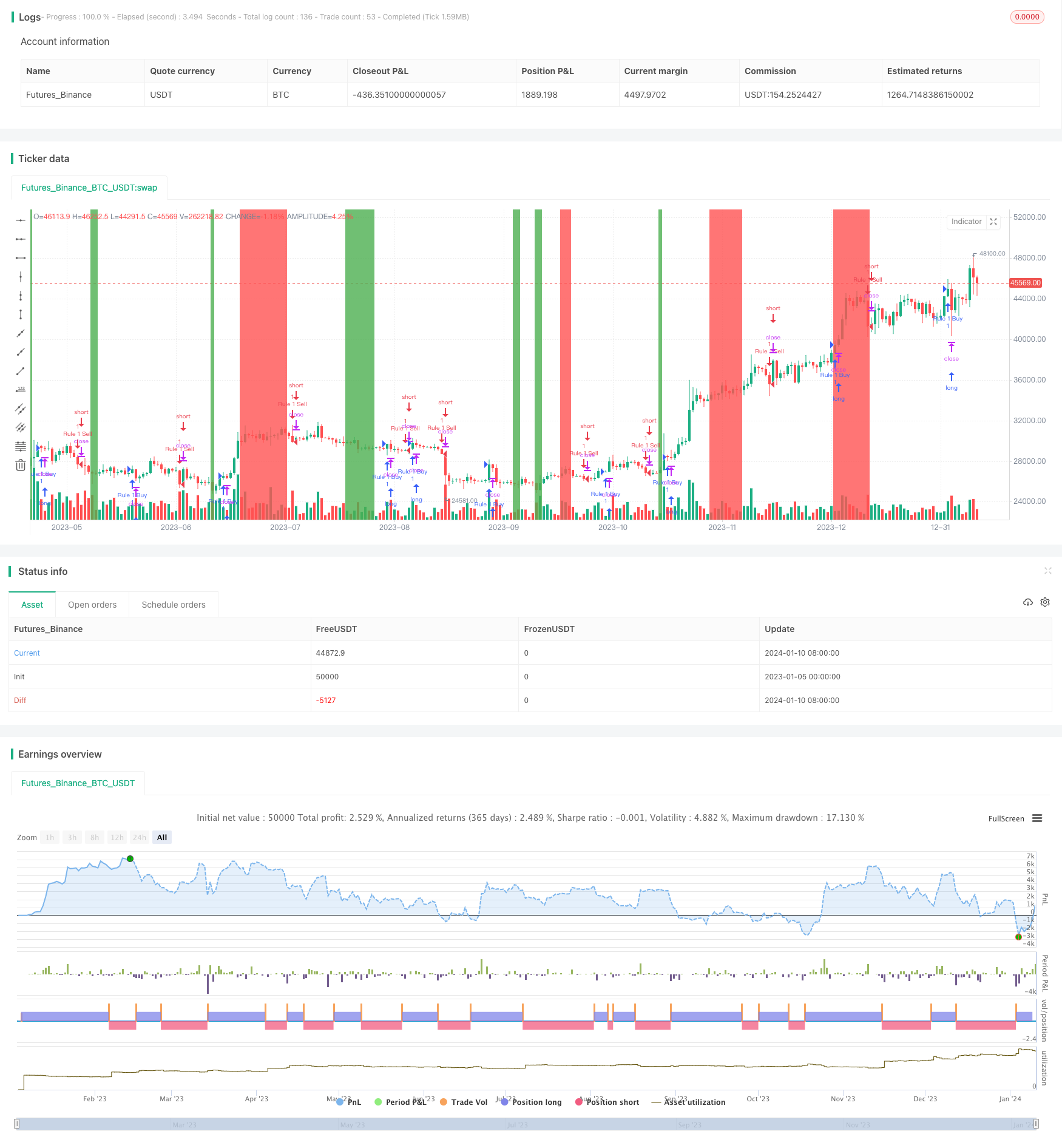
Overview
The trend following trading strategy based on multiple indicators is a quantitative trading strategy that combines the MACD, Stochastic and SMA moving average. This strategy aims to identify the trend direction in the market and get in the market in a timely manner when a new trend begins. It then uses a combination of signals from multiple indicators to determine when to exit the market.
Strategy Logic
This strategy uses three technical indicators, MACD, Stochastic and SMA, to judge the strength and direction of the market trend. When the MACD line crosses above the signal line, the %K line of the Stochastic crosses above %D and is above the overbought level, and the fast SMA crosses above the slow SMA, a buy signal is triggered. When the opposite situations happen, a sell signal is identified.
By combining multiple indicators, fake signals can be filtered out and the real beginning and ending of a trend can be recognized. At the same time, different indicators can form verification and reduce the probability of erroneous trades.
Advantage Analysis
The biggest advantage of this strategy is the combination of multiple indicators, which can effectively filter out market noise and lock in the real beginning and ending of trends. Compared with using a single MACD, Stochastic or SMA, the recognition effect is much better.
In addition, this strategy is flexible in parameter tuning and can be adjusted for different products and cycles, making it highly adaptable.
Risk Analysis
The main risk of this strategy is that the combination of multiple indicators increases the trading frequency and brings the risk of overtrading. In addition, improper parameter settings can also introduce the risk of erroneous trades.
To reduce risks, trading frequency should be appropriately controlled, longer cycles selected, and parameters optimized. When necessary, stop loss can be considered to control single trade loss.
Optimization Directions
The strategy can be optimized in the following aspects:
- Test the effects of different products and cycle parameters
- Increase indicator weighting and filtering conditions to reduce erroneous signals
- Incorporate stop loss to control risks
- Further optimize indicator parameters to improve profit factors
Conclusion
The trend following trading strategy based on multiple indicators improves signal accuracy through composite validation of indicators, and can effectively identify the beginning and ending of trends. Parameter optimization and risk control are the keys to the success of this strategy. In general, this strategy has small drawdowns and large profit potential, making it a very practical quantitative trading strategy.
Parameters
| Name | Default | What it controls |
|---|---|---|
| v_input_1 | 8 | fastLength |
| v_input_2 | 17 | slowlength |
| v_input_3 | 9 | MACDLength |
| v_input_4 | 14 | stochasticLength |
| v_input_5 | 80 | stochasticOverBought |
| v_input_6 | 20 | stochasticOverSold |
| v_input_7 | 10 | emaSignal |
Source Pine Script
/*backtest
start: 2023-01-05 00:00:00
end: 2024-01-11 00:00:00
period: 1d
basePeriod: 1h
exchanges: [{"eid":"Futures_Binance","currency":"BTC_USDT"}]
*/

//@version=3
strategy("Rule Number 1 Signals", overlay=true)

//Calculate MACD crossing or not
fastLength = input(8)
slowlength = input(17)
MACDLength = input(9)

MACD = ema(close, fastLength) - ema(close, slowlength)
aMACD = ema(MACD, MACDLength)
macdDelta = MACD - aMACD

//Calculate Stochastic Crossing

stochasticLength = input(14, minval=1)
stochasticOverBought = input(80)
stochasticOverSold = input(20)
emaSignal = input(10)
smoothK = 5
smoothD = 5

k = sma(stoch(close, high, low, stochasticLength), smoothK)
d = sma(k, smoothD)

//Crossovers and Over /Under
macdCrossOver = crossover(macdDelta, 0)
macdCrossUnder = crossunder(macdDelta, 0)
macdOver = macdDelta > 0
macdUnder = macdDelta < 0

stochasticCrossOver = crossover(k, d)
stochasticCrossUnder = crossunder(k, d)
stochasticOver = k > d
stochasticUnder = k < d

ema = ema(close, emaSignal)
smaCrossOver = crossover(close, ema)
smaCrossUnder = crossunder(close, ema)
smaOver = close > ema
smaUnder = close < ema

if ((macdCrossOver and stochasticOver and smaOver) or (macdOver and stochasticCrossOver and smaOver) or (macdOver and stochasticOver and smaCrossOver))
    strategy.entry("Rule 1 Buy", strategy.long, comment="Rule 1 Buy")
if ((macdCrossUnder and stochasticUnder and smaUnder) or (macdUnder and stochasticCrossUnder and smaUnder) or (macdUnder and stochasticUnder and smaCrossUnder))
    strategy.entry("Rule 1 Sell", strategy.short, comment="Rule 1 Sell")


//Plot the Oversold Study
bgcol = k < stochasticOverSold ? green : k > stochasticOverBought ? red : na
bgcolor(bgcol)
Published by ChaoZhang on the FMZ strategy square · last modified 2024-01-12. Collected in the Quant Trading Vault. Unvalidated research: re-test with your own data and costs before trusting it.
Build this with AgenKit
A spec is not a trading system. Paste this into your coding agent and AgenKit runs a specialist team — architecture, test-first build, risk gates, review — with paper trading on by default.
/agenkit build a production-grade trading bot with a backtest engine, risk controls and paper trading by default from strategies/Trend-Following-Trading-Strategy-Based-on-Multiple-Indicators.md- npx agenkit install engineering-kit in your project
- Paste the command into your agent and approve each phase
- Get tests, backtest, risk controls and a paper-trading switch
Understand it first
Before you run this, read the lesson behind the idea and how to backtest it honestly. Specs like this one are the survivors of an unknown number of trials; deflate their results accordingly.
Related specs
- EMA SMA Multi Indicator Comprehensive Trend Following StrategyPine Script · Trend following · 1h
- Multifactor Driven Trend Trading StrategyPine Script · Trend following · 1m
- Trading Strategy Following Dual Timeframe TrendsPine Script · Trend following · 1h
- BlackBit Trader XO Macro Trend Scanner StrategyPine Script · Trend following · 1h
- MACD Trend Following Trading Strategy Based on MACD IndicatorPine Script · Trend following · 10m
- Mini Pullback Supertrend StrategyPine Script · Trend following · 1h