Strategy vault / Trend following
Adaptive Trend Following with Dynamic Risk Control Strategy
This strategy is a short-term trading system that combines multiple technical indicators, primarily based on the Parabolic SAR (PSAR) as the core signal generator, while incorporating moving averages and momentum…
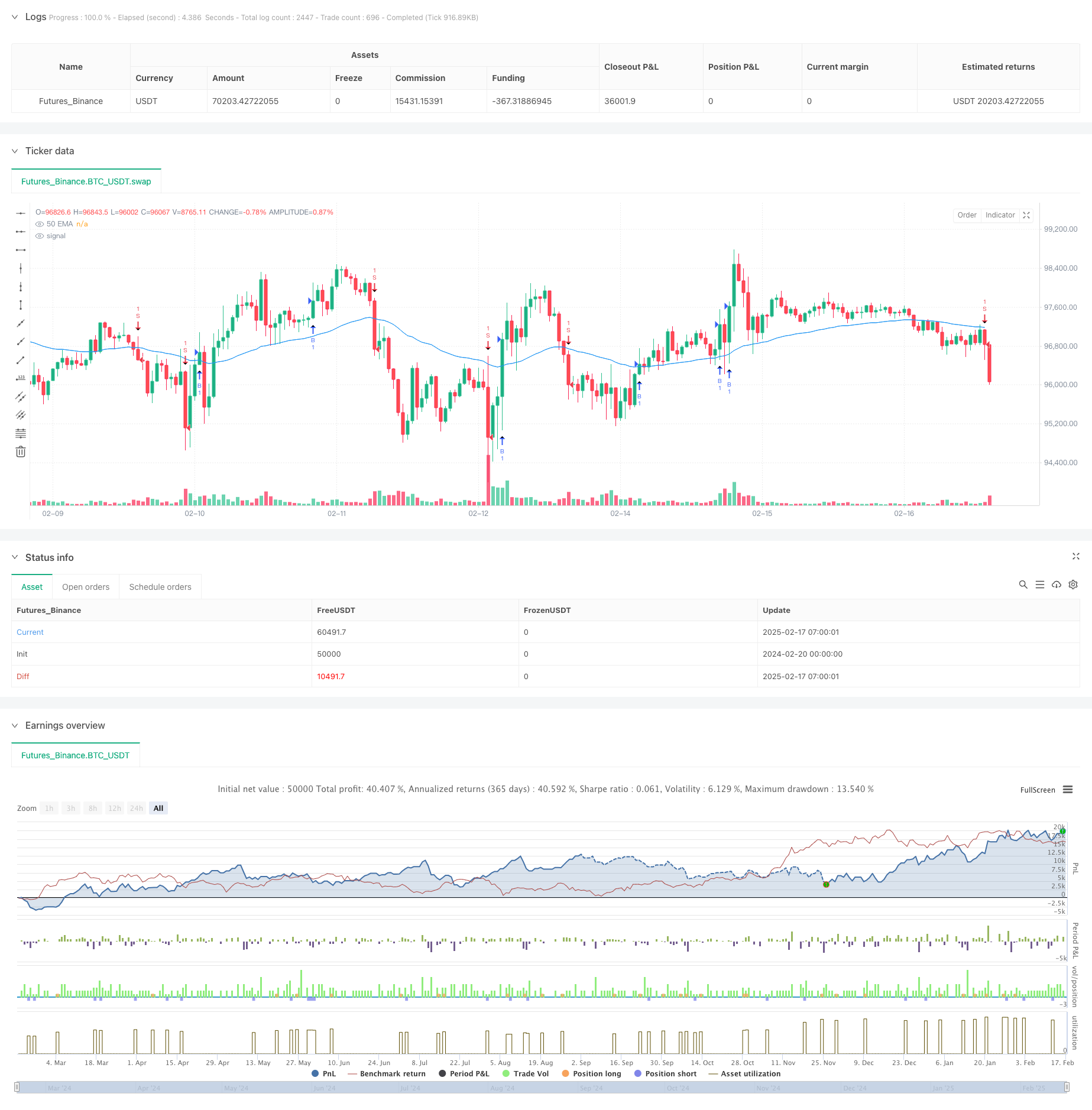
Overview
This strategy is a short-term trading system that combines multiple technical indicators, primarily based on the Parabolic SAR (PSAR) as the core signal generator, while incorporating moving averages and momentum indicators for trade filtering, along with a combination of dynamic stop-loss and fixed take-profit risk management methods. The strategy is designed to consider market trends and volatility, making it suitable for short-term trading in volatile market conditions.
Strategy Principles
The strategy uses the PSAR indicator as its primary trend determination tool, generating trading signals when price crosses the PSAR. To enhance signal reliability, the following filters are added:
- 50-period Exponential Moving Average (EMA50) as a trend filter to ensure trade direction aligns with medium-term trends
- Relative Strength Index (RSI) to filter out ranging markets, requiring RSI>40 for long positions and RSI<60 for short positions
- Average True Range (ATR) for dynamic stop-loss calculation, providing more flexible risk control
- Fixed 0.7% take-profit target to secure gains promptly
- Position check mechanism to avoid duplicate entries
Strategy Advantages
- Comprehensive signal system: Combines trend following and momentum indicators for more reliable trading signals
- Flexible risk control: Dynamic stop-loss adapts to market volatility
- False breakout prevention: Multiple filtering conditions effectively reduce the impact of false signals
- Clear profit targets: Fixed take-profit ratio helps control holding time and improve capital efficiency
- Clear trading logic: Well-defined component responsibilities facilitate subsequent optimization and adjustment
Strategy Risks
- Over-filtering risk: Multiple conditions may cause missed trading opportunities
- Fixed take-profit limitations: 0.7% fixed take-profit may exit strong trends too early
- Parameter sensitivity: PSAR, EMA, RSI parameter settings significantly impact strategy performance
- Market environment dependence: May underperform in low volatility or highly volatile markets
- Slippage impact: Frequent trading may lead to higher transaction costs
Strategy Optimization Directions
- Dynamic take-profit mechanism: Adjust profit targets based on market volatility
- Position management optimization: Introduce volatility-based dynamic position sizing system
- Market environment recognition: Add market state identification module to adjust strategy parameters accordingly
- Indicator parameter optimization: Implement adaptive parameter adjustment mechanism
- Transaction cost control: Optimize entry/exit frequency to reduce trading costs
Summary
The strategy builds a complete trading system by combining multiple technical indicators, with solid considerations in trend identification, risk control, and trade execution. Its core strengths lie in its flexible risk control mechanism and comprehensive signal system, while attention needs to be paid to parameter optimization and market adaptability. Through continuous optimization and improvement, the strategy has the potential to maintain stable performance across different market conditions.
Source Pine Script
/*backtest
start: 2024-02-20 00:00:00
end: 2025-02-17 08:00:00
period: 1h
basePeriod: 1h
exchanges: [{"eid":"Futures_Binance","currency":"BTC_USDT"}]
*/

//@version=6
strategy("Nicole 100%", overlay=true)

// ? Settings Parabolic SAR Parameter
start = input.float(0.02, "Start AF")
increment = input.float(0.02, "Acceleration factor")
maximum = input.float(0.2, "Max. AF")

// ? Calculate Parabolic SAR
SAR = ta.sar(start, increment, maximum)

// ? ATR Calculate (for dynamic stop loss))
atrLength = input.int(14, "ATR Calculation cycle")
atrMultiplier = input.float(1.3, "ATR Coefficient")  // 2times ATR As Stop-Loss Range
ATR = ta.atr(atrLength)

// ? Fixed 0.5% Take profit calculation
takeProfitPercent = 0.007  // 0.7% Fixed take profit
takeProfitLong = close * (1 + takeProfitPercent)  // Take Profit on Buy
takeProfitShort = close * (1 - takeProfitPercent) // Take Profit on Sell

// ? **50 EMA Filter**
ema50 = ta.ema(close, 50)

// ? **RSI Filter (to prevent entering during oscillation))**
rsiLength = input.int(14, "RSI Cycle")
rsi = ta.rsi(close, rsiLength)
longFilter = rsi > 40  // Only go long when RSI > 31
shortFilter = rsi < 60 // Only go short when RSI < 69

// ? **Check if there is already a position**
isFlat = strategy.position_size == 0  // **Only when there is no position, a new order can be opened**

// ? **Bull Entry Conditions**
longCondition = ta.crossover(close, SAR) and close > ema50 and longFilter and isFlat

// ? **Bear Entry Conditions**
shortCondition = ta.crossunder(close, SAR) and close < ema50 and shortFilter and isFlat

// ? **Entry strategy**
if (longCondition)
    strategy.entry("B", strategy.long, comment="B")

if (shortCondition)
    strategy.entry("S", strategy.short, comment="S")

// ? **take profit & Stop loss**
stopLossLong = close - (ATR * atrMultiplier)  // Long position ATR stop loss
stopLossShort = close + (ATR * atrMultiplier) // Short position ATR stop loss

strategy.exit("Exit Long", from_entry="B", stop=stopLossLong, limit=takeProfitLong, comment="TP Long")
strategy.exit("Exit Short", from_entry="S", stop=stopLossShort, limit=takeProfitShort, comment="TP Short")

// ? **Mark Entry and Exit Points**
plotshape(series=longCondition, location=location.belowbar, style=shape.triangleup, size=size.small, title="B")
plotshape(series=shortCondition, location=location.abovebar, style=shape.triangledown, size=size.small, title="S")

// ? **Draw 50 EMA**
plot(ema50, color=color.blue, title="50 EMA")
Published by ChaoZhang on the FMZ strategy square · last modified 2025-02-19. Collected in the Quant Trading Vault. Unvalidated research: re-test with your own data and costs before trusting it.
Build this with AgenKit
A spec is not a trading system. Paste this into your coding agent and AgenKit runs a specialist team — architecture, test-first build, risk gates, review — with paper trading on by default.
/agenkit build a production-grade trading bot with a backtest engine, risk controls and paper trading by default from strategies/Adaptive-Trend-Following-with-Dynamic-Risk-Control-Strategy.md- npx agenkit install engineering-kit in your project
- Paste the command into your agent and approve each phase
- Get tests, backtest, risk controls and a paper-trading switch
Understand it first
Before you run this, read the lesson behind the idea and how to backtest it honestly. Specs like this one are the survivors of an unknown number of trials; deflate their results accordingly.
Related specs
- Dual ATR Channel Trend Following StrategyPine Script · Trend following · 15m
- Multi Factor Trend Following Quantitative StrategyPine Script · Trend following · 1d
- Indicator Verification Automated Trading StrategyPine Script · Trend following · 10m
- Adaptive ATR and RSI Trend Following Strategy with Trailing Stop LossPine Script · Trend following · 1h
- Bollinger Bands and RSI Trend Following StrategyPine Script · Trend following · 1h
- Dual Mode Adaptive Trend Trading Strategy EMA Crossover with ATR Volatility Based Risk Management SystemPine Script · Trend following · 1d