Strategy vault / Machine learning
High Frequency Hybrid Technical Analysis Quantitative Strategy
This strategy is a high-frequency quantitative trading approach based on multiple technical indicators. It combines candlestick pattern analysis, trend following, and momentum indicators to enhance trading accuracy…
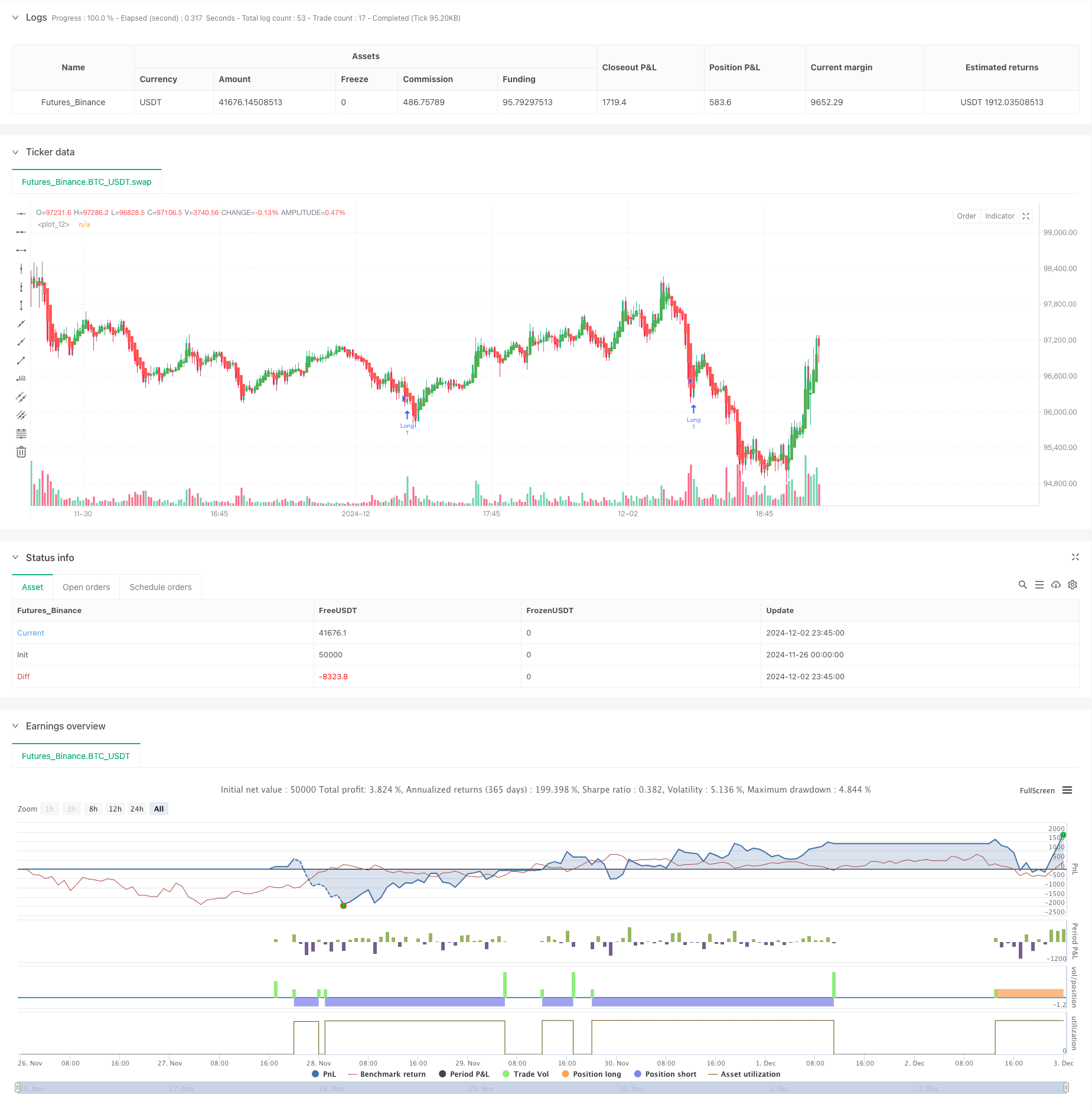
Overview
This strategy is a high-frequency quantitative trading approach based on multiple technical indicators. It combines candlestick pattern analysis, trend following, and momentum indicators to enhance trading accuracy through multi-dimensional signal confirmation. The strategy employs a 1:3 risk-reward ratio, which helps maintain stable returns in volatile markets through conservative money management.
Strategy Principles
The core logic is built on the synergistic effect of three main technical indicators. First, Heiken Ashi candles are used to filter market noise and provide clearer trend direction. Second, Bollinger Bands identify overbought and oversold areas while providing dynamic support and resistance levels. Third, the stochastic RSI confirms price momentum and helps judge trend continuity. The strategy also incorporates ATR for dynamic stop-loss and profit targets, making risk management more flexible.
Strategy Advantages
- Multiple signal confirmation mechanism significantly reduces false signals
- Dynamic stop-loss and profit targets improve market volatility adaptation
- Strict risk-reward ratio (1:3) supports long-term stable profitability
- ATR-based position sizing provides good scalability
- Simple and clear strategy logic, easy to understand and maintain
Strategy Risks
- High-frequency trading may face higher transaction costs
- Slippage risk in volatile markets
- Multiple indicators may lead to signal lag
- Fixed risk-reward ratio might miss opportunities in certain market conditions It's recommended to control these risks through strict money management and regular backtesting.
Optimization Directions
- Introduce adaptive indicator parameters for better market environment adaptation
- Add volume analysis to improve signal reliability
- Develop dynamic risk-reward ratio adjustment mechanism
- Add market volatility filters to adjust trading frequency during high volatility
- Consider implementing machine learning algorithms for parameter optimization
Summary
This strategy combines classical technical analysis methods with modern quantitative trading concepts. Through the coordinated use of multiple indicators, it pursues high profitability while ensuring robustness. The strategy's scalability and flexibility make it suitable for various market environments, but traders need to carefully control risks and regularly optimize parameters.
Source Pine Script
/*backtest
start: 2024-11-26 00:00:00
end: 2024-12-03 00:00:00
period: 15m
basePeriod: 15m
exchanges: [{"eid":"Futures_Binance","currency":"BTC_USDT"}]
*/

//@version=5
strategy("BTC Scalping Strategy with Risk-Reward 1:3", overlay=true)

// Heiken Ashi Candle Calculation
var float haOpen = na
haClose = (open + high + low + close) / 4
haOpen := na(haOpen[1]) ? (open + close) / 2 : (haOpen[1] + haClose[1]) / 2
haHigh = math.max(high, math.max(haOpen, haClose))
haLow = math.min(low, math.min(haOpen, haClose))

// Plot Heiken Ashi Candles
plotcandle(haOpen, haHigh, haLow, haClose, color=haClose >= haOpen ? color.green : color.red)

// Bollinger Bands Calculation
lengthBB = 20
src = close
mult = 2.0
basis = ta.sma(src, lengthBB)
dev = mult * ta.stdev(src, lengthBB)
upperBB = basis + dev
lowerBB = basis - dev

// Stochastic RSI Calculation (fixed parameters)
kLength = 14
dSmoothing = 3
stochRSI = ta.stoch(close, high, low, kLength)

// Average True Range (ATR) for stop loss and take profit
atrLength = 14
atrValue = ta.atr(atrLength)

// Entry conditions
longCondition = ta.crossover(close, lowerBB) and stochRSI < 20
shortCondition = ta.crossunder(close, upperBB) and stochRSI > 80

// Alerts and trade signals
if (longCondition)
    strategy.entry("Long", strategy.long)
    strategy.exit("Take Profit", "Long", profit=atrValue*3, loss=atrValue)
    alert("Buy Signal Triggered", alert.freq_once_per_bar_close)

if (shortCondition)
    strategy.entry("Short", strategy.short)
    strategy.exit("Take Profit", "Short", profit=atrValue*3, loss=atrValue)
    alert("Sell Signal Triggered", alert.freq_once_per_bar_close)
Published by ChaoZhang on the FMZ strategy square · last modified 2024-12-04. Collected in the Quant Trading Vault. Unvalidated research: re-test with your own data and costs before trusting it.
Build this with AgenKit
A spec is not a trading system. Paste this into your coding agent and AgenKit runs a specialist team — architecture, test-first build, risk gates, review — with paper trading on by default.
/agenkit build a production-grade trading bot with a backtest engine, risk controls and paper trading by default from strategies/High-Frequency-Hybrid-Technical-Analysis-Quantitative-Strategy.md- npx agenkit install engineering-kit in your project
- Paste the command into your agent and approve each phase
- Get tests, backtest, risk controls and a paper-trading switch
Understand it first
Before you run this, read the lesson behind the idea and how to backtest it honestly. Specs like this one are the survivors of an unknown number of trials; deflate their results accordingly.
Related specs
- Triple Moving Average Combined with MACD Quantitative StrategyPine Script · Machine learning · 1d
- ADX EFI 50 Moving Average Channel Pullback StrategyPine Script · Machine learning · 1h
- AI Powered Volatility Price System Divergence Trading StrategyPine Script · Machine learning · 1h
- Bollinger Bands Fibonacci Retracement Trading StrategyPine Script · Machine learning · 2h
- Dual Indicator Stochastic RSI and EMA Trading StrategyPine Script · Machine learning · 1d
- Multi indicator Assisted StrategyPine Script · Machine learning · 1d