Strategy vault / Trend following
TSI Crossover Strategy
This strategy uses the TSI indicator as the main trading signal. When the TSI indicator crosses its signal line, and the TSI indicator is below the lower limit or above the upper limit, the strategy will generate an…
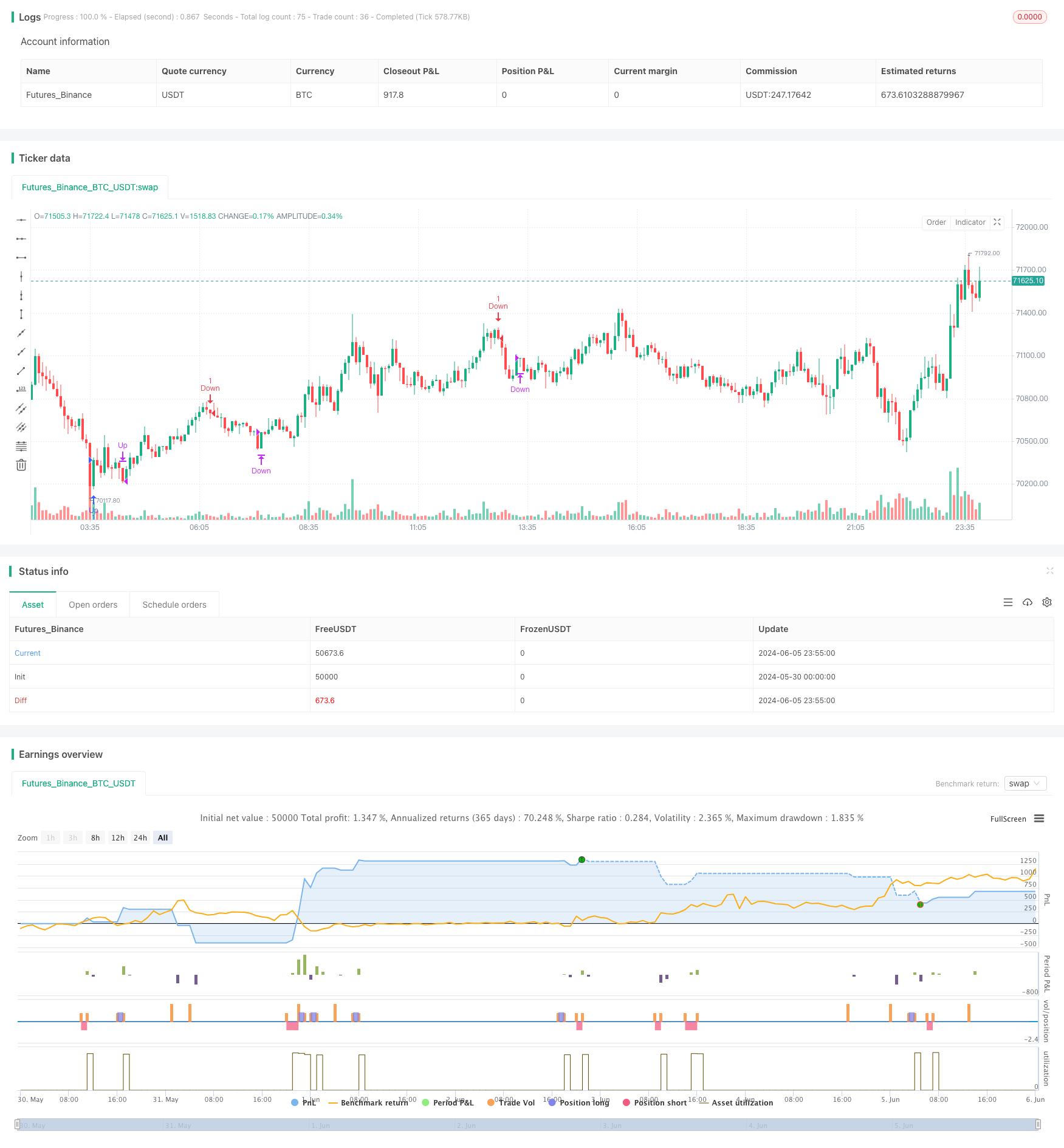
Overview
This strategy uses the TSI indicator as the main trading signal. When the TSI indicator crosses its signal line, and the TSI indicator is below the lower limit or above the upper limit, the strategy will generate an open position signal. At the same time, the strategy also uses indicators such as EMA and ATR to optimize strategy performance. The strategy only runs within specific trading sessions and sets a minimum trading frequency to control overtrading.
Strategy Principle
- Calculate the TSI indicator value and signal line value.
- Determine whether the current time is within the allowable trading range, and the current bar is at least the specified minimum number of bars away from the last trade.
- If the TSI indicator crosses above the signal line from below, and the signal line is below the specified lower limit, a long signal is generated.
- If the TSI indicator crosses below the signal line from above, and the signal line is above the specified upper limit, a short signal is generated.
- If currently holding a long position, once the TSI indicator crosses below the signal line from above, close all long positions.
- If currently holding a short position, once the TSI indicator crosses above the signal line from below, close all short positions.
Advantage Analysis
- The strategy logic is clear, using the cross of the TSI indicator as the only condition for opening and closing positions, which is simple and easy to understand.
- By limiting the trading session and trading frequency, the risk of overtrading is effectively controlled.
- Timely stop loss and stop profit, once a opposite signal appears, decisively close the position, controlling the risk exposure of a single transaction.
- Multiple indicators are used to assist in judgment, such as EMA, ATR, etc., enhancing the robustness of the strategy.
Risk Analysis
- The strategy is quite sensitive to the selection of TSI indicator parameters, and different parameters will bring large performance differences, which need to be chosen carefully.
- The opening and closing conditions are relatively simple, lacking trend judgment and volatility constraints, and may result in losses in oscillating markets.
- Lack of position management and fund management, it is difficult to control the drawdown, once a continuous loss will lead to a large drawdown.
- Only doing long-short reversal, not trend tracking, will miss many trend opportunities.
Optimization Direction
- Optimize the parameters of the TSI indicator to find a more robust parameter combination. Automatic optimization methods such as genetic algorithms can be used.
- Add trend judgment indicators, such as MA or MACD, to select the trend direction when opening a position to improve the success rate.
- Add volatility indicators, such as ATR, to reduce the number of trades in high volatility market environments.
- Introduce a position management model to dynamically adjust the position size of each trade based on recent market performance and account net value.
- Trend tracking logic can be added to continue holding positions in trend market to improve the strategy's ability to capture big trends.
Summary
This strategy is based on the TSI indicator and generates trading signals through the cross of TSI and its signal line. At the same time, it limits the trading time and frequency to control risks. The advantage of the strategy is that the logic is simple and clear, and it stops loss and profit in a timely manner. However, the disadvantage is the lack of trend judgment and position management, sensitivity to TSI parameters, and can only capture reversal market while missing trend market. In the future, the strategy can be improved from aspects such as trend and volatility judgment, position management, and parameter optimization.
Source Pine Script
/*backtest
start: 2024-05-30 00:00:00
end: 2024-06-06 00:00:00
period: 5m
basePeriod: 1m
exchanges: [{"eid":"Futures_Binance","currency":"BTC_USDT"}]
*/

// This Pine Script™ code is subject to the terms of the Mozilla Public License 2.0 at https://mozilla.org/MPL/2.0/
// © nikgavalas

//@version=5
strategy("TSI Entries", overlay=true, margin_long=100, margin_short=100)

//
// INPUTS
//

// Define the start and end hours for trading
string sessionInput = input("1000-1530", "Session")

// Day of the week.
string daysInput = input.string("23456", tooltip = "1 = Sunday, 7 = Saturday")

// Minimum number of bar's between entries
requiredBarsBetweenEntries = input.int(12, "Required Bars Between Entries")

// Show debug labels
bool showDebugLabels = input.bool(false, "Show Debug Labels")

//
// FUNCTIONS
//

//@function Define the triple exponential moving average function
tema(src, len) => tema = 3 * ta.ema(src, len) - 3 * ta.ema(ta.ema(src, len), len) + ta.ema(ta.ema(ta.ema(src, len), len), len)

//@function Atr with EMA
atr_ema(length) =>
    trueRange = na(high[1])? high-low : math.max(math.max(high - low, math.abs(high - close[1])), math.abs(low - close[1]))
    //true range can be also calculated with ta.tr(true)
    ta.ema(trueRange, length)

//@function Check if time is in range
timeinrange() =>
    sessionString = sessionInput + ":" + daysInput
    inSession = not na(time(timeframe.period, sessionString, "America/New_York"))

//@function Displays text passed to `txt` when called.
debugLabel(txt, color, y, style) =>
    if (showDebugLabels)
        label.new(bar_index, y, text = txt, color = color, style = style, textcolor = color.black, size = size.small)


//
// INDICATOR CODE
//

long = input(title="TSI Long Length", defval=8)
short = input(title="TSI Short Length", defval=8)
signal = input(title="TSI Signal Length", defval=3)
lowerLine = input(title="TSI Lower Line", defval=-50)
upperLine = input(title="TSI Upper Line", defval=50)

price = close
double_smooth(src, long, short) =>
	fist_smooth = ta.ema(src, long)
	ta.ema(fist_smooth, short)

pc = ta.change(price)
double_smoothed_pc = double_smooth(pc, long, short)
double_smoothed_abs_pc = double_smooth(math.abs(pc), long, short)
tsiValue = 100 * (double_smoothed_pc / double_smoothed_abs_pc)
signalValue = ta.ema(tsiValue, signal)

//
// COMMON VARIABLES
//

var color trendColor = na
var int lastEntryBar = na

bool tradeAllowed = timeinrange() == true and (na(lastEntryBar) or bar_index - lastEntryBar > requiredBarsBetweenEntries)

//
// CROSSOVER
//

bool crossOver = ta.crossover(tsiValue, signalValue)
bool crossUnder = ta.crossunder(tsiValue,signalValue)

if (tradeAllowed)
	if (signalValue < lowerLine and crossOver == true)
		strategy.entry("Up", strategy.long)
		lastEntryBar := bar_index

	else if (signalValue > upperLine and crossUnder == true)

		strategy.entry("Down", strategy.short)
		lastEntryBar := bar_index

//
// EXITS
//

if (strategy.position_size > 0 and crossUnder == true)
	strategy.close("Up", qty_percent = 100)

else if (strategy.position_size < 0 and crossOver == true)
	strategy.close("Down", qty_percent = 100)
Published by ChaoZhang on the FMZ strategy square · last modified 2024-06-07. Collected in the Quant Trading Vault. Unvalidated research: re-test with your own data and costs before trusting it.
Build this with AgenKit
A spec is not a trading system. Paste this into your coding agent and AgenKit runs a specialist team — architecture, test-first build, risk gates, review — with paper trading on by default.
/agenkit build a production-grade trading bot with a backtest engine, risk controls and paper trading by default from strategies/TSI-Crossover-Strategy.md- npx agenkit install engineering-kit in your project
- Paste the command into your agent and approve each phase
- Get tests, backtest, risk controls and a paper-trading switch
Understand it first
Before you run this, read the lesson behind the idea and how to backtest it honestly. Specs like this one are the survivors of an unknown number of trials; deflate their results accordingly.
Related specs
- ATR Dynamic Trend Following and EMA Crossover Trading StrategyPine Script · Trend following · 1d
- ATR and Moving Average Crossover Hybrid StrategyPine Script · Trend following · 1h
- ATR and T3 Moving Average StrategyPine Script · Trend following · 5m
- Adaptive ATR and RSI Trend Following Strategy with Trailing Stop LossPine Script · Trend following · 1h
- Bollinger Bands and RSI Trend Following StrategyPine Script · Trend following · 1h
- Dual ATR Channel Trend Following StrategyPine Script · Trend following · 15m